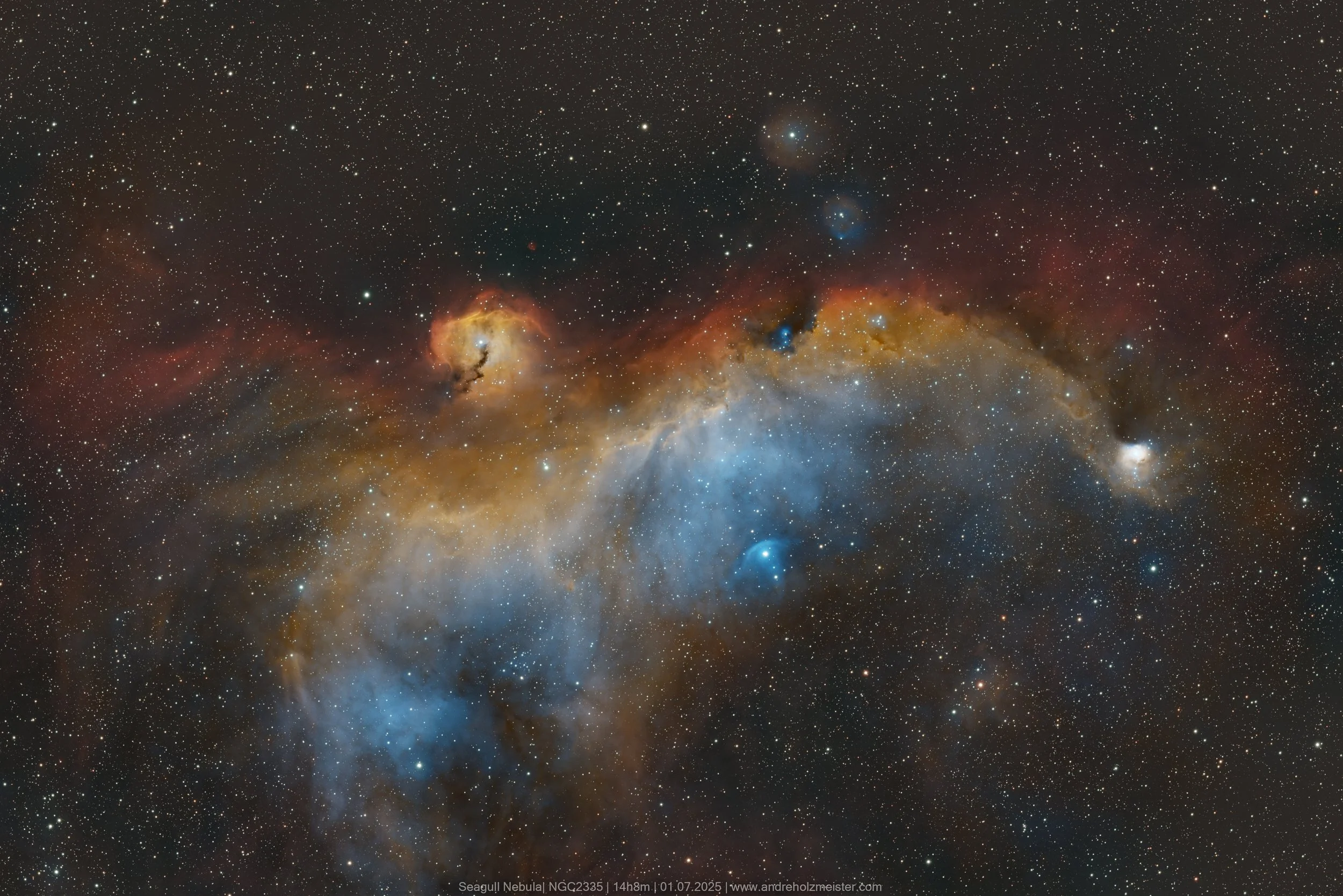
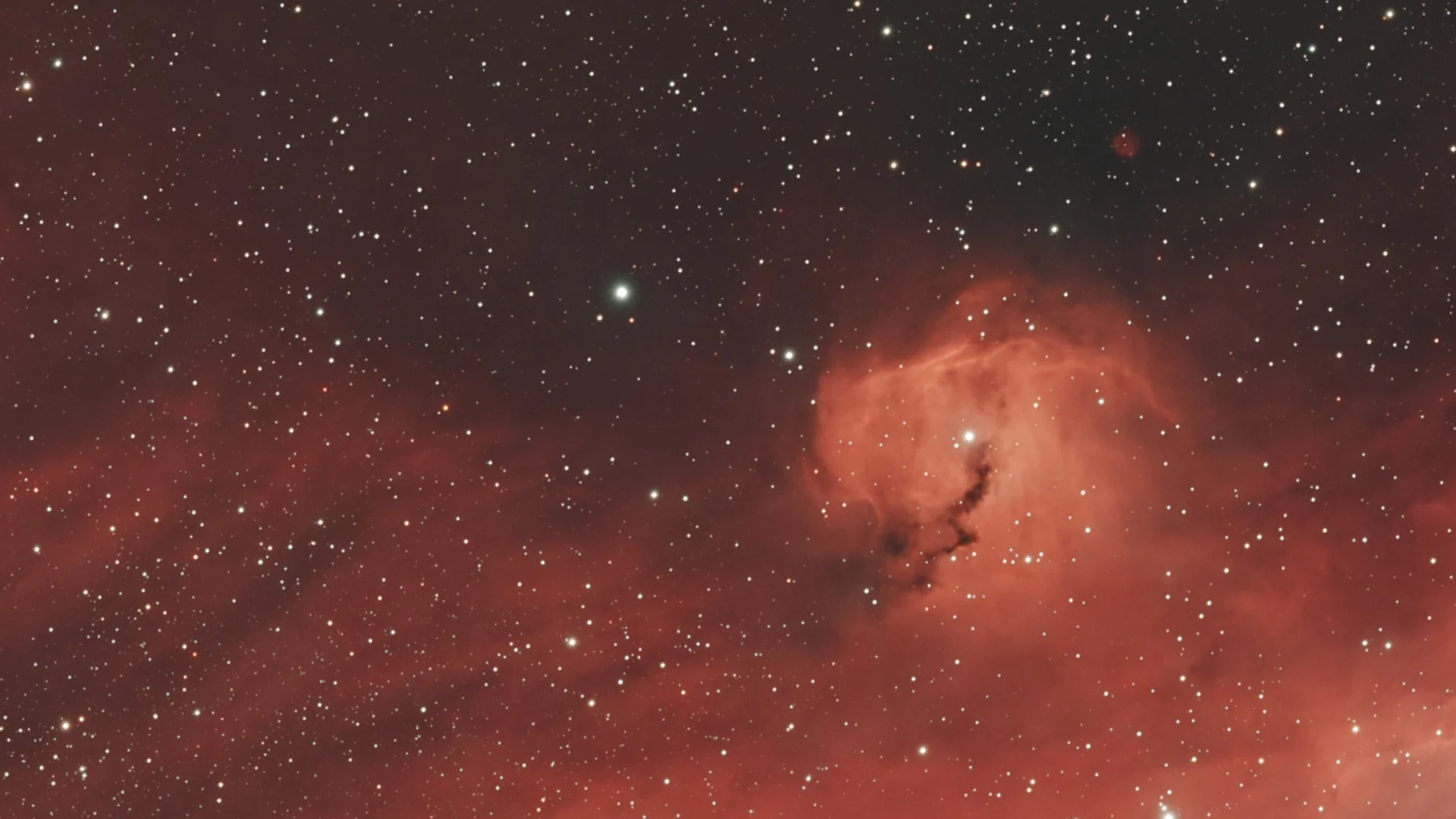
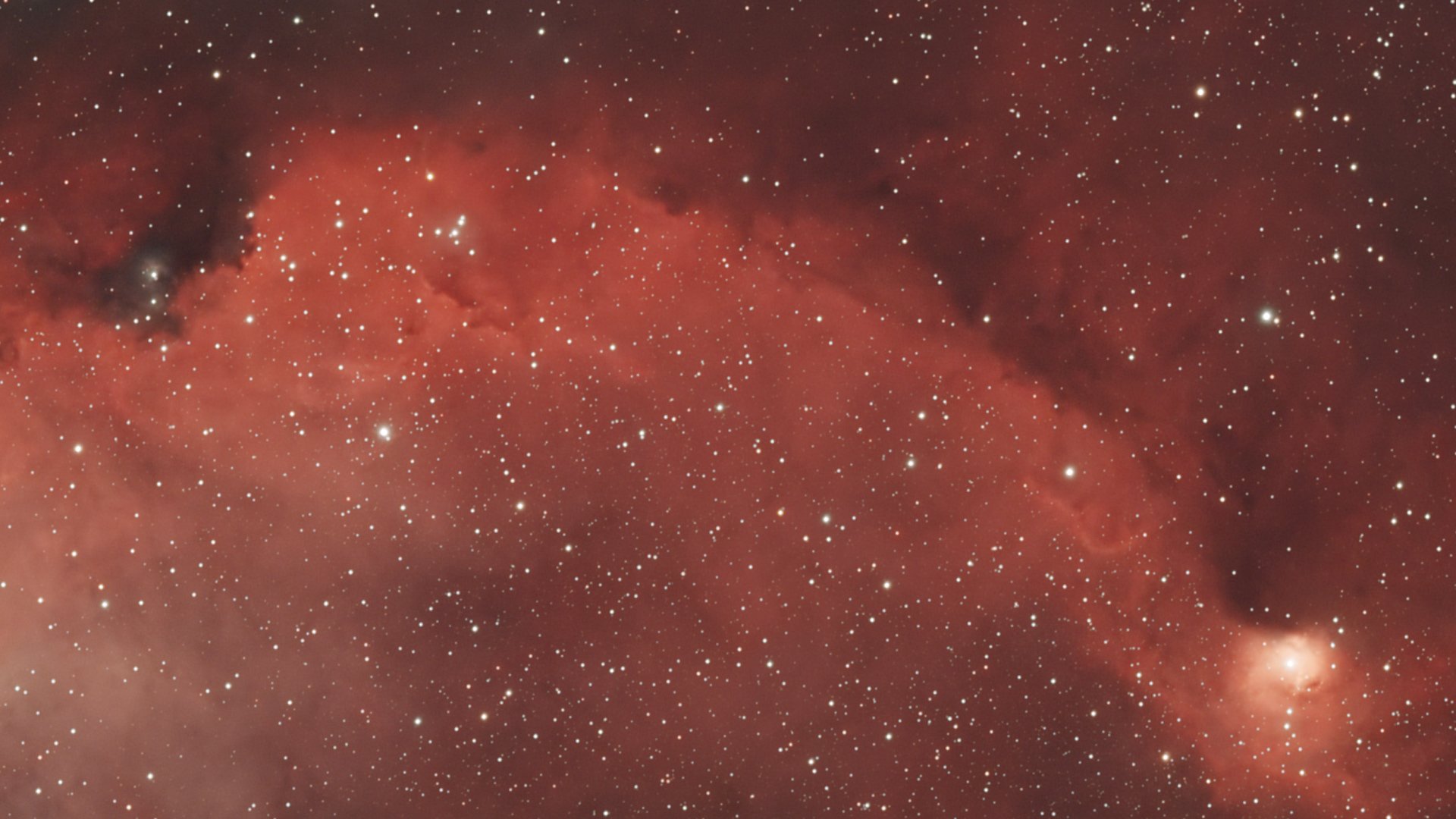
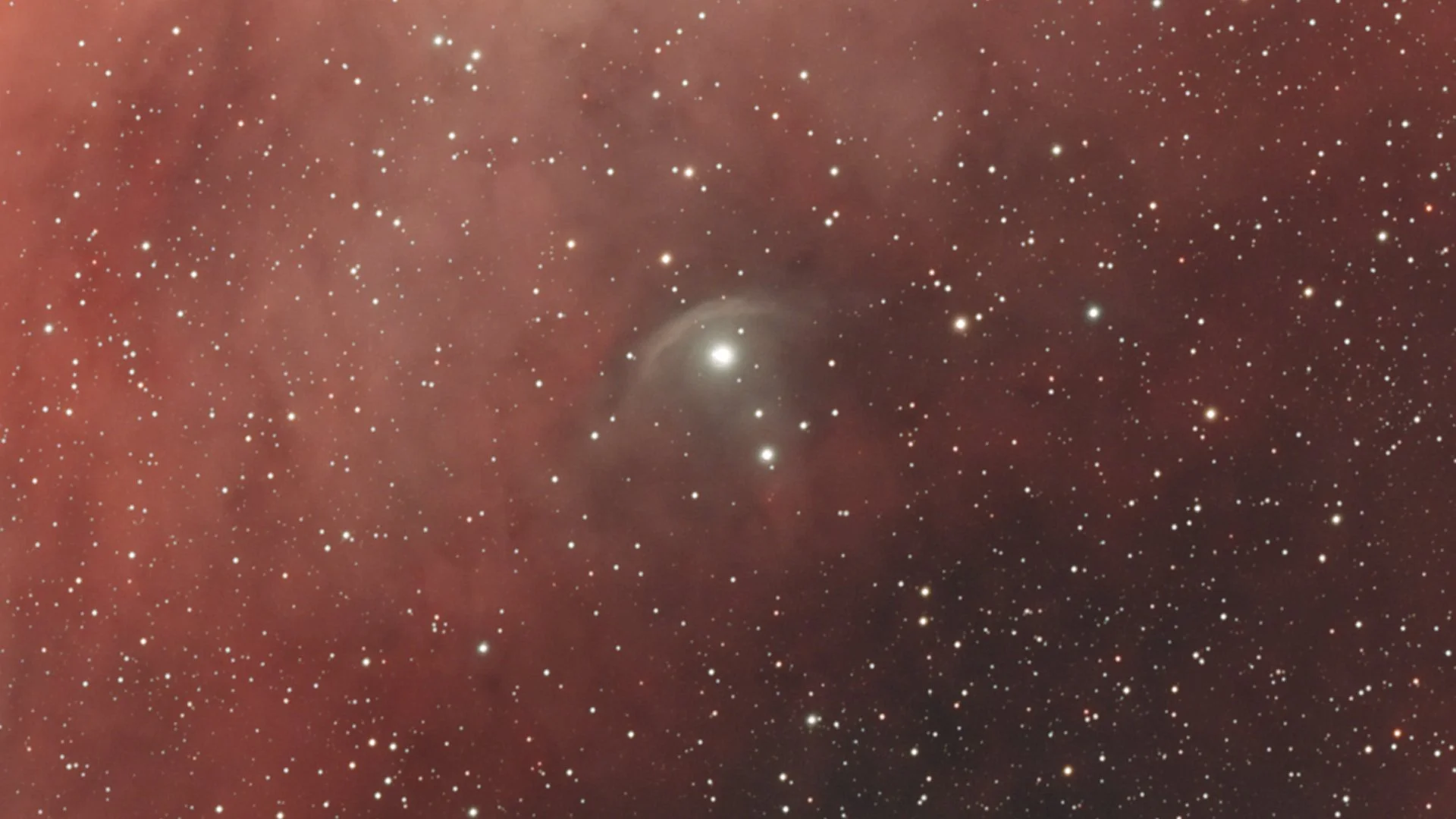
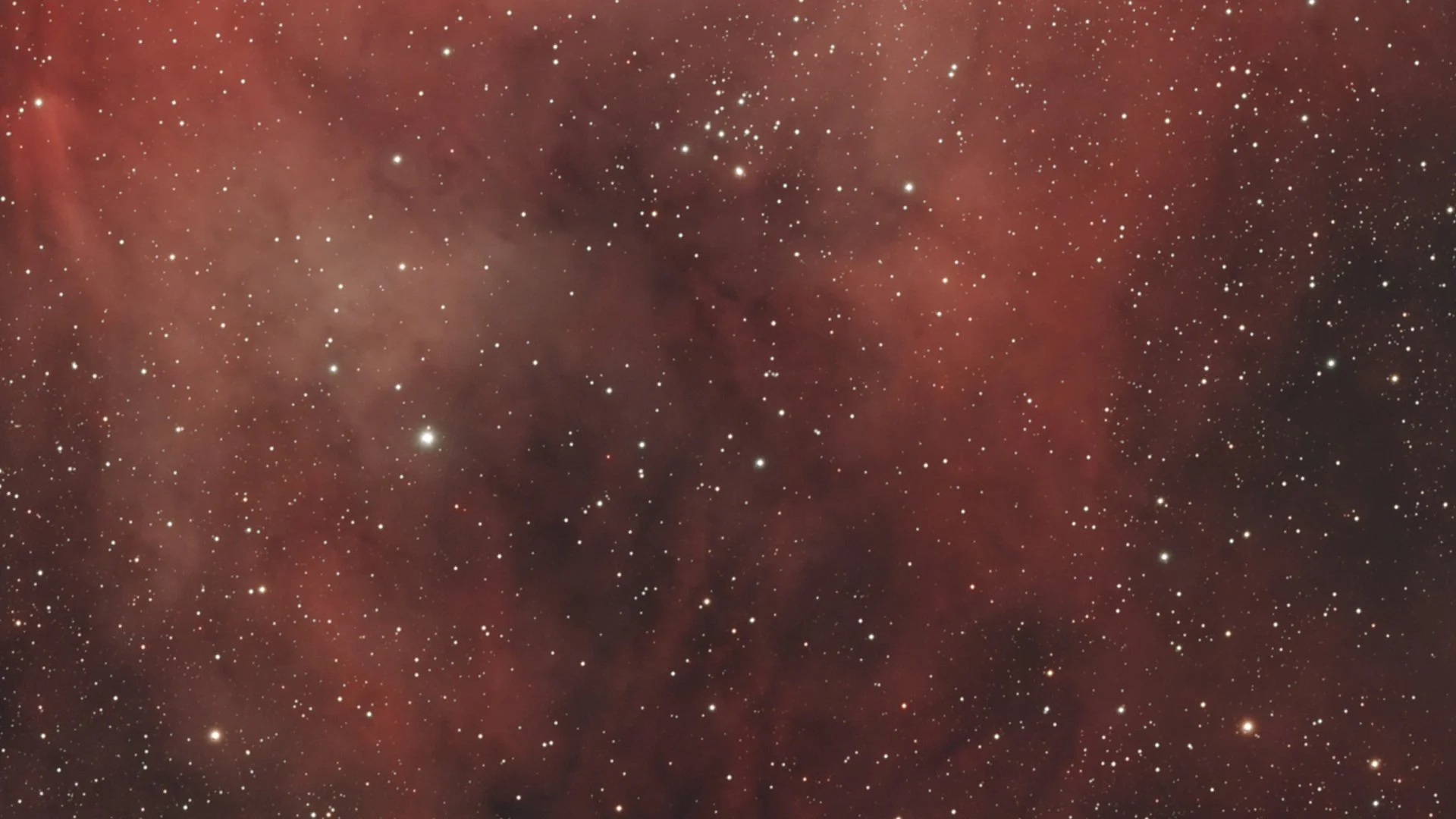
SEAGULL NEBULA
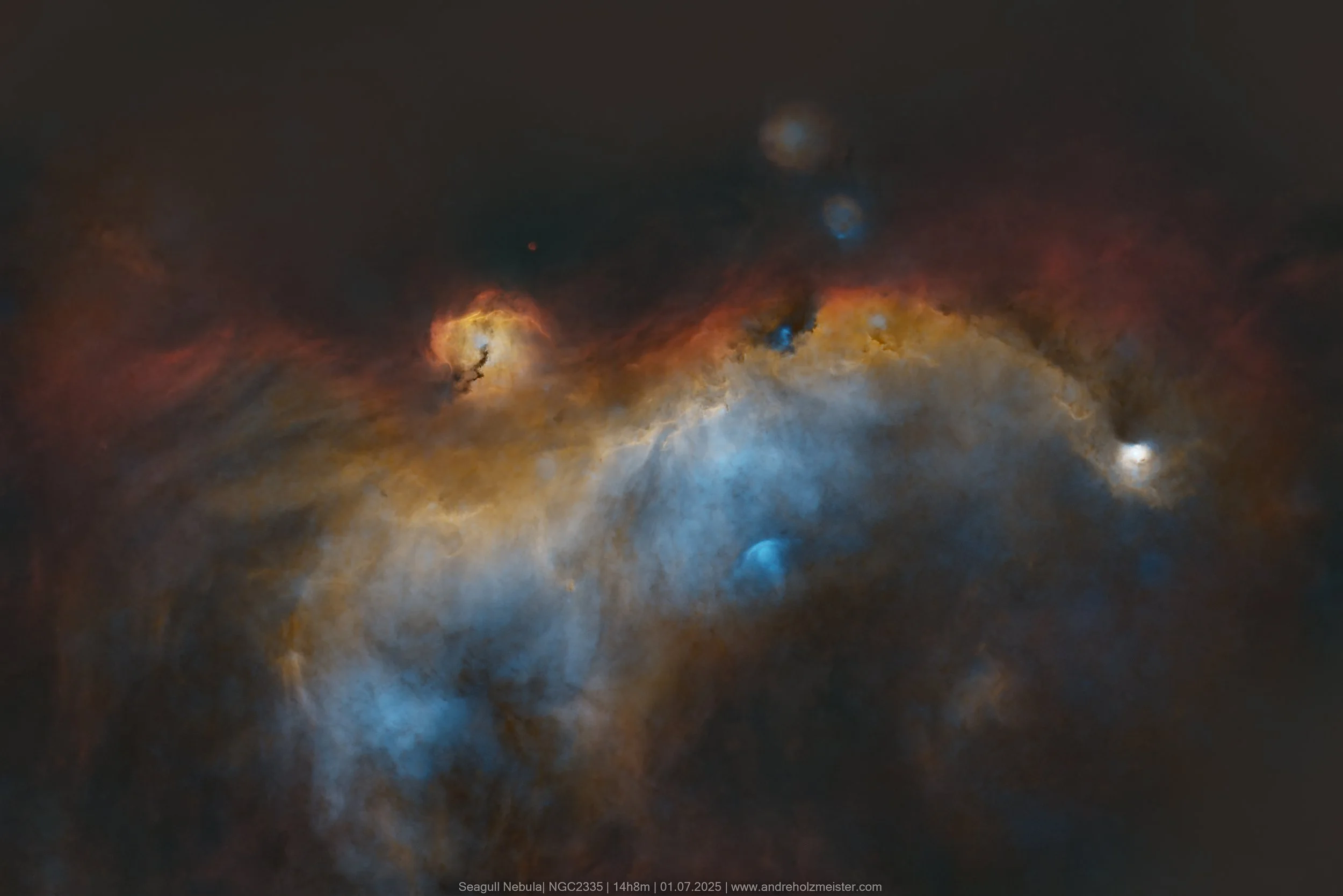
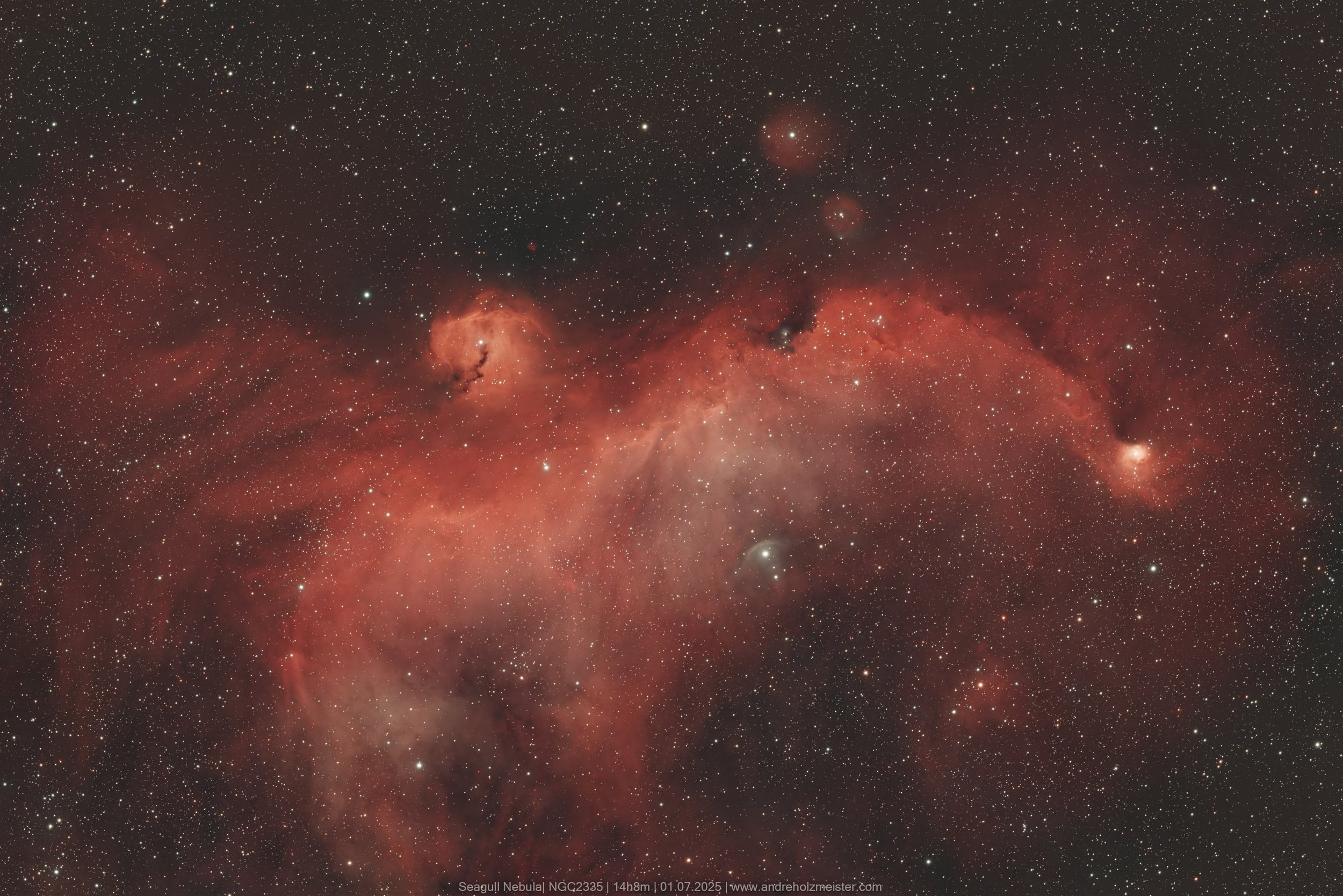
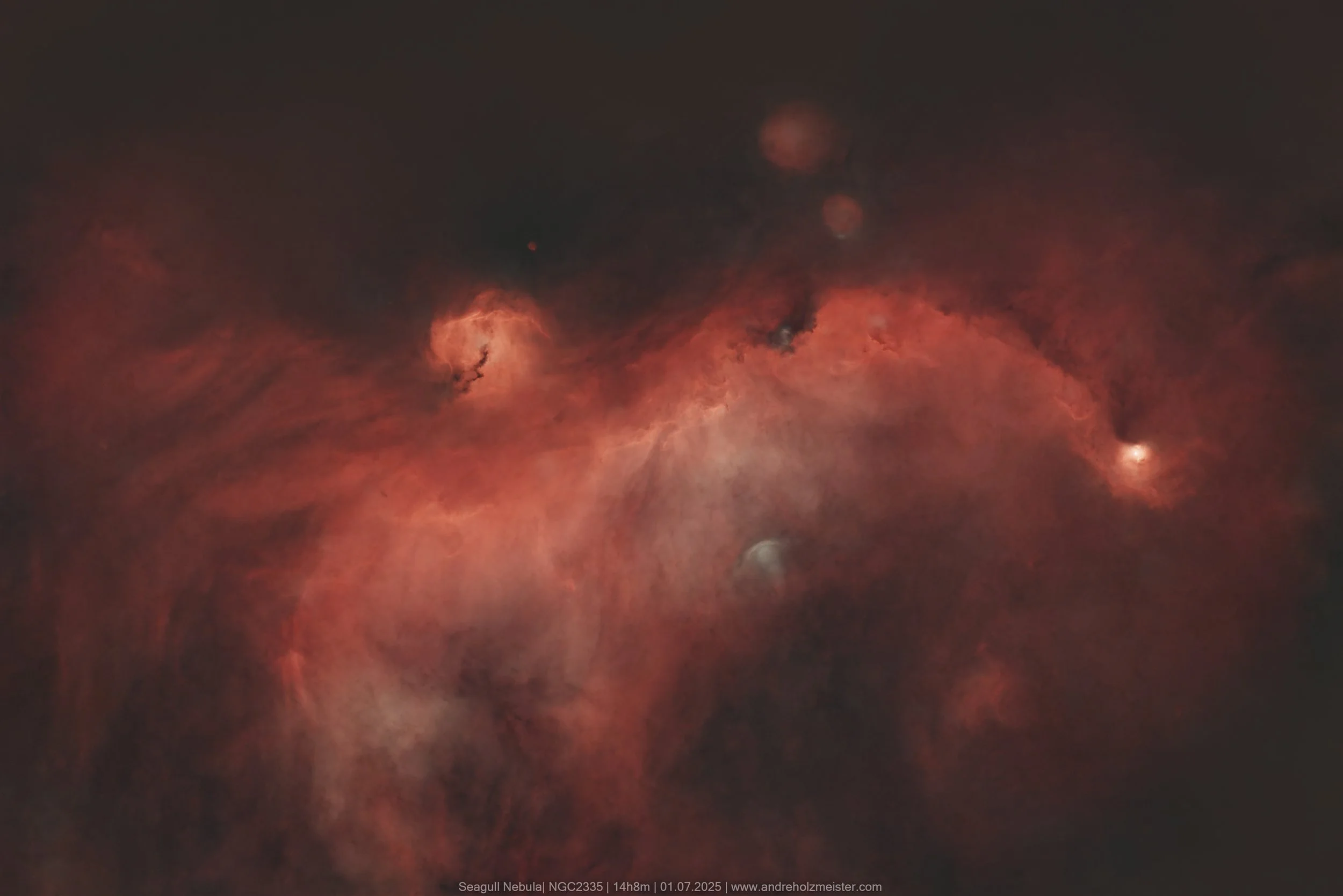
The Seagull Nebula is one of those regions where scale reveals itself slowly. Known scientifically as IC 2177, it stretches across a vast area of sky along the border between the constellations Monoceros and Canis Major, about 3,700 light-years from Earth. What looks like a single object in photographs is actually a long chain of emission nebulae and dark dust clouds, illuminated by young, massive stars embedded within the gas. Its light is dominated by glowing hydrogen, tracing where star formation is actively reshaping the interstellar medium.
The name Seagull comes purely from perspective. When viewed in wide-field images, the nebula’s shape suggests a bird in flight—wings outstretched against the darkness of space. There is nothing avian about the physics behind it, of course, but the resemblance reminds us how naturally we search for familiar forms in structures shaped by gravity and radiation alone. In reality, this region is a dynamic environment, where stellar winds and ultraviolet light carve cavities and filaments over millions of years.
What makes the Seagull Nebula especially compelling is its openness. Unlike compact nebulae with clear boundaries, IC 2177 feels like a gesture rather than a monument—an extended sweep of gas that blends gradually into the surrounding Milky Way.
14h8m total integration - 178 x 300s
Sharpstar 61 EDPH II + 0.7 reducer @f4.5
ASI294MC PRO dedicated astrocamera
AM5 Mount
SVBONY 7nm dual band filter
SVBONY 30mm f4 Guide Scope
ASI120MM mini guide camera with red filter
ASIAir mini
Bortle 4-5
Software: DeepSkyStacker > Siril > Veralux Alchemy > Starnet > VeraLux HMS > Graxpert > Cosmic Clarity > Photoshop