DARK SHARK NEBULA
This is my first attempt at the Dark Shark Nebula, this shot was unthinkable from my old Bortle 8-9 light-polluted spot in Orlando FL. It was not even a thought for my new Bortle 4-5 in Texas, but I went on a New Moon Astrophotography trip with my family in a Bortle 3 Dark Sky spot in Hill Country and was able to snatch this incredible image of the Dark Shark reflection and dark nebula.
To me, this is probably the epitome of the pareidolia effect—the tendency we humans have to see familiar forms in abstract shapes, like a face on a pipe with two screws on top. Pixar made brilliant use of this effect in The Blue Umbrella short film; if you’ve never seen it, it’s worth looking up (it’s available on Disney+). This nebula, along with the Witch Head, sits at the very top of that scale for me—everything else falls a step below in terms of resemblance.
The Dark Shark Nebula in Cepheus is one of those objects that almost feels like a private discovery, even though it’s been cataloged for decades. Unlike glowing nebulae, it doesn’t announce itself with light at all. Known in astronomical catalogs as LDN 1235 (with parts also associated with LDN 1251), it is a dark nebula—a dense cloud of cold interstellar dust that reveals its presence only by blocking the starlight behind it. Its shark-like silhouette emerges not from emission or reflection, but from absence.
Located in the constellation Cepheus, roughly 2,000 to 2,500 light-years away, this cloud sits against a rich Milky Way background, where contrast does the storytelling. The dust grains within it absorb and scatter visible light, carving sharp, organic shapes into the star field. There is no single illuminating star here, no bright core demanding attention. The Dark Shark exists as a contour, a boundary, a reminder that structure in the universe is often defined as much by what is hidden as by what is revealed.
For astronomers, dark nebulae like this were historically crucial. They helped overturn the early assumption that starless patches of sky were simply empty. Instead, these regions showed that space contains dense material capable of forming stars and planets, and that dust plays a major role in shaping what we can and cannot see. In astrophotography, capturing the Dark Shark is less about pulling signal out of noise and more about preserving subtle gradients and contrast—respecting the darkness rather than fighting it.
There’s something philosophically fitting about a nebula defined by shadow. In Cepheus, a constellation named after a mythological king, the Dark Shark offers no spectacle, only quiet presence. It reminds us that the cosmos isn’t composed solely of luminous events and dramatic births, but also of slow, cold accumulations—places where the future is stored in silence, waiting for gravity and time to do their work.
3h 16 min total integration time | 38x300s
Rokinon 135mm f/2 @f/2
ASI294MC PRO dedicated astrocamera
AM5 Mount
SVBONY UV/IR cut filter
SVBONY 30mm f4 Guide Scope
ASI120MM mini guide camera with red filter
ASIAir mini
Bortle 3
Software: Siril > Starnet > Graxpert BG and Denoise > VeraLux HMS > CosmicClarity Sharpening and Super Resolution > Photoshop
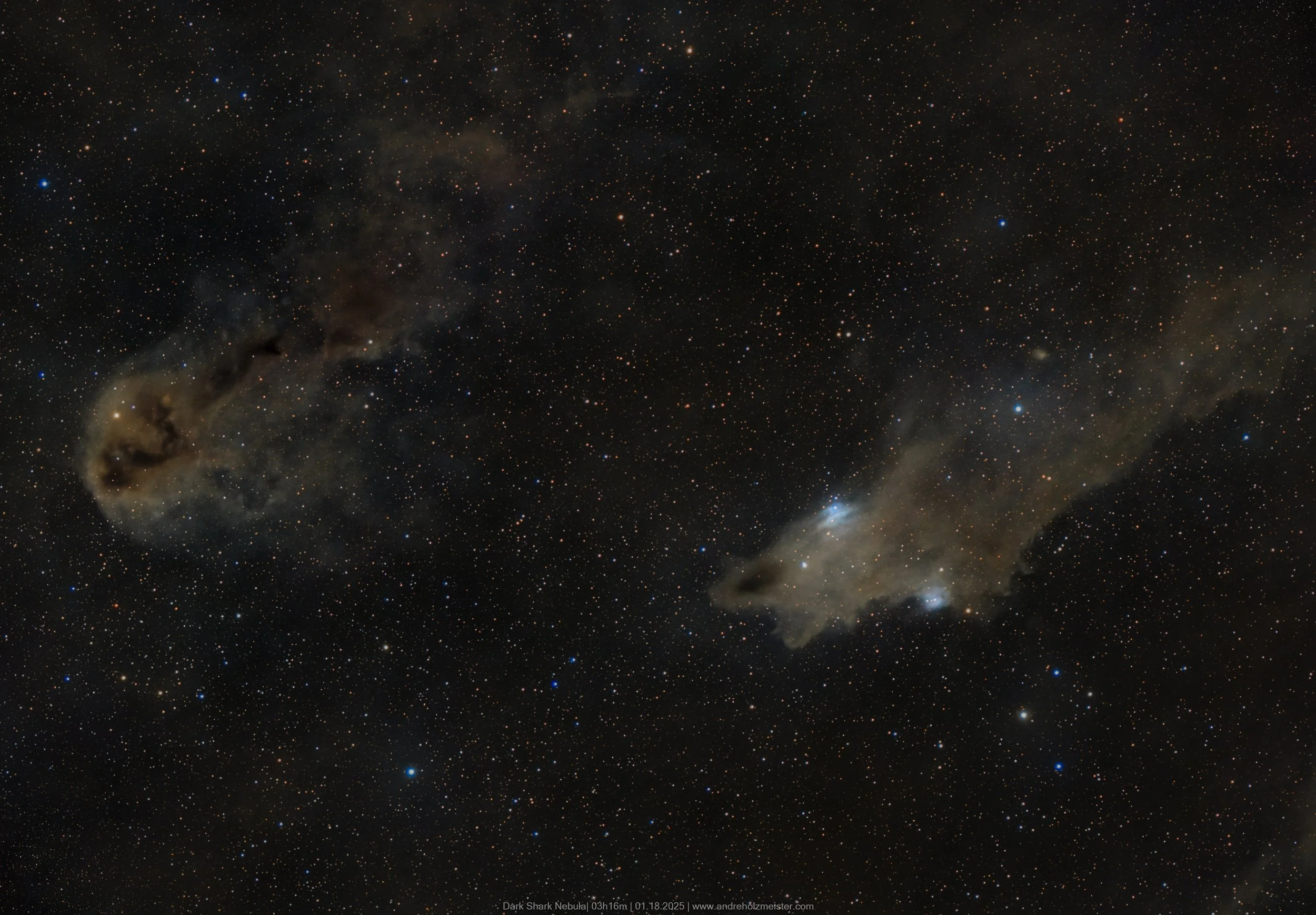
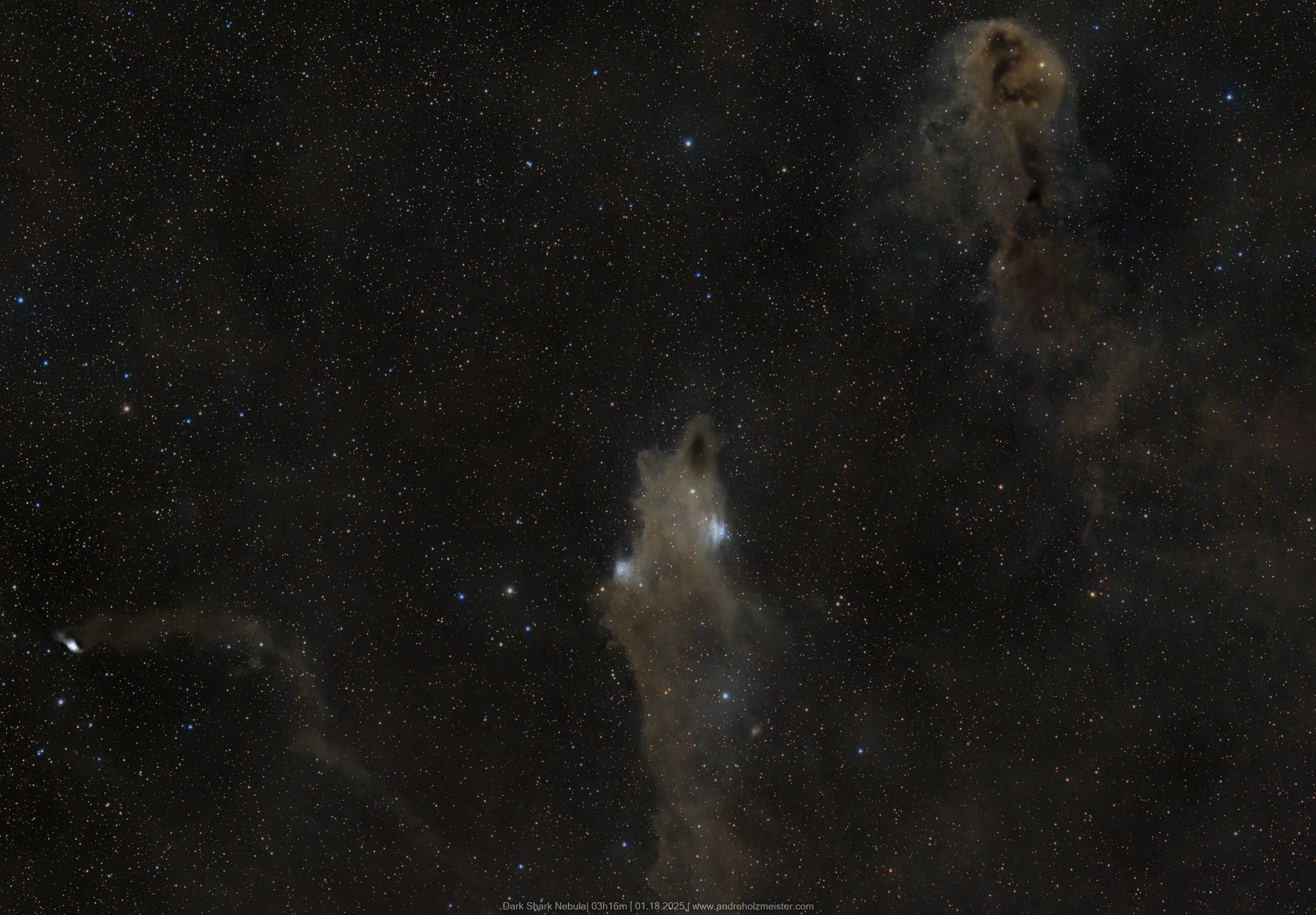
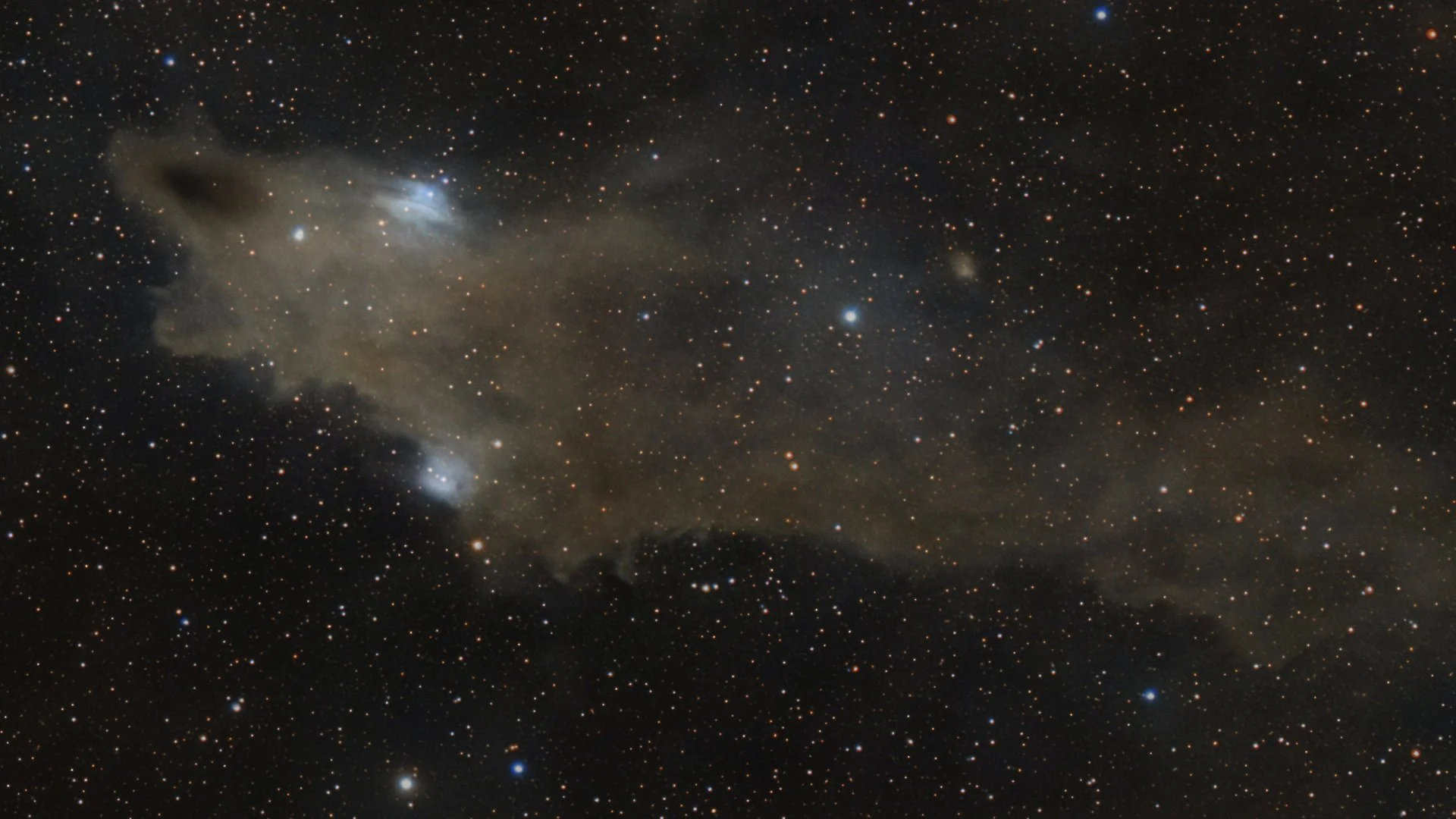
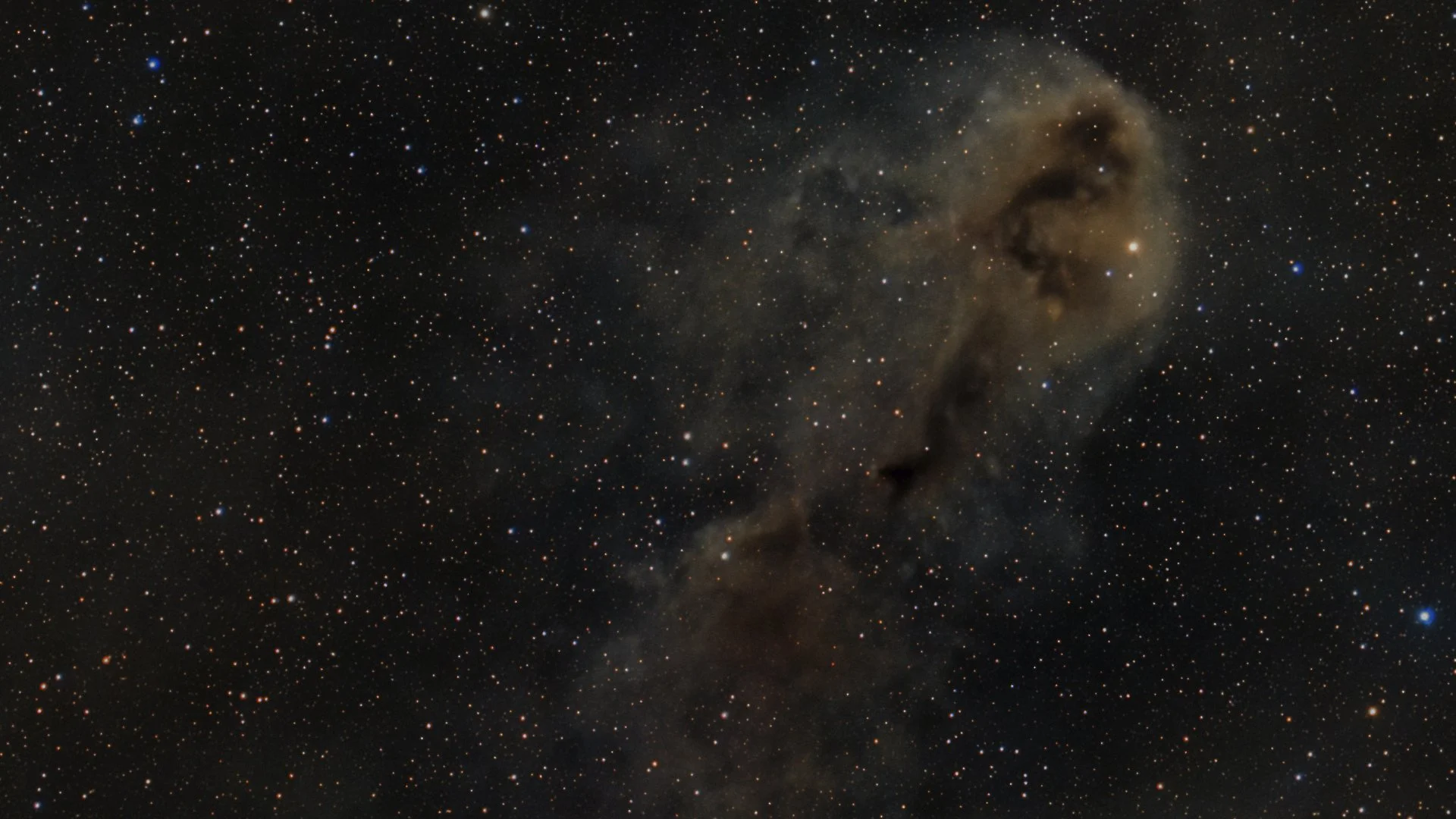
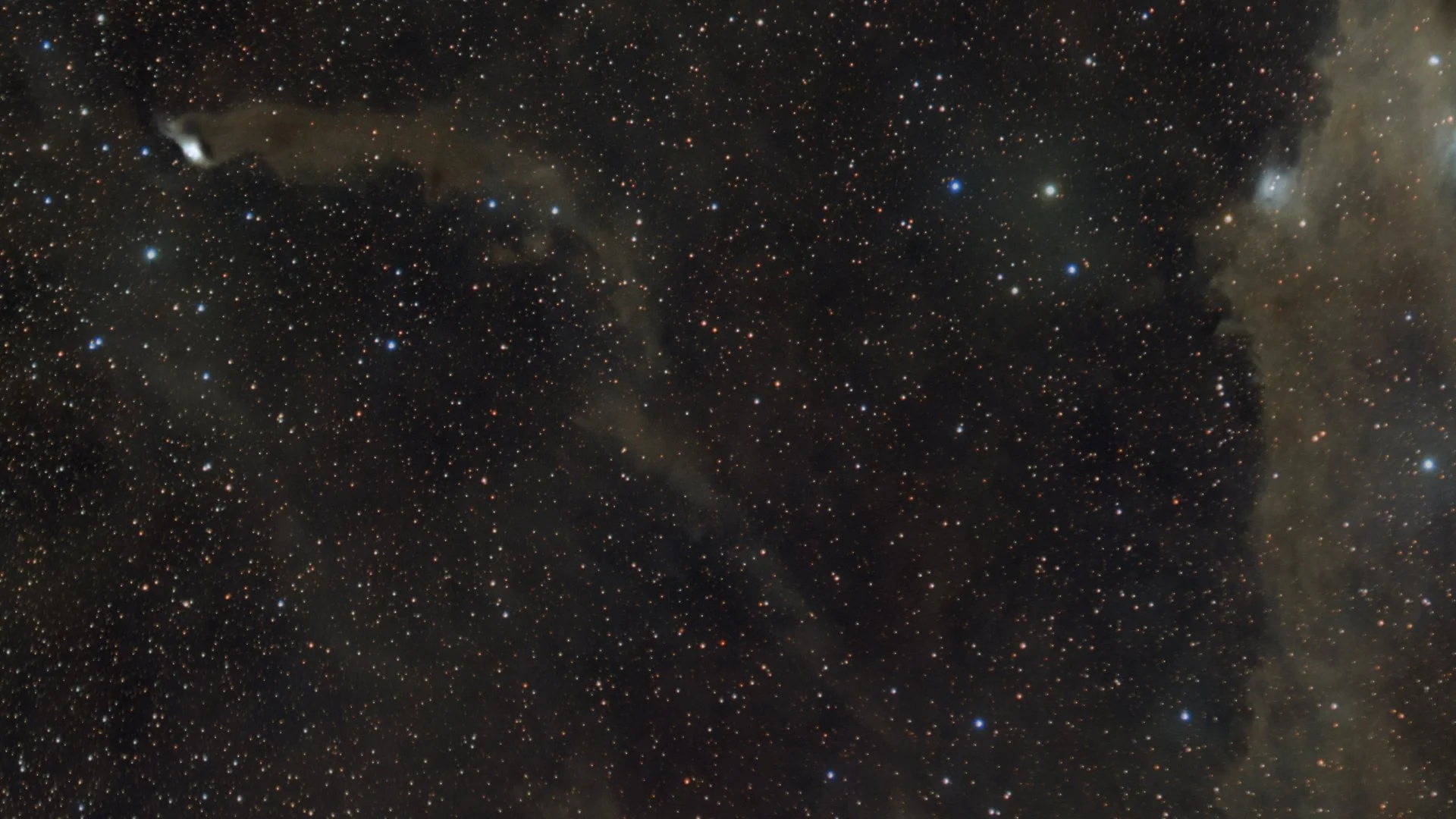
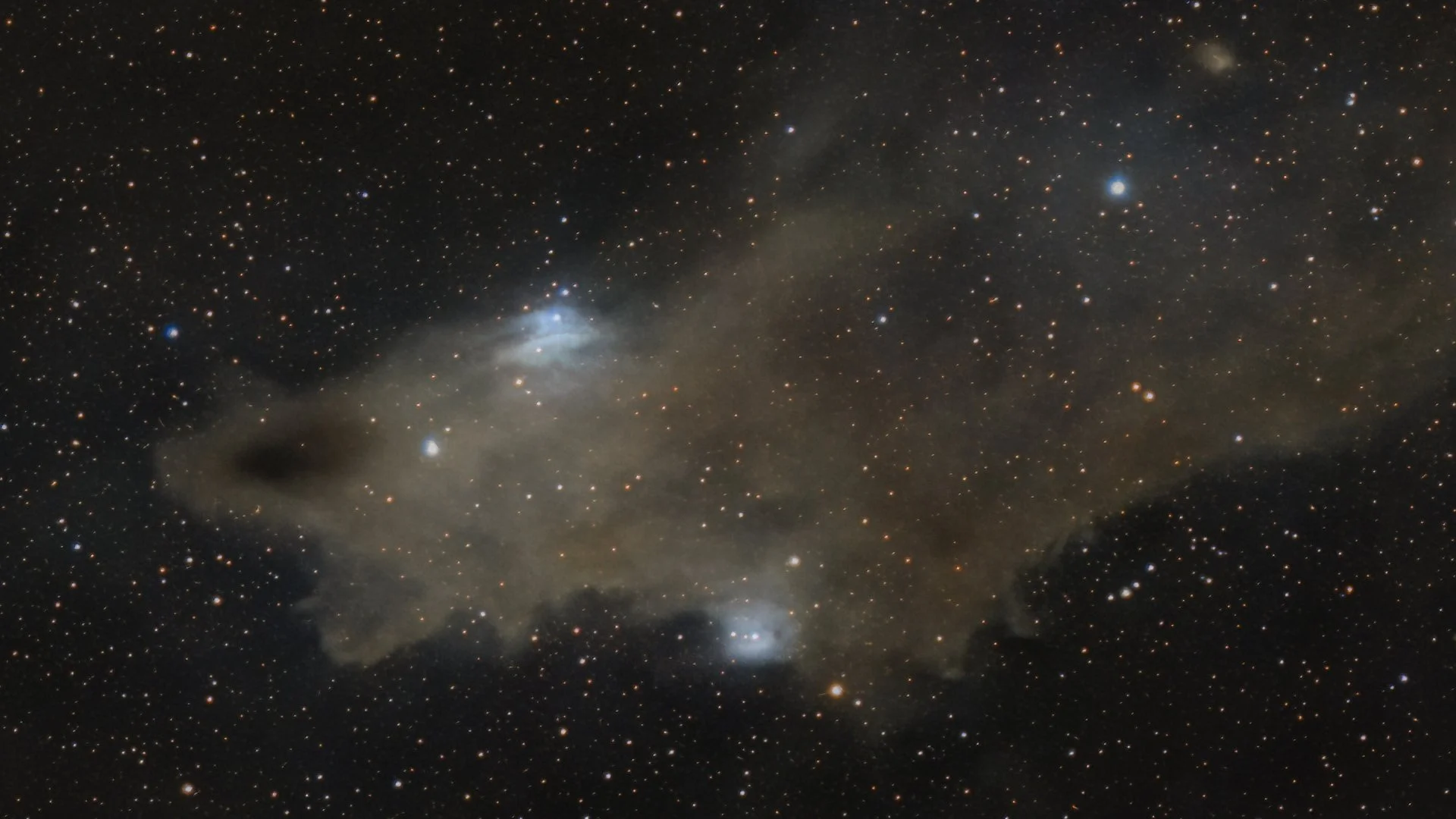
1:1 pixel crops, click to enlarge