ORION | M42
The Orion Nebula is a reminder that the universe is still busy making things. What you see in that soft violet glow is a cradle of stars, a place where gravity gathers ancient dust and gas and shapes them into newborn suns. The light from this nebula began its journey more than a thousand years ago—long before any telescope, long before any photograph—yet it arrives tonight with calm clarity, carrying news of a place where creation never really stops. In a way, photographing the Orion Nebula is like catching the universe in the act of breathing: you’re witnessing the moment where chaos becomes structure, where darkness gives way to luminous heat, where the raw materials of future worlds ignite. And the most humbling part is knowing that everything we are made of once passed through a place just like this—so when you capture the Orion Nebula, you’re not just pointing your camera outward, but also quietly tracing the origin story of ourselves.
Orion is the closest Star Nursery to our Solar System, about 1,344 light-years away. That’s why it’s one of the few nebulae that can be seen with the naked eye, glowing as a soft patch of mist in Orion’s sword. Its brightness comes from a cluster of very young, very hot stars (the Trapezium) that flood the surrounding gas with ultraviolet light, making the entire region shine.
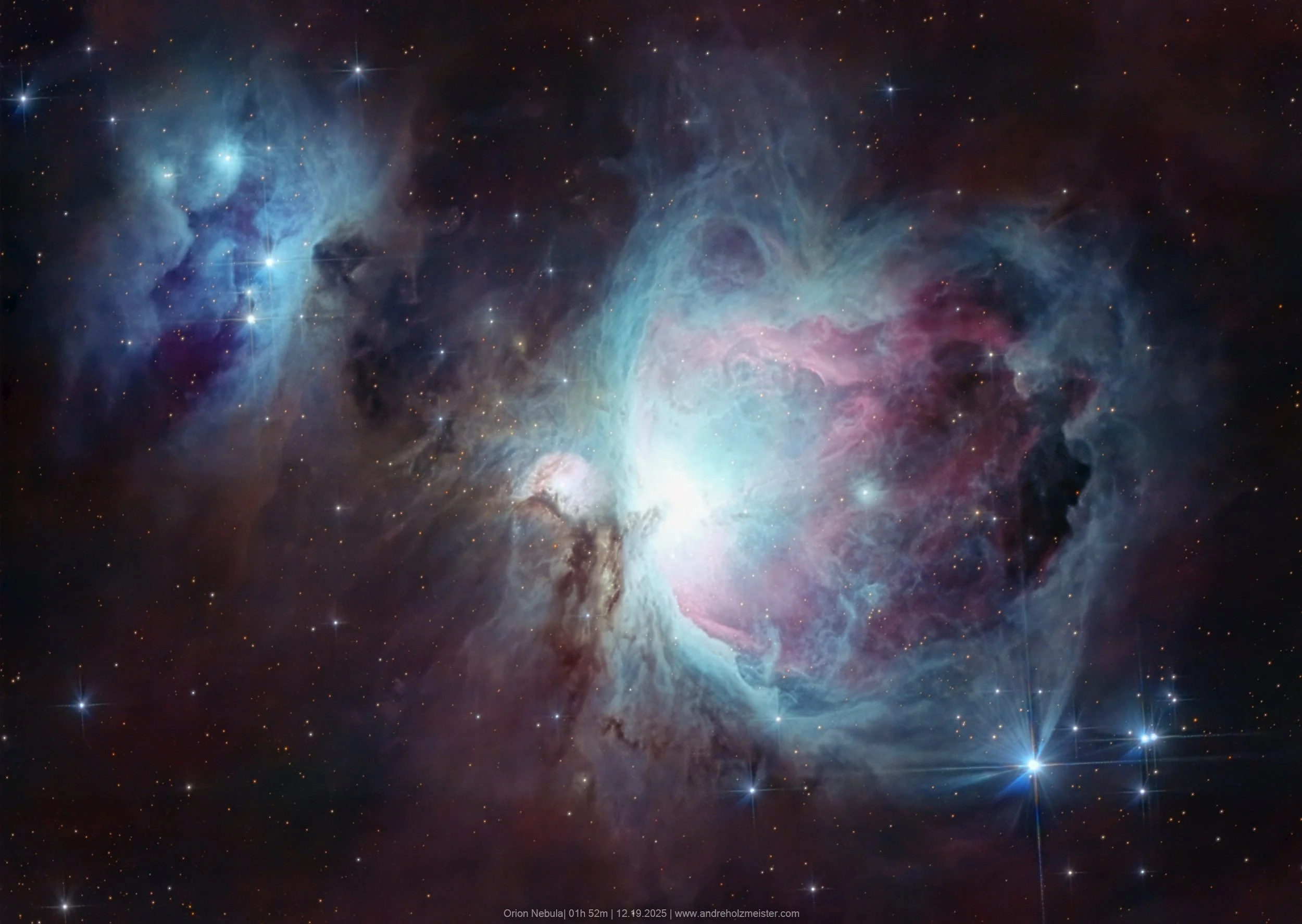
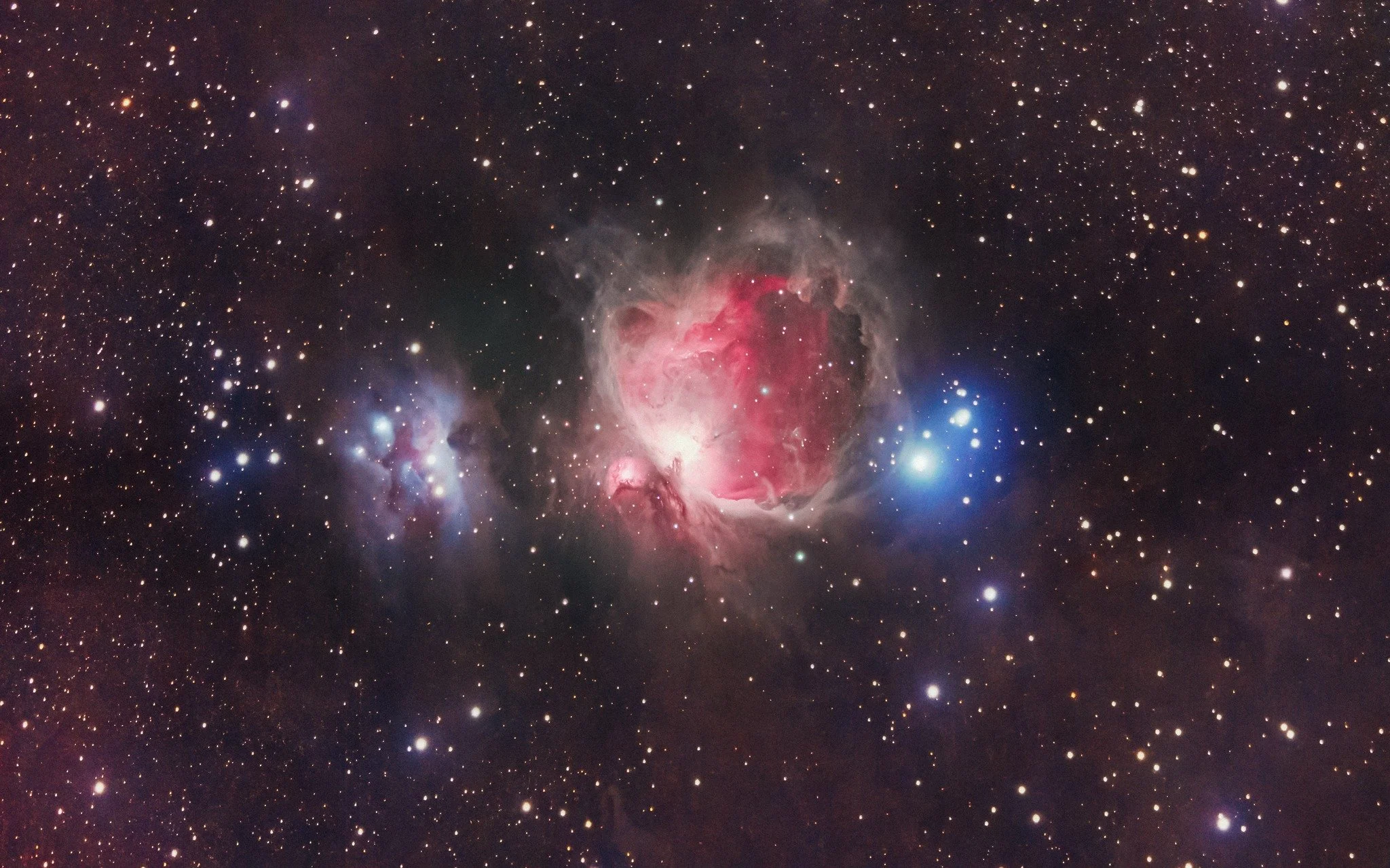
I wasn't planning to process my Orion Nebula project just yet; I wanted to capture at least another night of RGB data. I didn't calculate it, but I estimate I have 2/3 of RGB UV/IR cut filter and 1/3 of dual narrowband data. This was more than enough to get way more data than my last attempt.
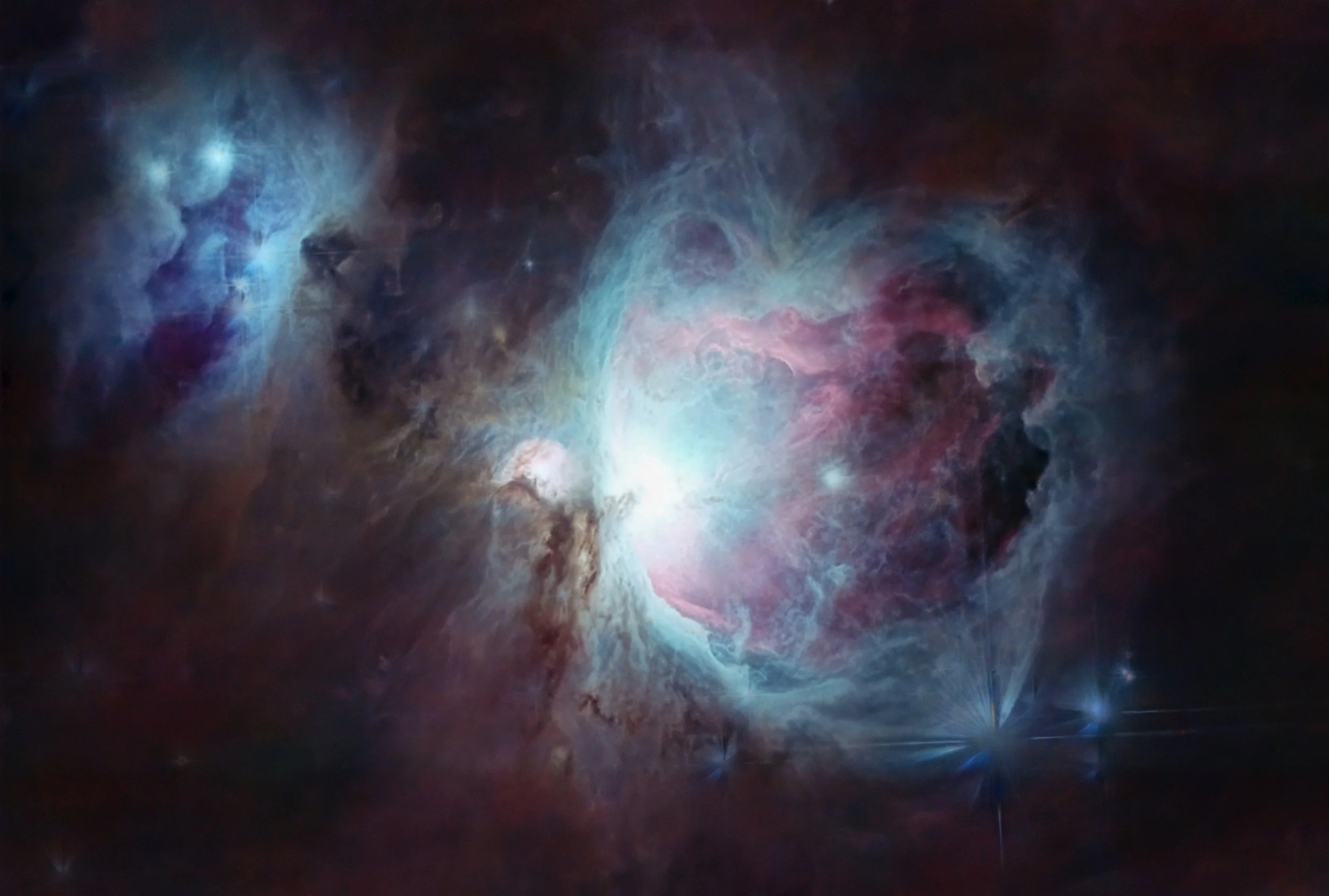
I'm sharing my new attempt, clearly way more data, and my previous attempt just for the sake of evolution comparison. Older one was taken in Bortle 8-9 with the Optolong L-pro filter in January 31st 2023 and was my first light with a cooled camera, same camera and FOV as this one by the way, just different cropping because the edges were very noisy in the old one.
20h 04 min total integration time
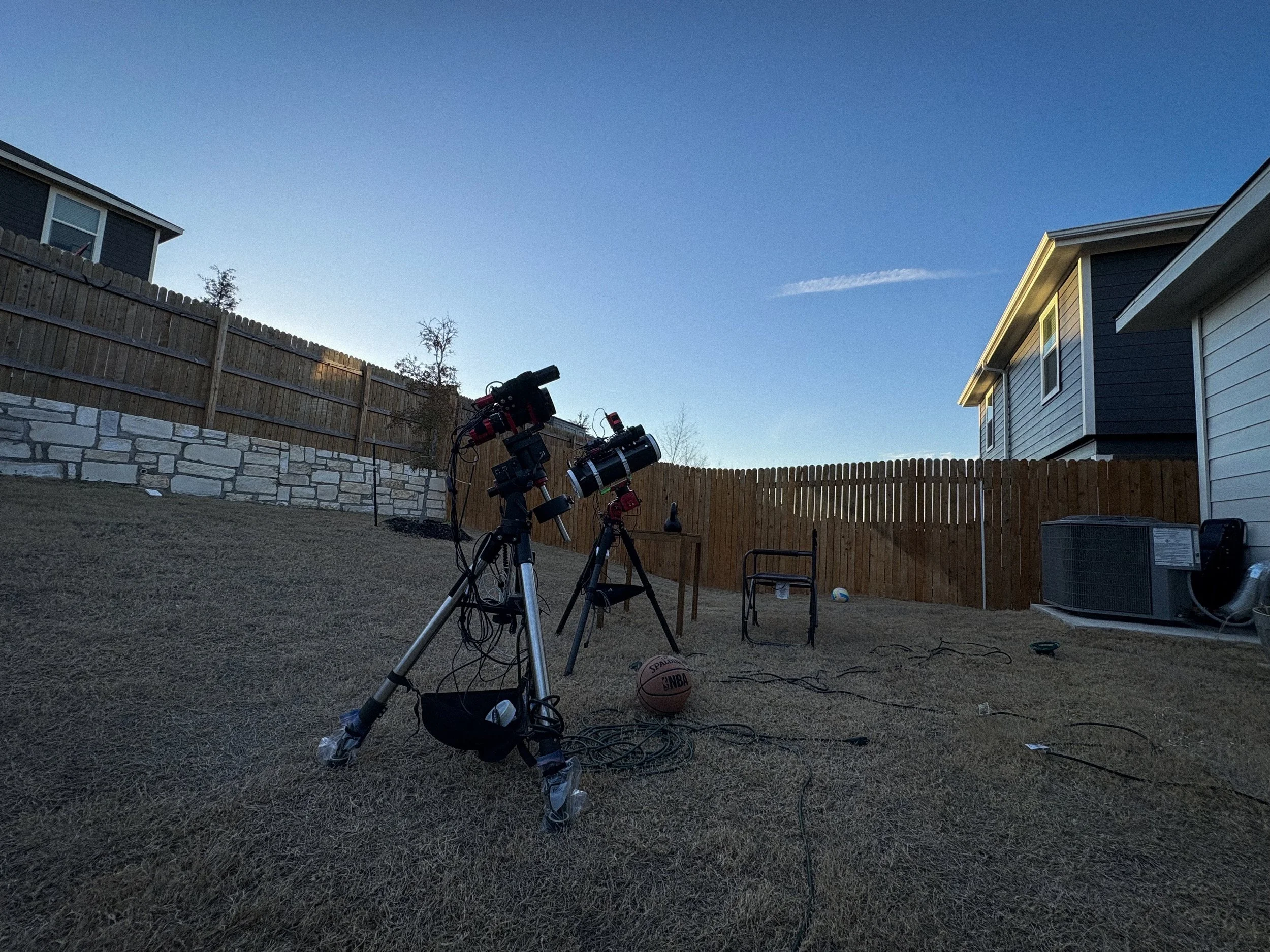
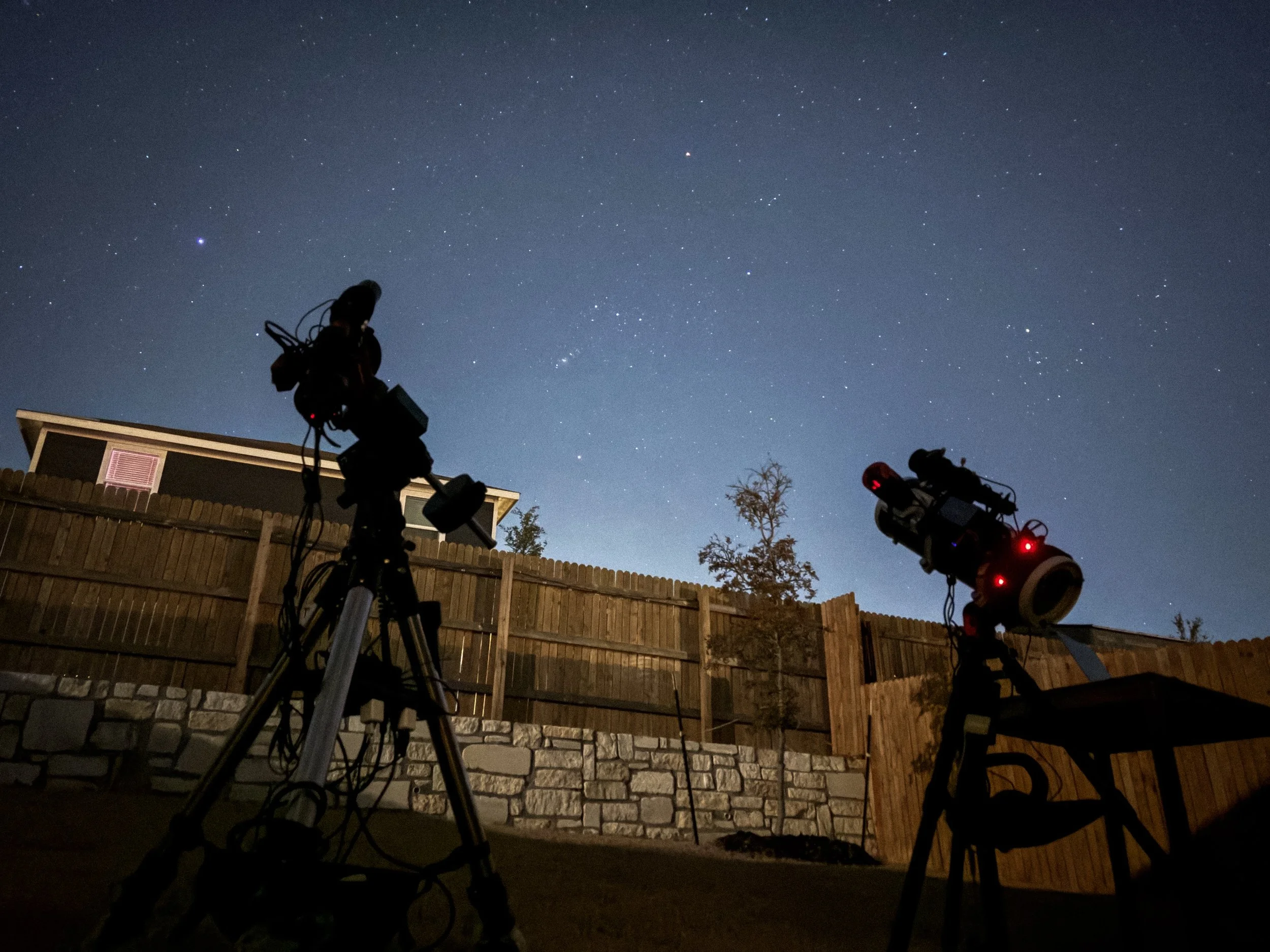
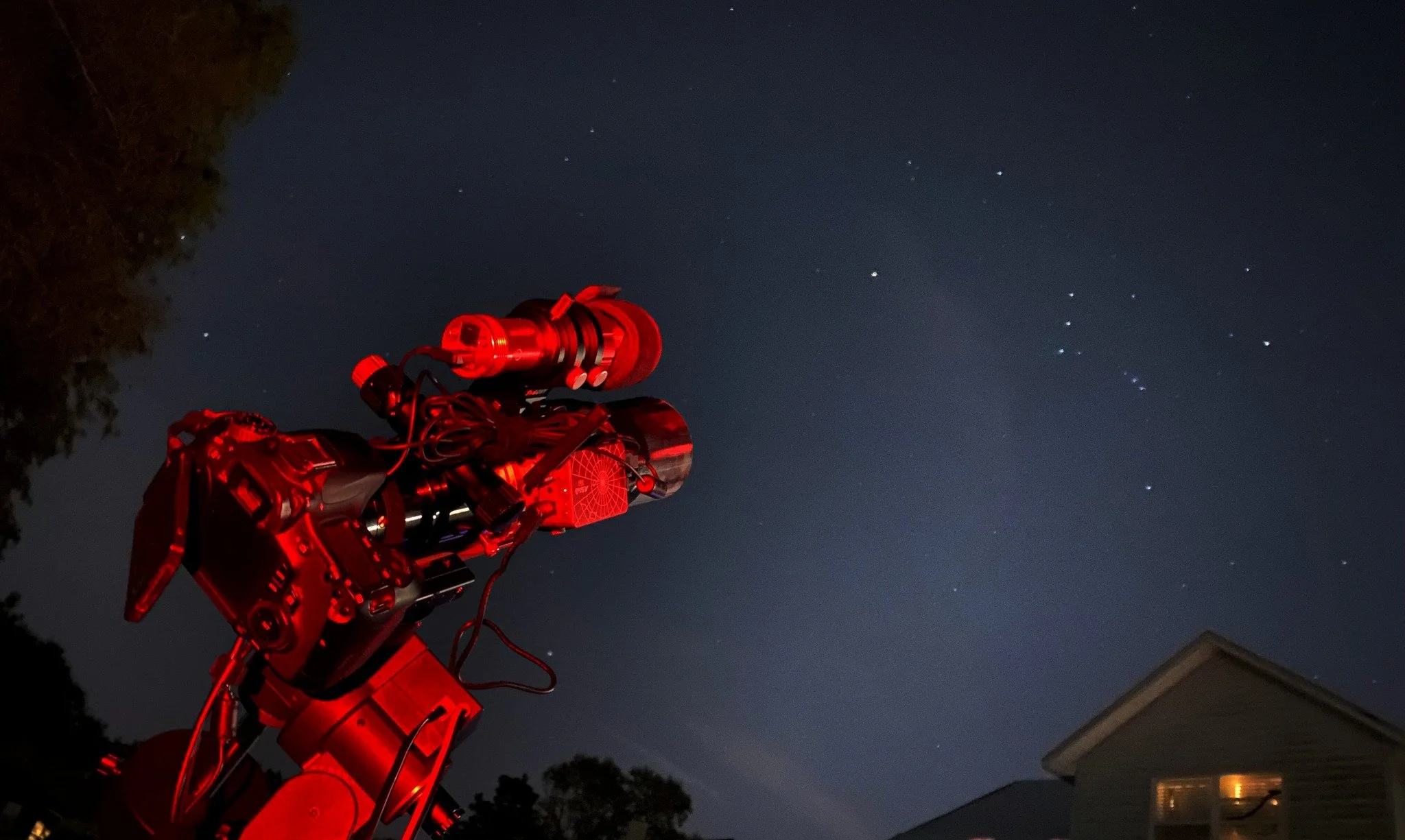
Sharpstar 61 EDPH II + 0.7 reducer @f4.5
ASI183MC PRO dedicated astrocamera
AM5 Mount
SVBONY UV/IR cut filter
SVBONY 7nm dual band filter
SVBONY 30mm f4 Guide Scope
ASI120MM mini guide camera with red filter
ASIAir mini
Bortle 4-5
Software: DeepSkyStacker > Siril > Veralux > Starnet > Graxpert > Cosmic Clarity > Photoshop > Topaz Denoiser
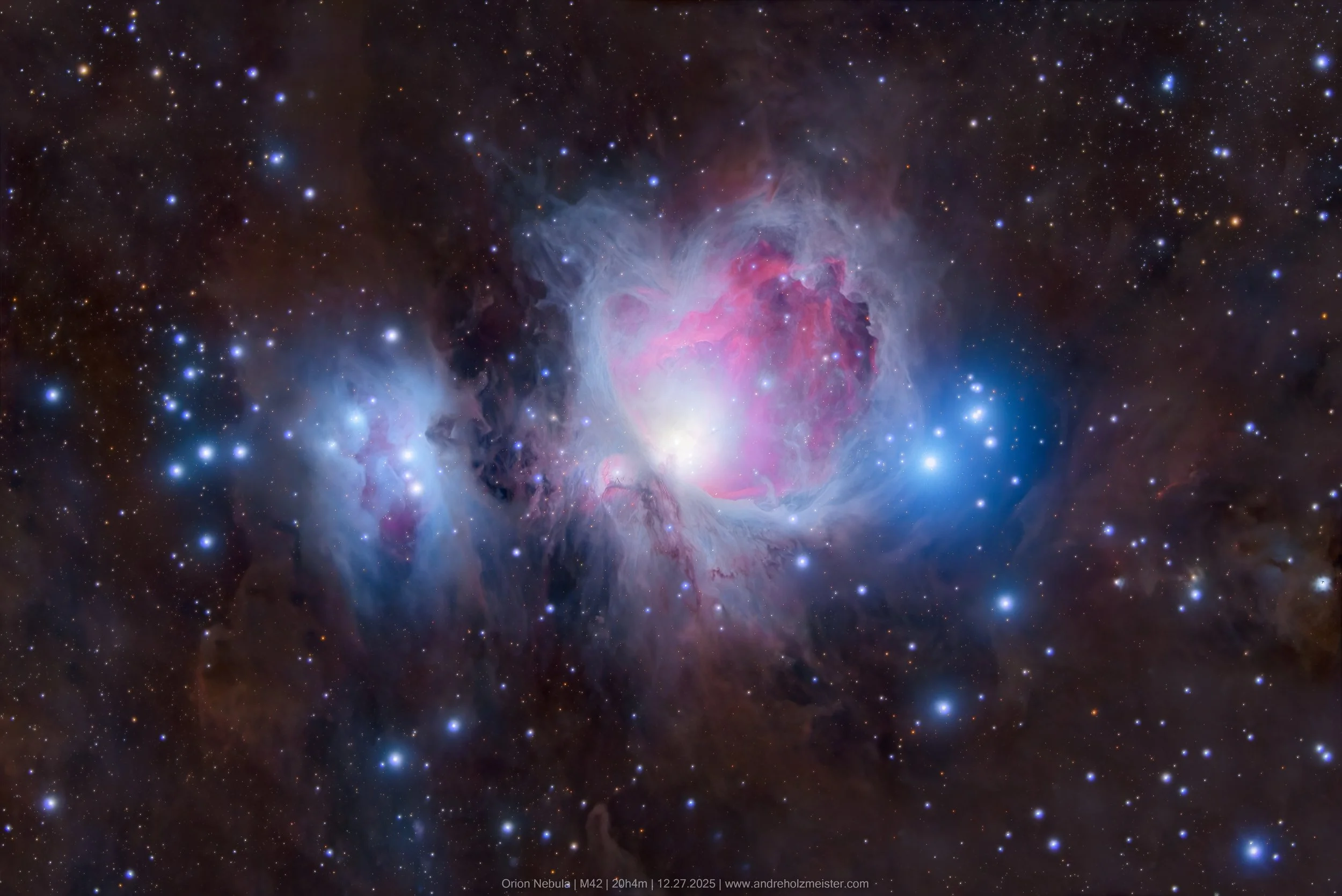
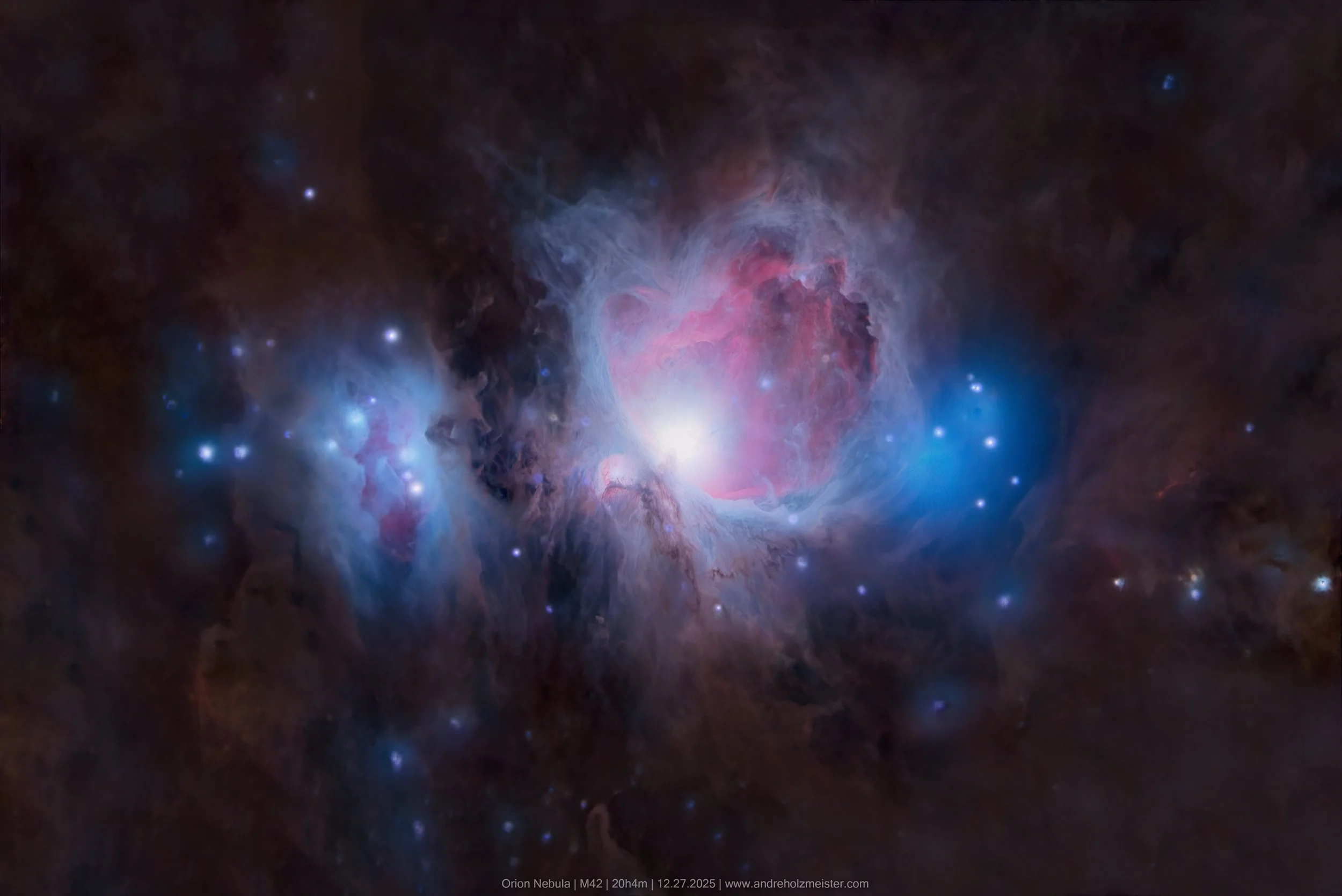
During processing is common to use a Starless tool like Starnet++ that separates and create a starmask image so that we can add the stars back in the end of the processing, allowing use to stretch the nebula further without blowing out the stars, helping us extract all the available data in the image.
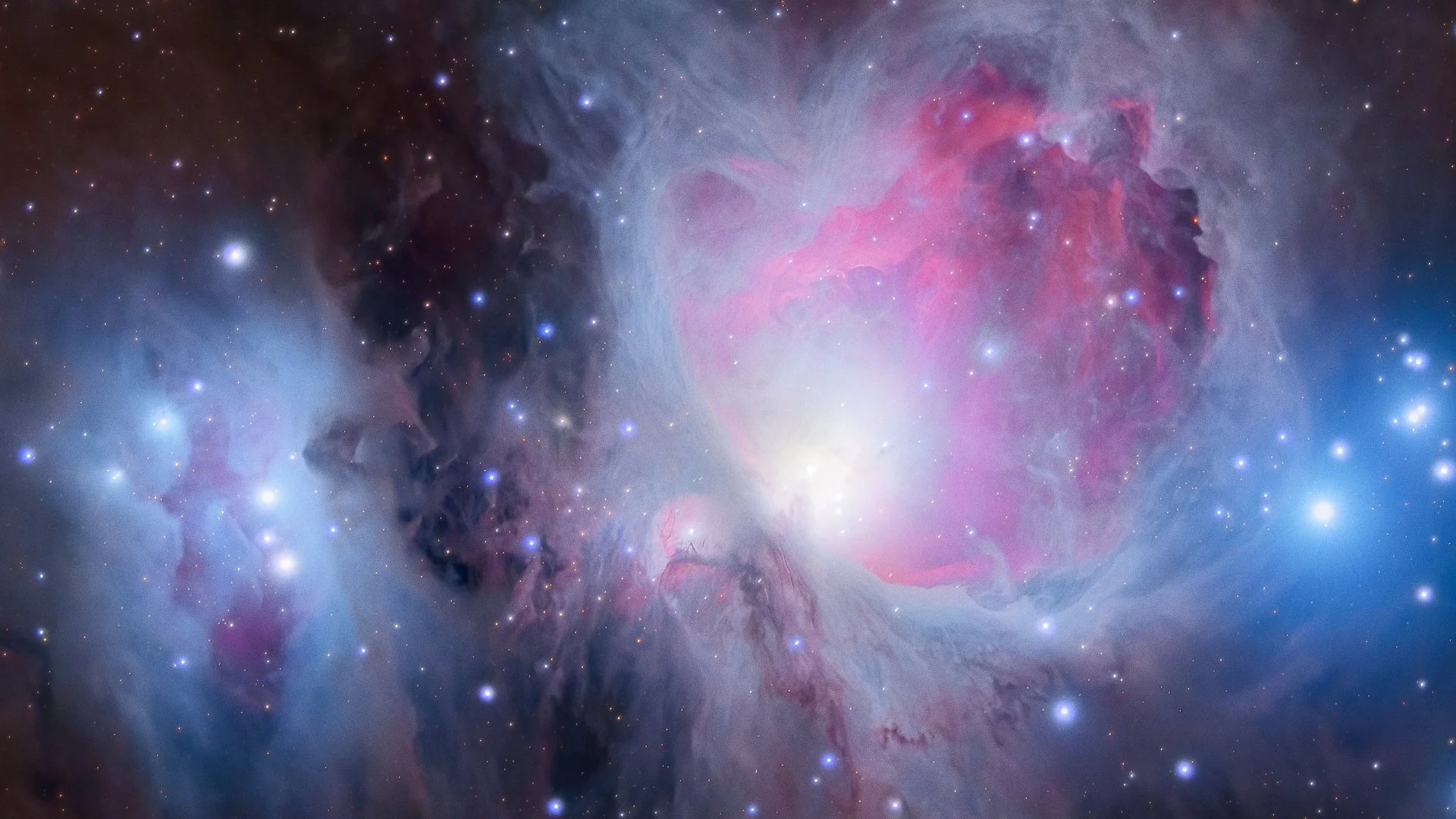
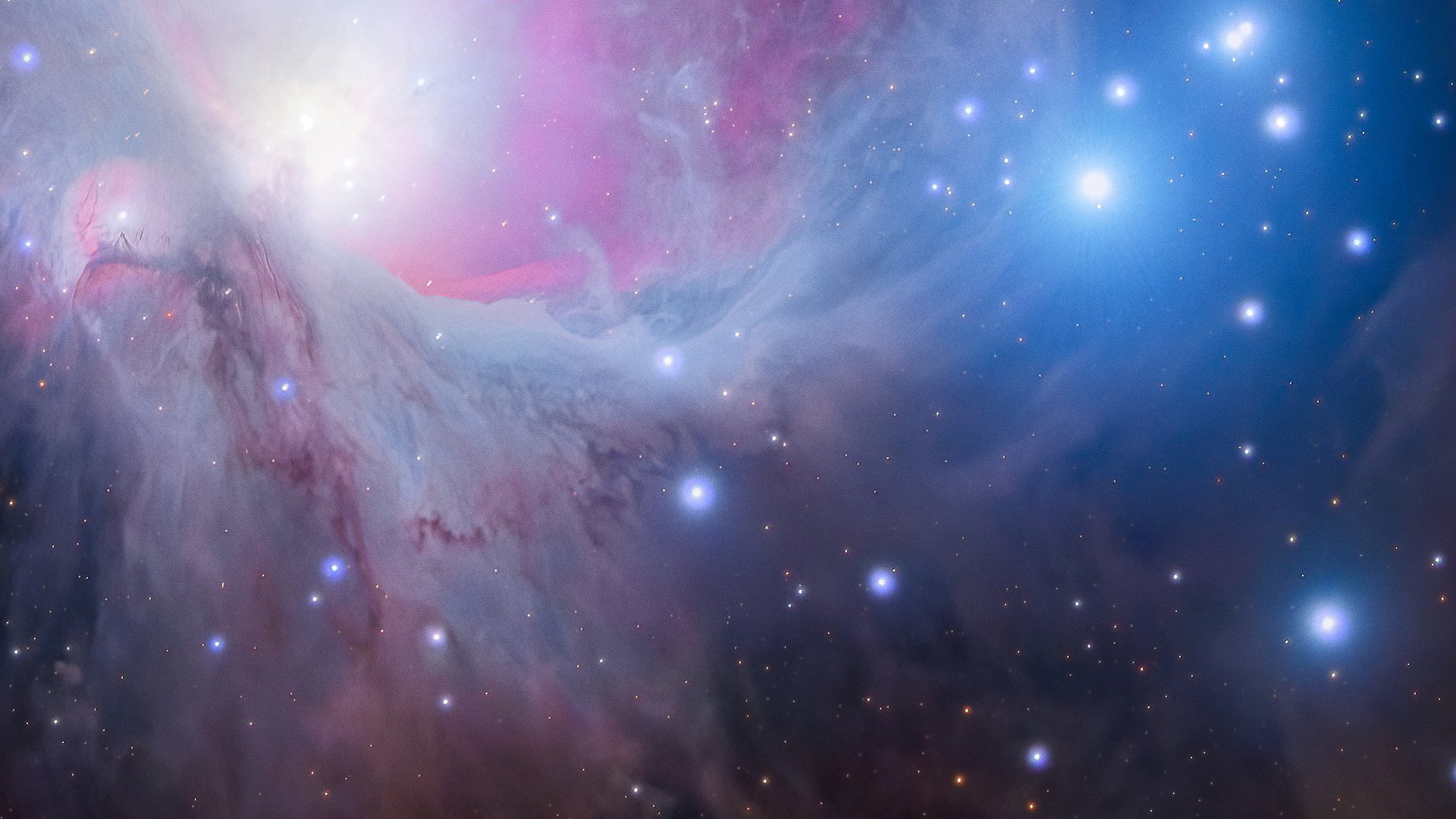
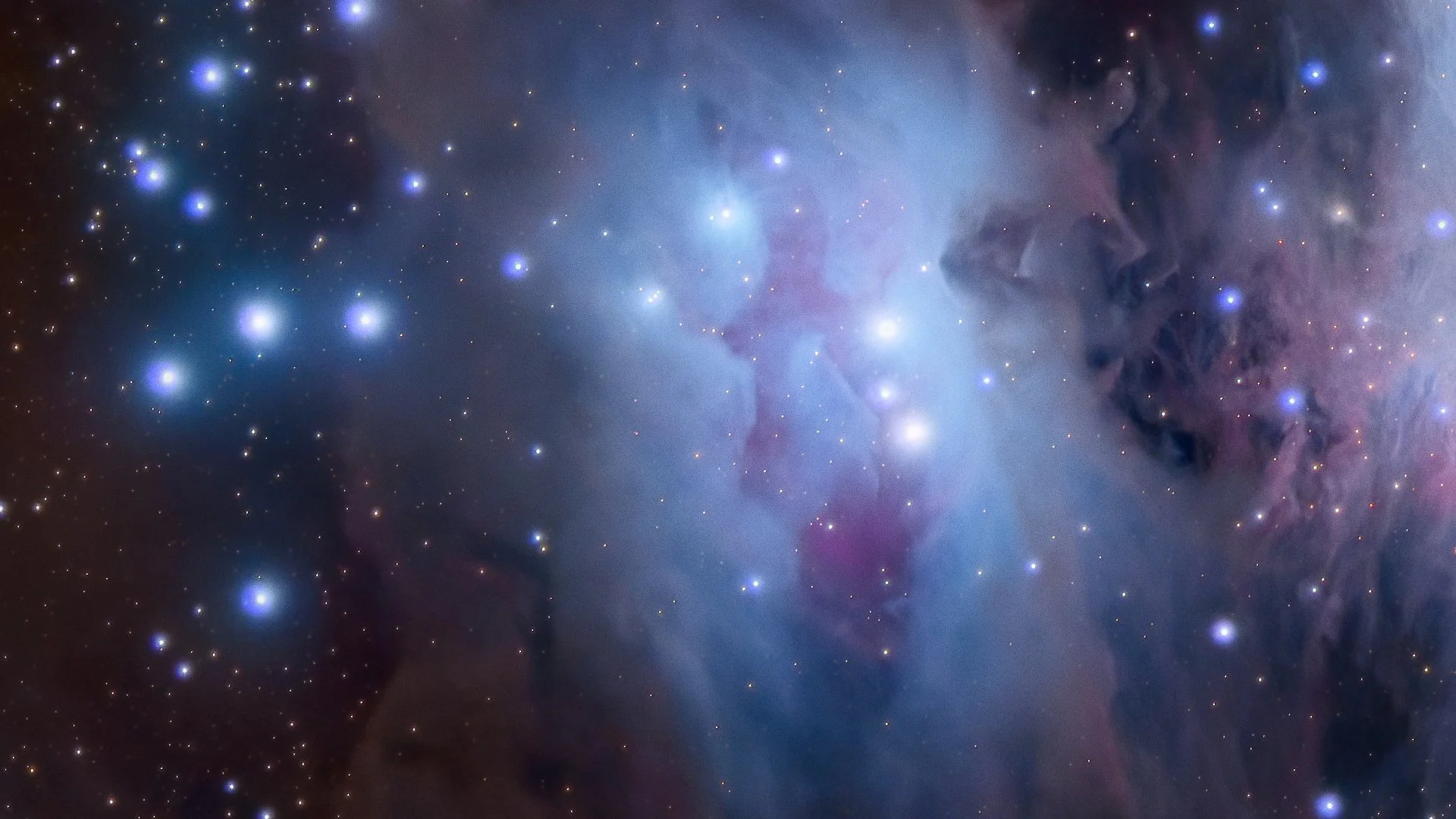
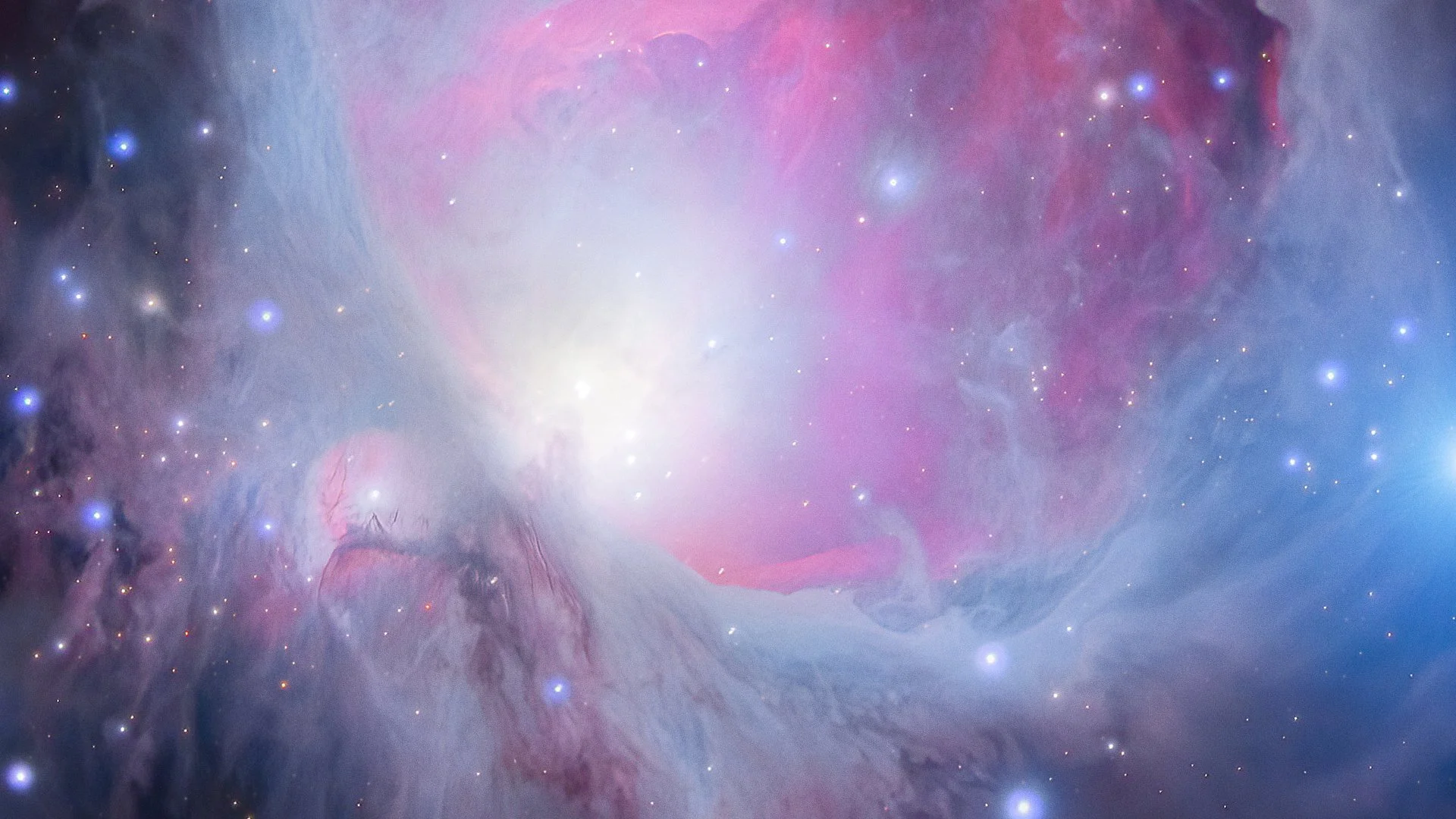
Click to enlarge to 1:1 pixel size
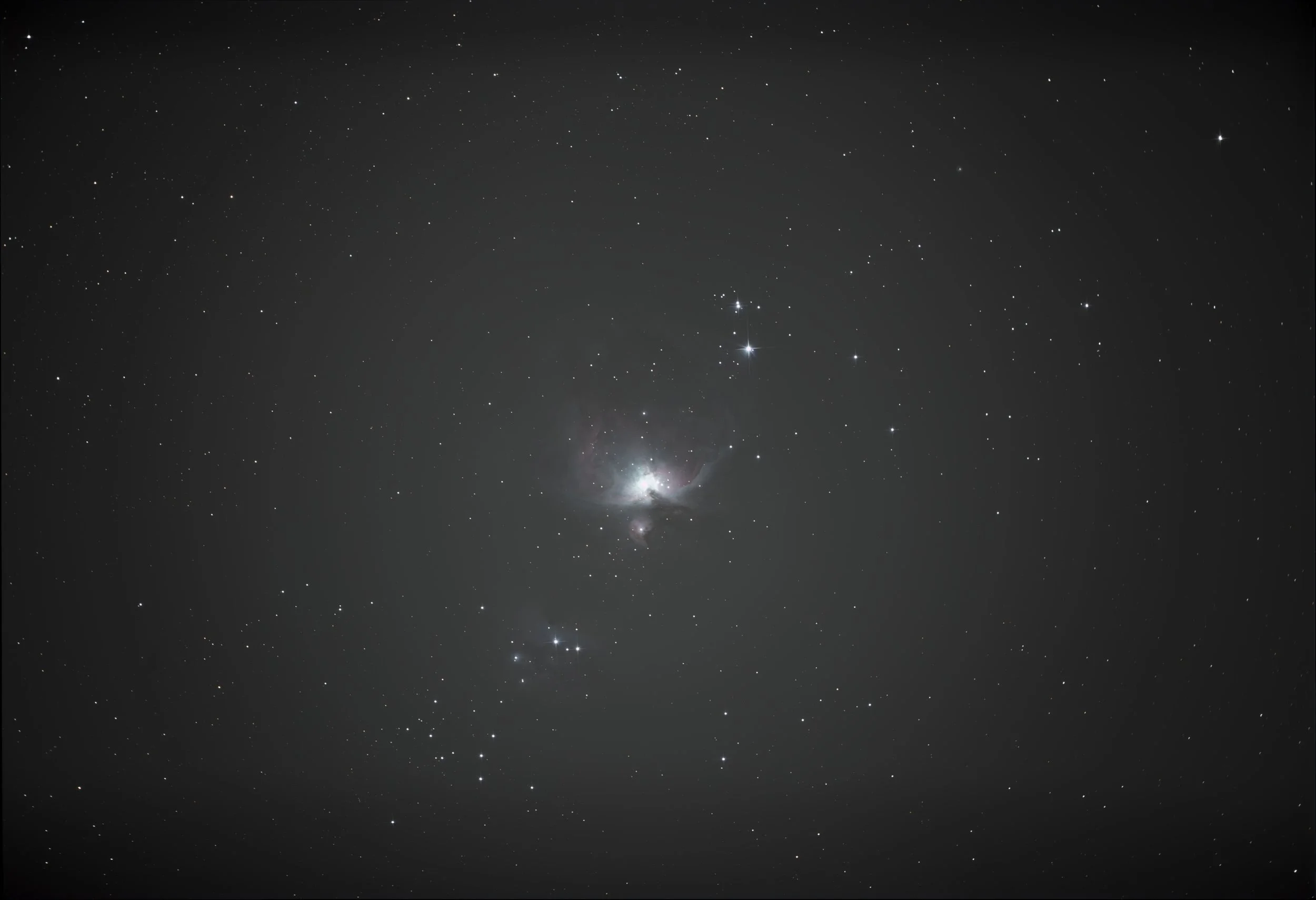
The image above was just a test that rendered fairly good results, it was the first light of a new Telescope, a SkyWatcher QUATTRO 150p Newtonian, paired with an unmodified Canon 6D Full Frame camera and even though SkyWatcher states it is APS-C maximum sensor size the Full Frame vignette was way smaller than I expected, and surprisingly, the coma corrector did a very good job even at the corners. I was just testing the scope’s collimation and tested it for just a couple of hours, and this is the result. Quite remarkable for just a little test. I heavily cropped because as it was just a test I didnt take any callibration frames, so that stack is just lights, and there was quite a good amount of light pollution gradients and artifacts, dust motes, etc.
1h52m total integration 168 x 40 seconds
SkyWatcher QUATTRO 150p with Coma corrector/reducer - 518mm f3.45
iOptron GEM28 Mount - Unguided
Canon 6D Full frame unmodified
Bortle 4-5
Software: Siril > Starnet > Graxpert > Cosmic Clarity > Photoshop
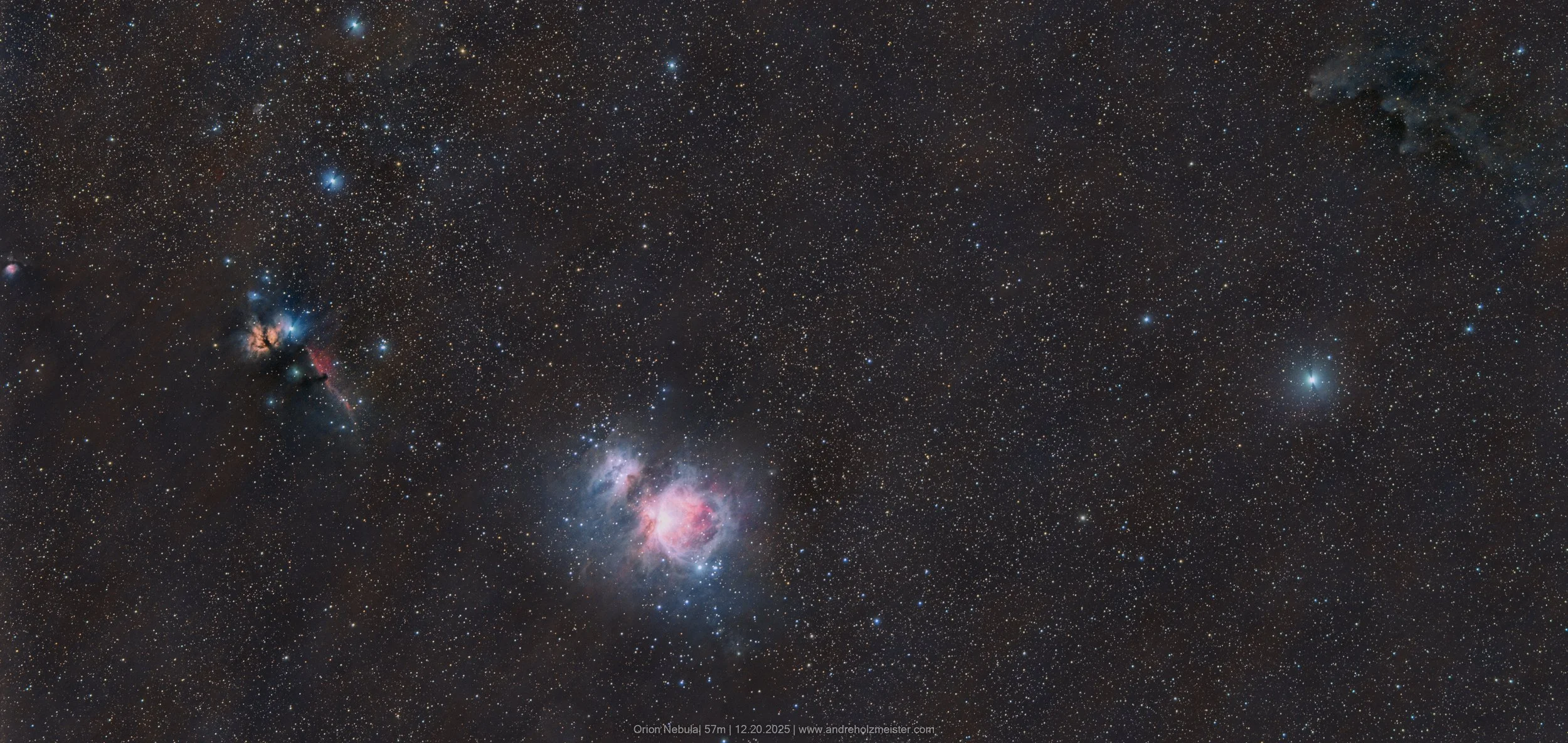
The image above is a wide fild taken with an unmodified Full Frame camera, the Canon 6D and a Rokinon 135mm f2, just shot of an hour of exposures to test the signal on the Ha emission Nebula, I had to bump the reds a lot in post production but the data was there, far from an astro modified camera but better than I expected, If I use more integration time I can definitely produce a great image without astro modifying it. The cool thing about those wide fields is that you can see more targets, like the Horsehead Nebula to the left and the Witch Head Nebula on the top right, even M78 is peaking on the far left. It tells a bit more story than the single target.
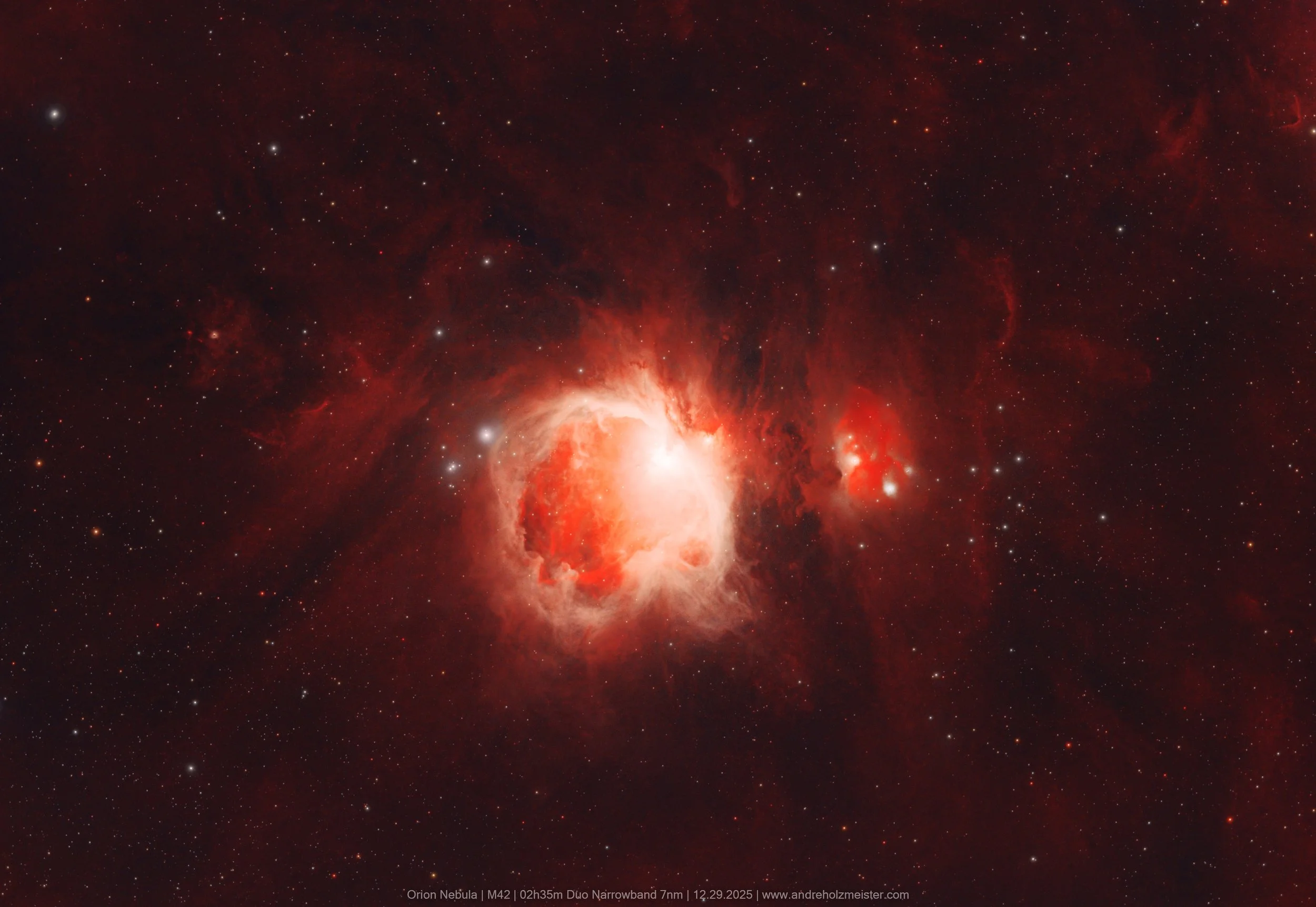
This version was photographed witht he exact same rig from the picture above but with a different astro camera, the ASI 294 MC pro. It is a bigger sensor allowing for a wider Field of View, also I used a 7nm duo narrowband filter, that only allows Hydrogen Alpha (Ha) and Oxygen III (OIII) to pass through the filter, the usual ionized gasses that glow in these emission nebulas. Only 2 hours and 35 minutes was able to capture this amount of data. I also went for a very different look prioritizing the Ha which is naturally red, I did like this color palette quite a lot.
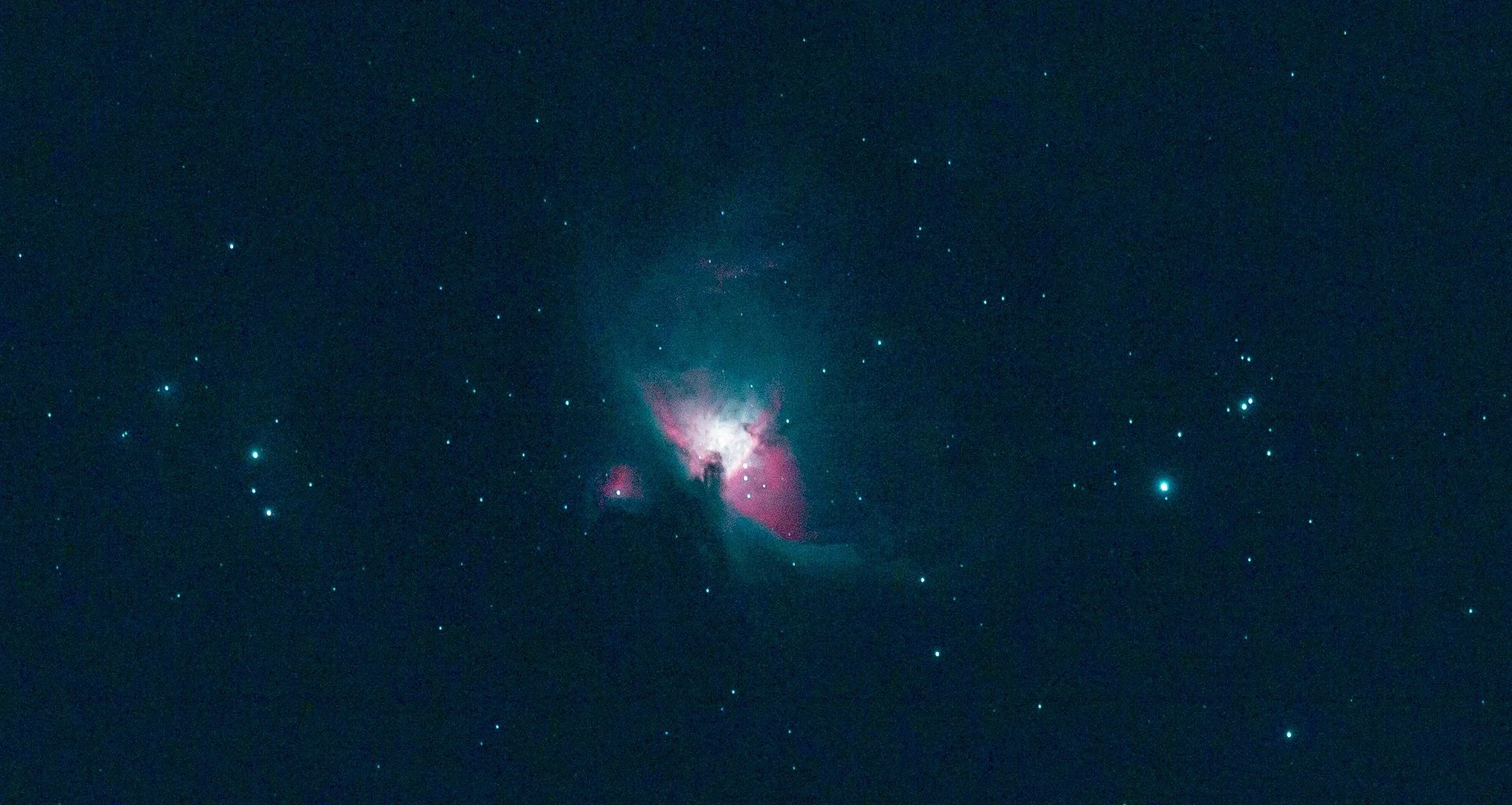
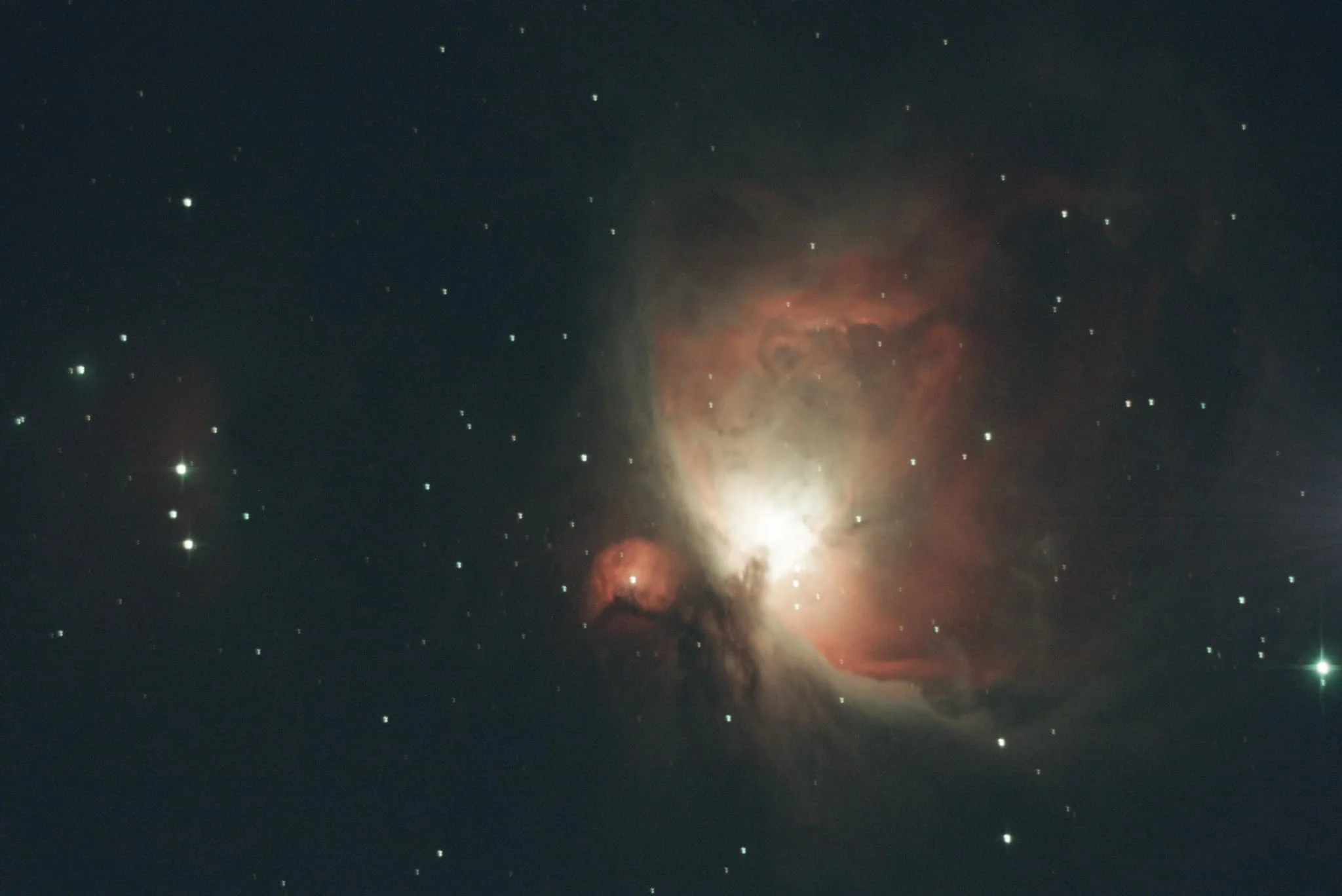
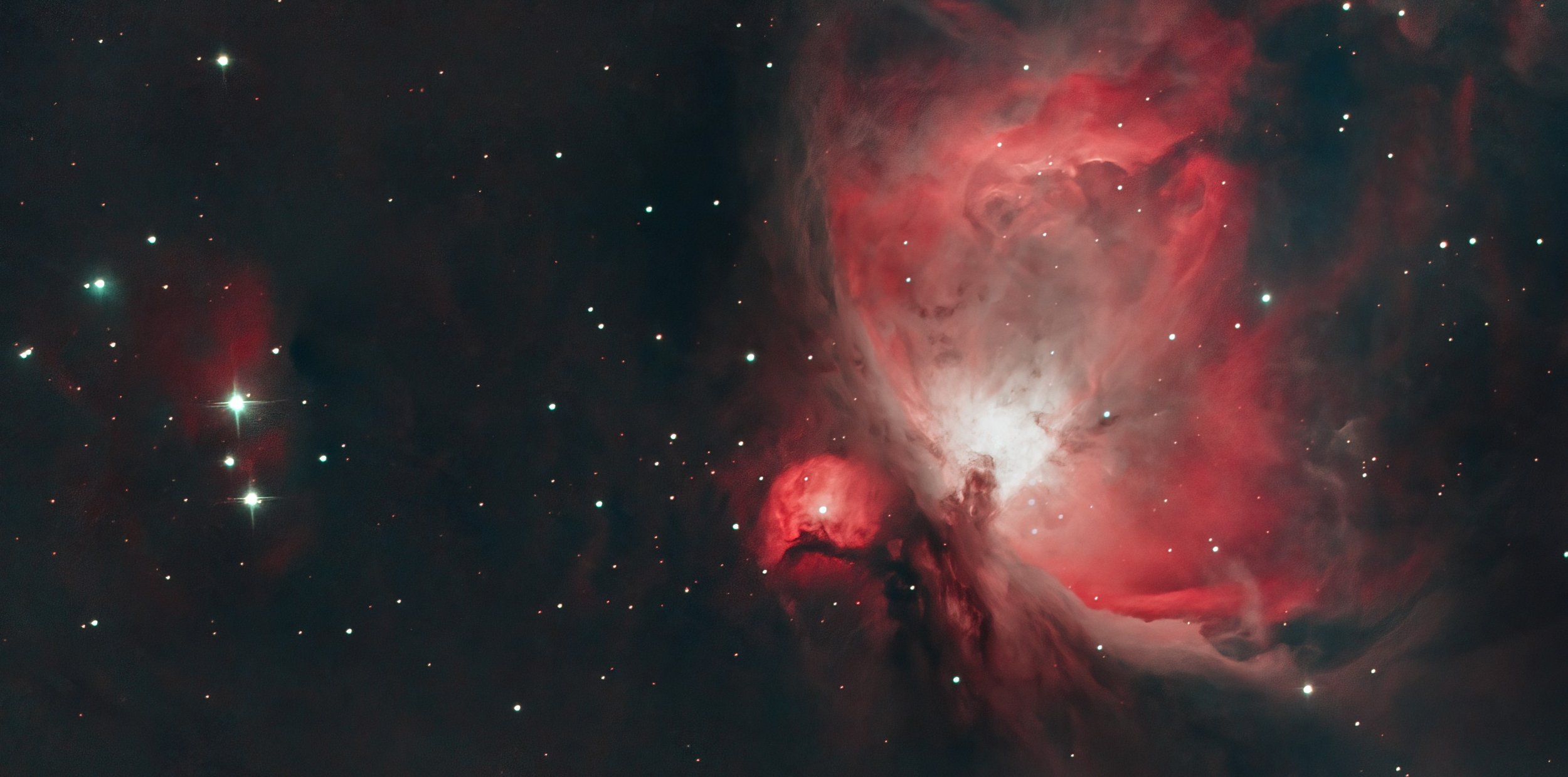
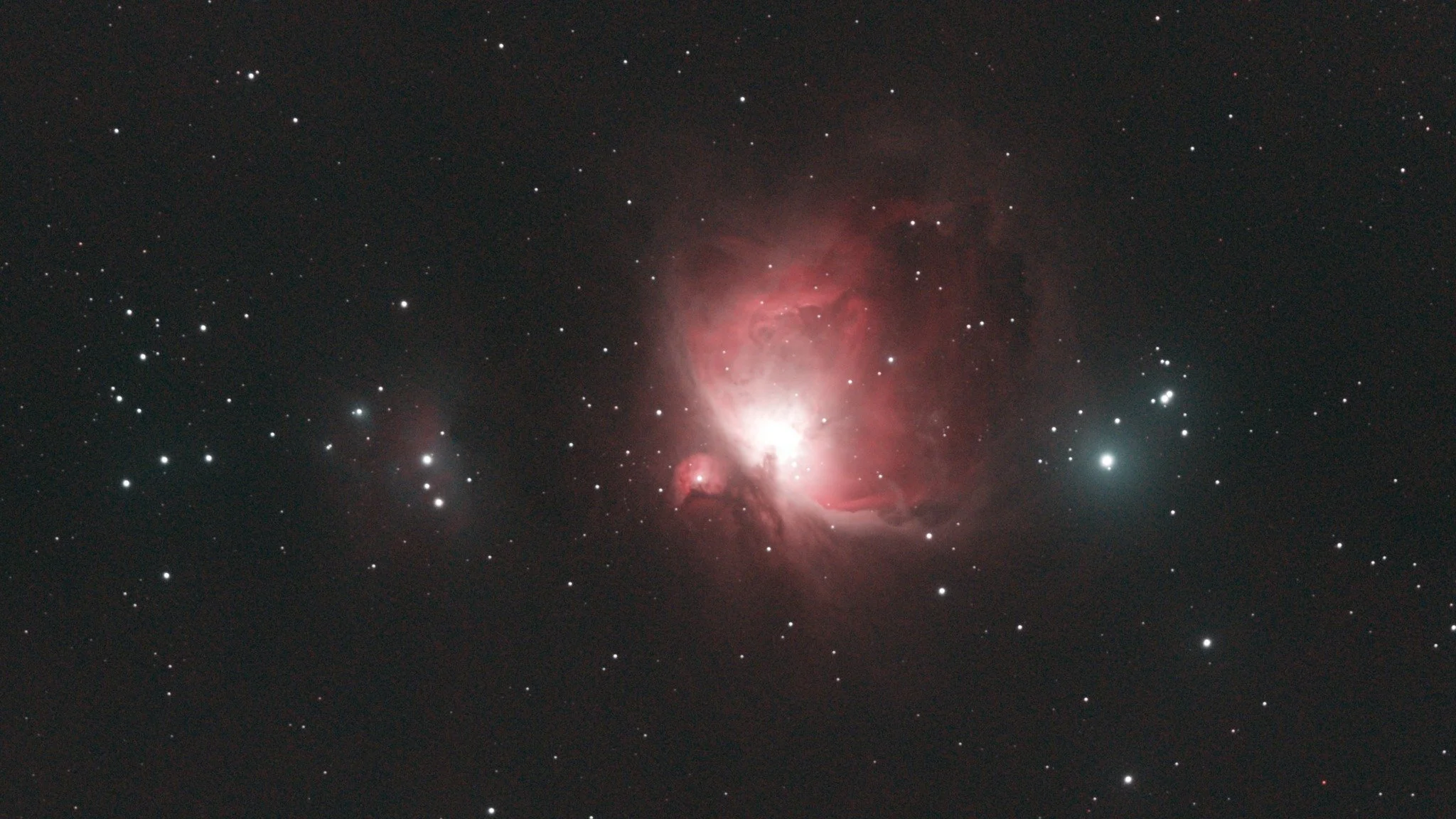
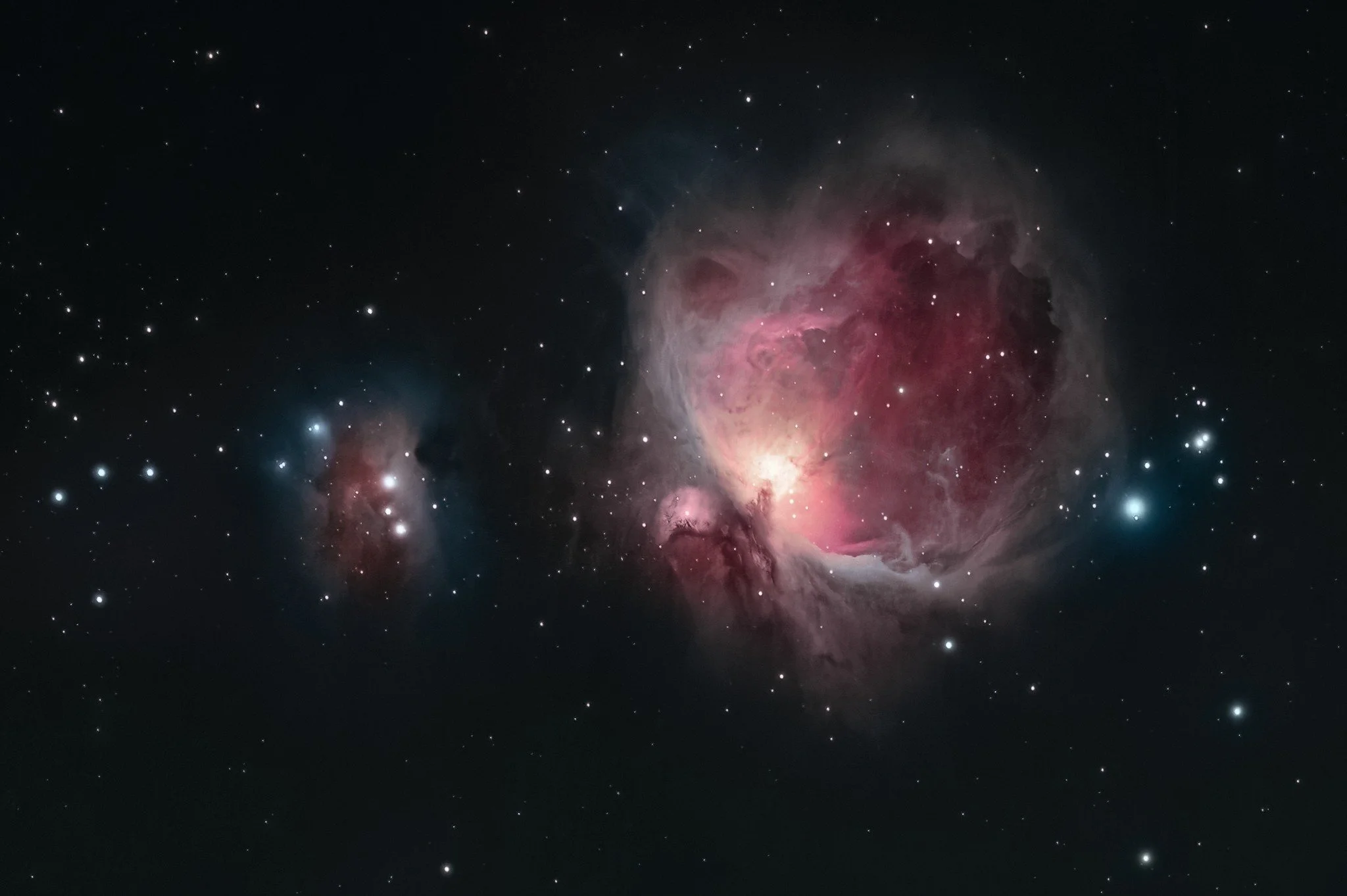
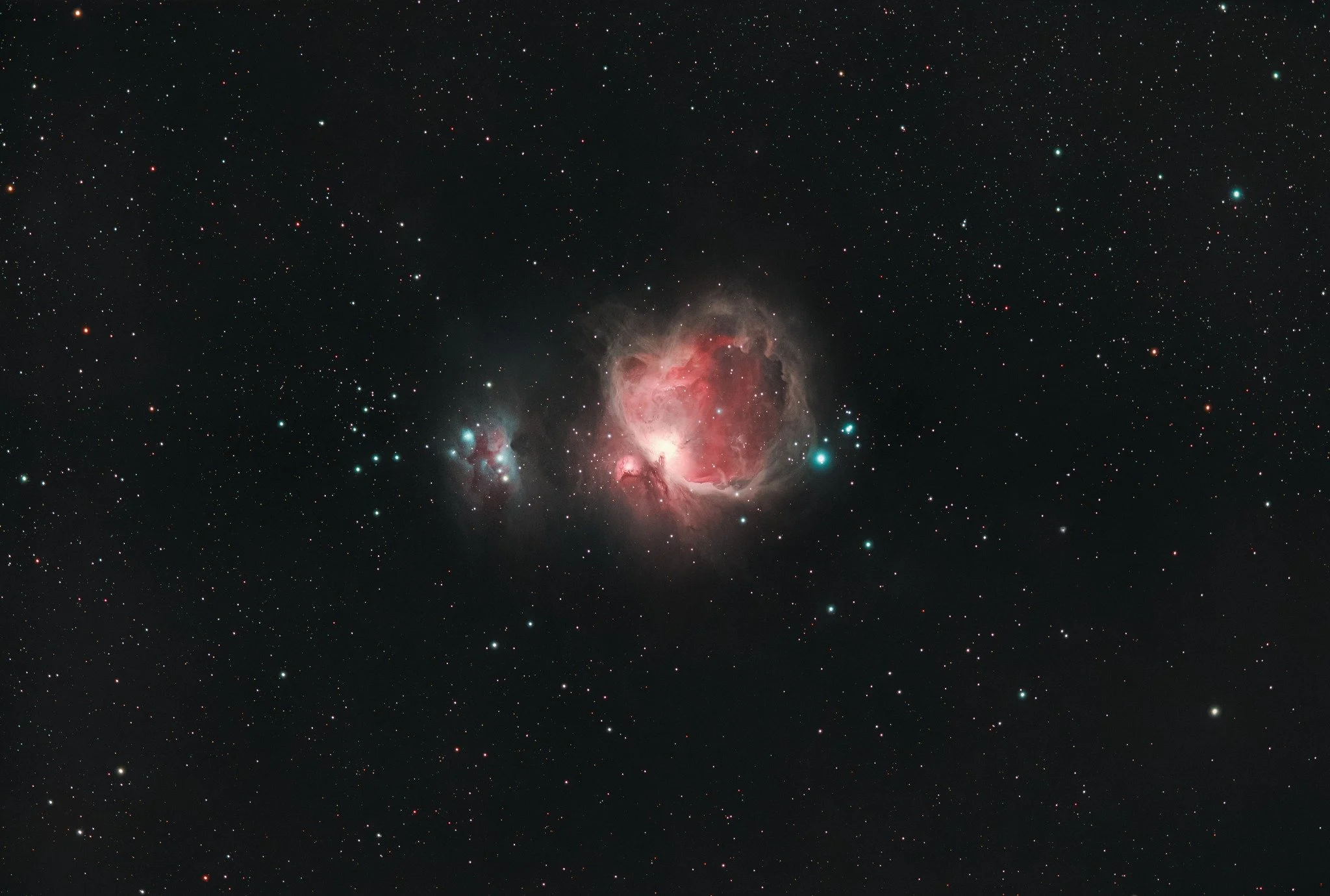
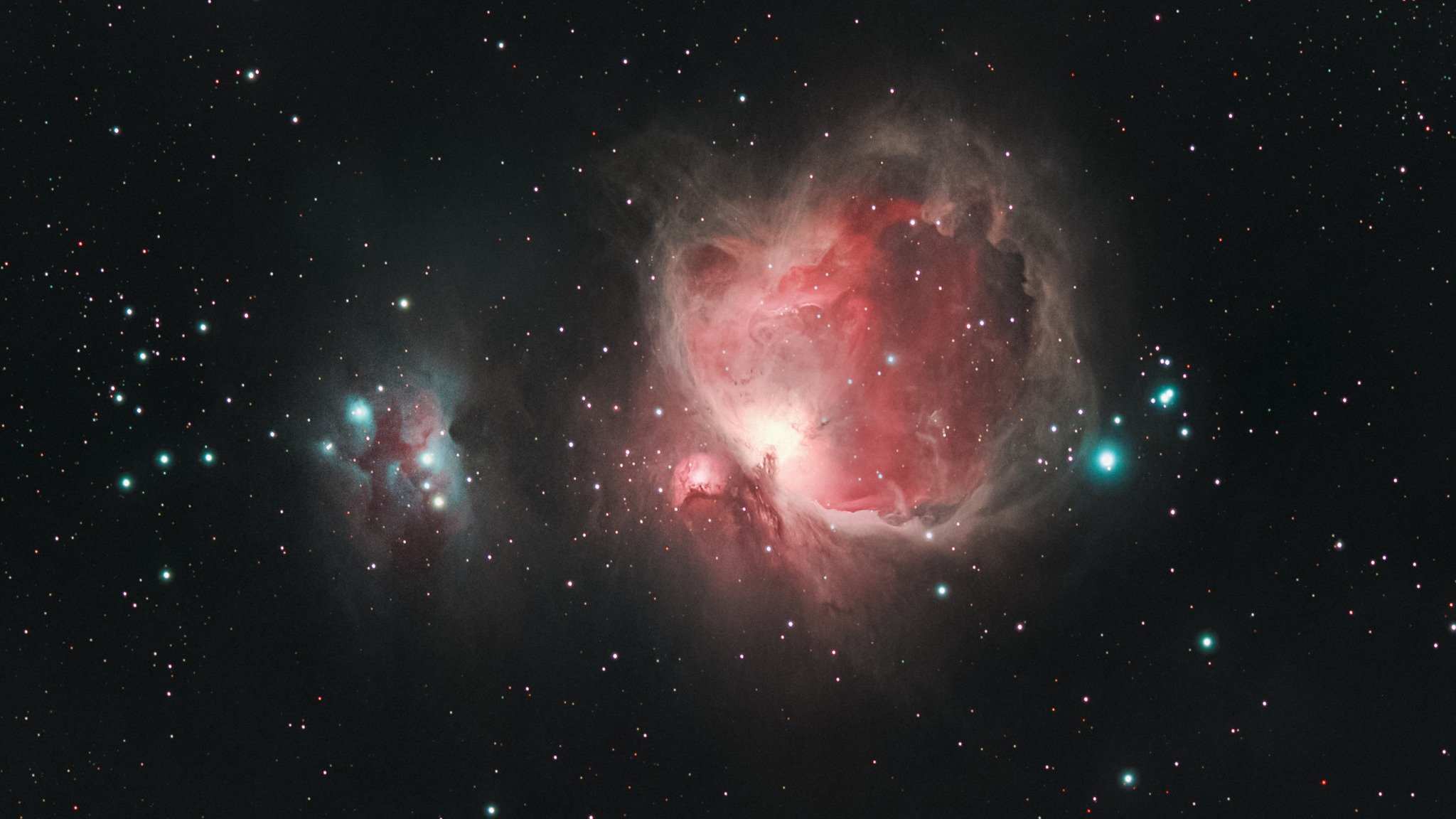
Previous iterations of M42 through the years.
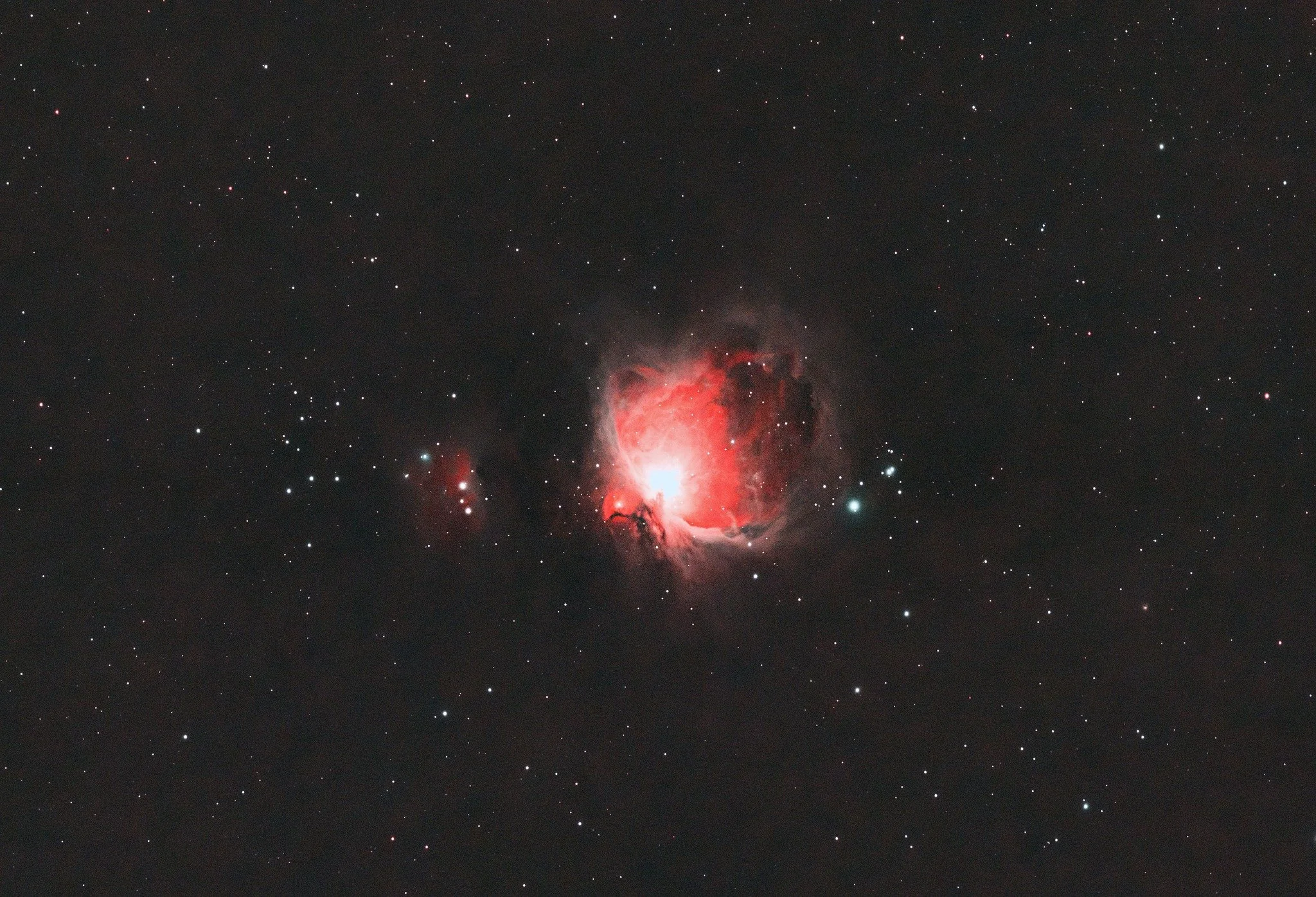
The First & The Latest
Orion is one of the easiest targets because of its brightness. And one of the hardest because of how bright it is, and the huge dynamic range between the super bright core with the trapezium asterism and the fainter outskirts.
Since I started my journey in early Summer, by the time Orion was up in the sky, in Autumn, I already had my first telescope and mount, so the first images of this target do not have the dramatic improvements that I had on the late summer targets such as the North America nebula and Andromeda. By the time I took my first image of Orion I already had my first narrowband filter, an Askar Duo Band (Ha 13nm, Oiii 30nm), comparable to the L-Enhance wavelength, so I put up my unmodified Canon 60D with the filter threaded on the front of the focal reducer of the mighty little Sharpstar 61 EDPH II, and shot for a couple hours and processed to the beast of my abilities. I cant describe in words the emotion of stretching the first data of Orion, I was in disbelief of how cool it was, the amount of crispy nebulosity I had in my hands with just a couple hours, in comparison to my previous targets, Andromeda and North America nebulas were the brithest and easier targets, I had a lot of frustrations with the pleiades in Bortle 8-9 and other fainter targets such as the Elephant Trunk and Heart Nebula. So when I got this data from Orion I couldn’t believe my eyes, I think every astro photographer can relate and understand what I felt at the time; it’s probably is the reason so many of us have a special place in our hearts for this incredible star nursery.
What I like in this comparison is the fact that the telescope and a lot of the gear is the same; what changed was upgrading to an astro camera, but mainly it all comes to knowledge and dedication in learning everything, from how to better acquire the data to how to process it. Too many factors at play but knowledge and experience were the transformative factors. The first one was taken under Bortle 8-9 skies and new moon, the latter was taken under Bortle 4-5 and also new moon. The First is just 2 hours of narrow band data, the later is 20h of UV/IR cut filter to get all the IFN and natural colors, the first was an unmodified DSLR, the later is a dedicated cooled astro camera, the ASI183MC pro, the first one was stacked in DSS and processed totally in Photoshop, the later was stacked in DSS also but processed with Siril, Starnet++, and with a ton of scripts and way more dedication. Mounts didn't have any impact; the first was an iOptron GEM28, and the latter was a ZWO AM5. Same guide scope and camera, same ASIAIR mini, and a few years of experience, the first one was probably September 2022 since I captured 2h of it at dawn, at the time I didn’t know how to process multiple nights, the latter is from 2025, I started capturing it late November and added a few more data over December on the available clear nights. What a journey!