PLEIADES | M31
I finally finished my first project under my new home in Kyle, Texas, suburbs of South Austin, and boy what a difference from my old light polluted sky in Orlando, FL. If you know nothing about astrophotography, there is a a scale of light pollution called the Bortle scale that goes from 1 to 9, nine being the worst, and Orlando was 8-9 and here in Kyle it is 4-5, and it makes a hell of a difference, specially for broad band targets such as galaxies or reflection nebulas like the Pleiades, broad band means its light is made of natural light, the same light wavelengths such as the light emitted by the cities posts, meaning I cant use light pollution filters efficiently.
The Pleiades, or Seven Sisters, has always felt like a quiet gathering in the night sky. Nestled in Taurus, this shimmering cluster has been watched and whispered about for thousands of years. In Greek myth, they were daughters of Atlas, lifted into the heavens to escape Orion’s pursuit, their light forever woven together. Across the world, from the Māori to many Native American peoples, these same stars carried stories of beginnings, journeys, and the rhythm of the seasons. Long before clocks and calendars, their soft glow told farmers when to plant and travelers when to move. Even now, to look up at them is to feel something ancient—like listening to an old song the sky never stopped singing.
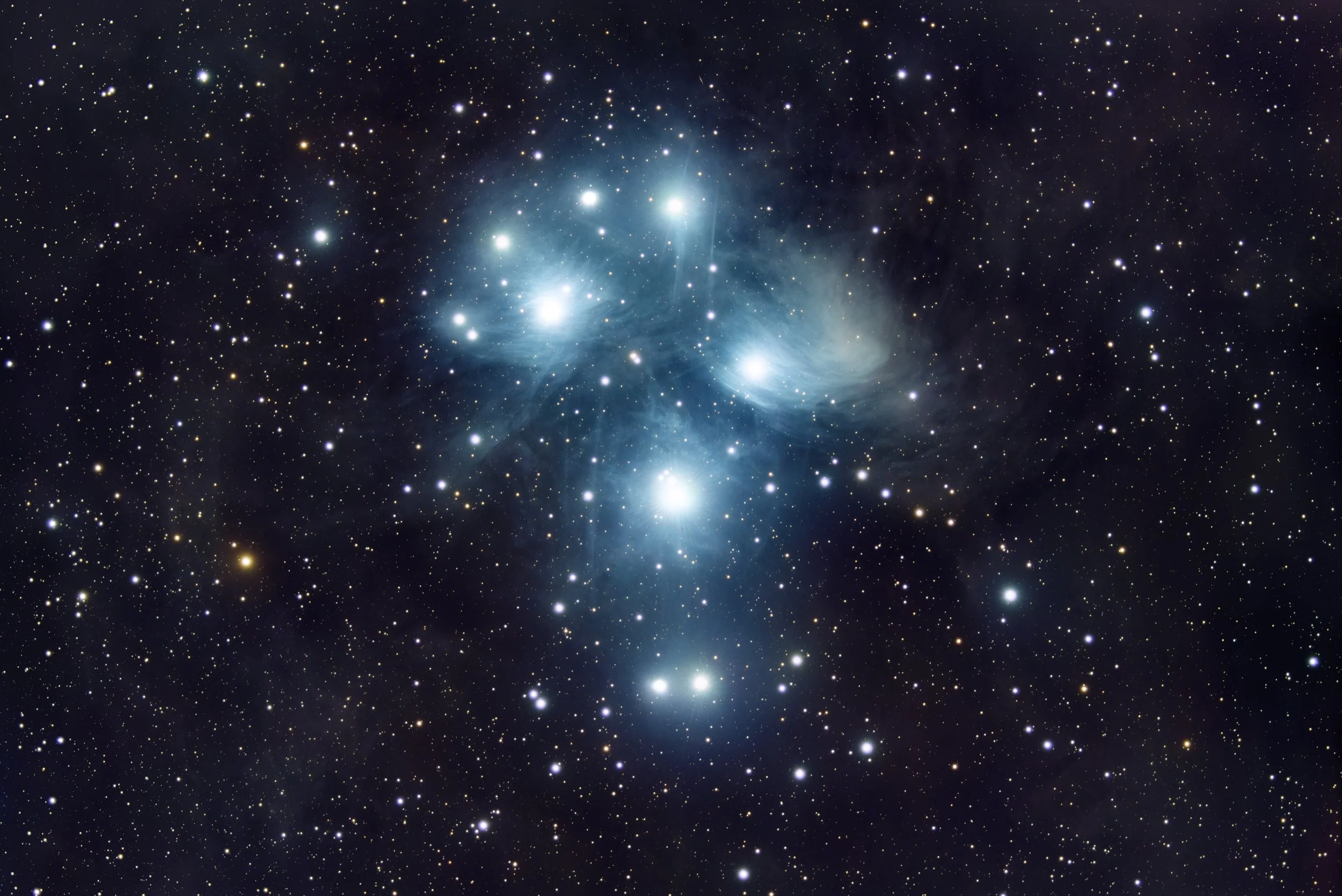
20h 25 min total integration time
Sharpstar 61 EDPH II + 0.7 reducer @f4.5
ASI183MC PRO dedicated astrocamera
AM5 Mount
SVBONY UV/IR cut filter
SVBONY 30mm f4 Guide Scope
ASI120MM mini guide camera with red filter
ASIAir mini
Bortle 4-5
Software: DeepSkyStacker > Siril > Starnet > Graxpert > Photoshop > Topaz Denoiser
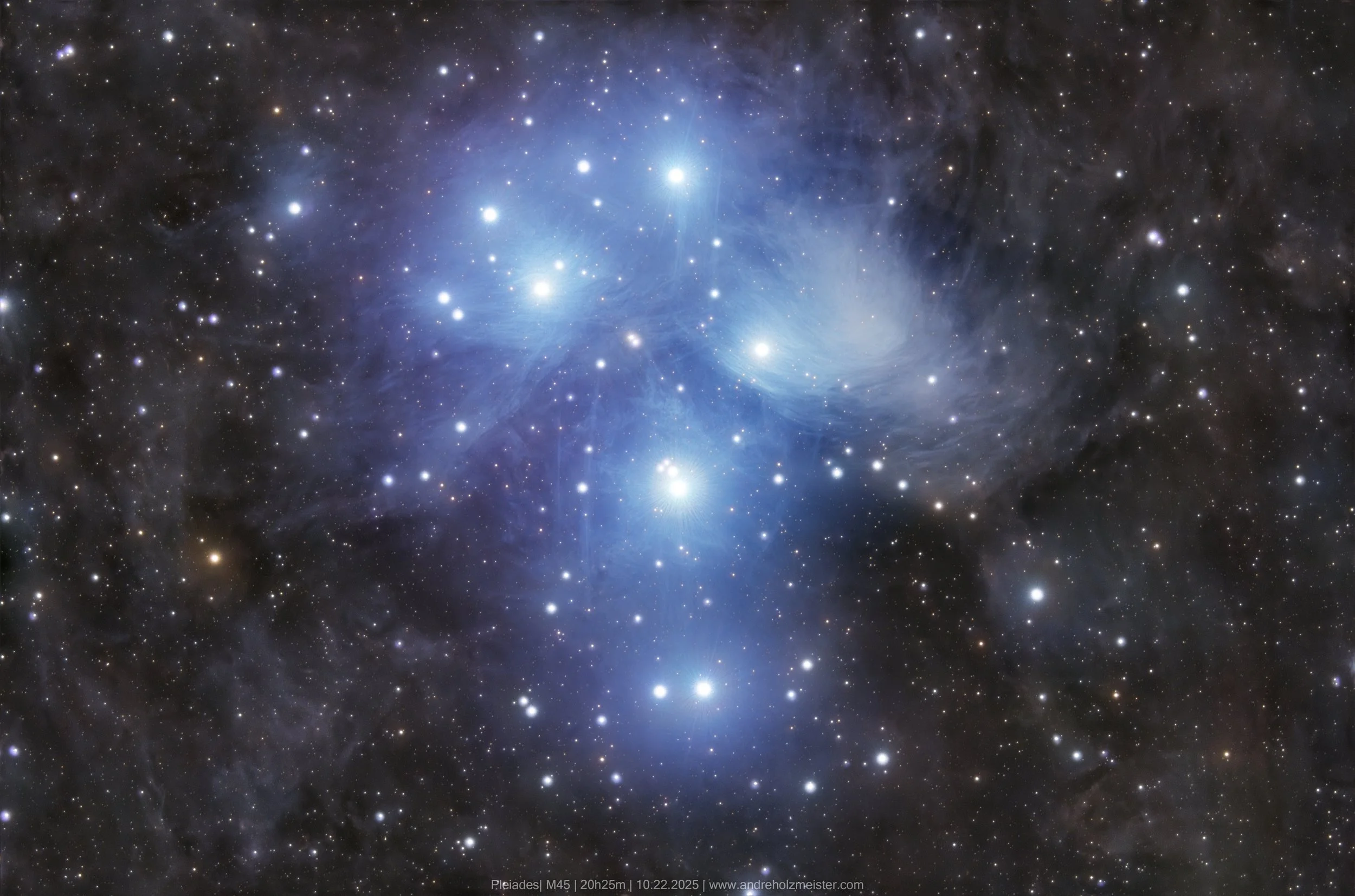
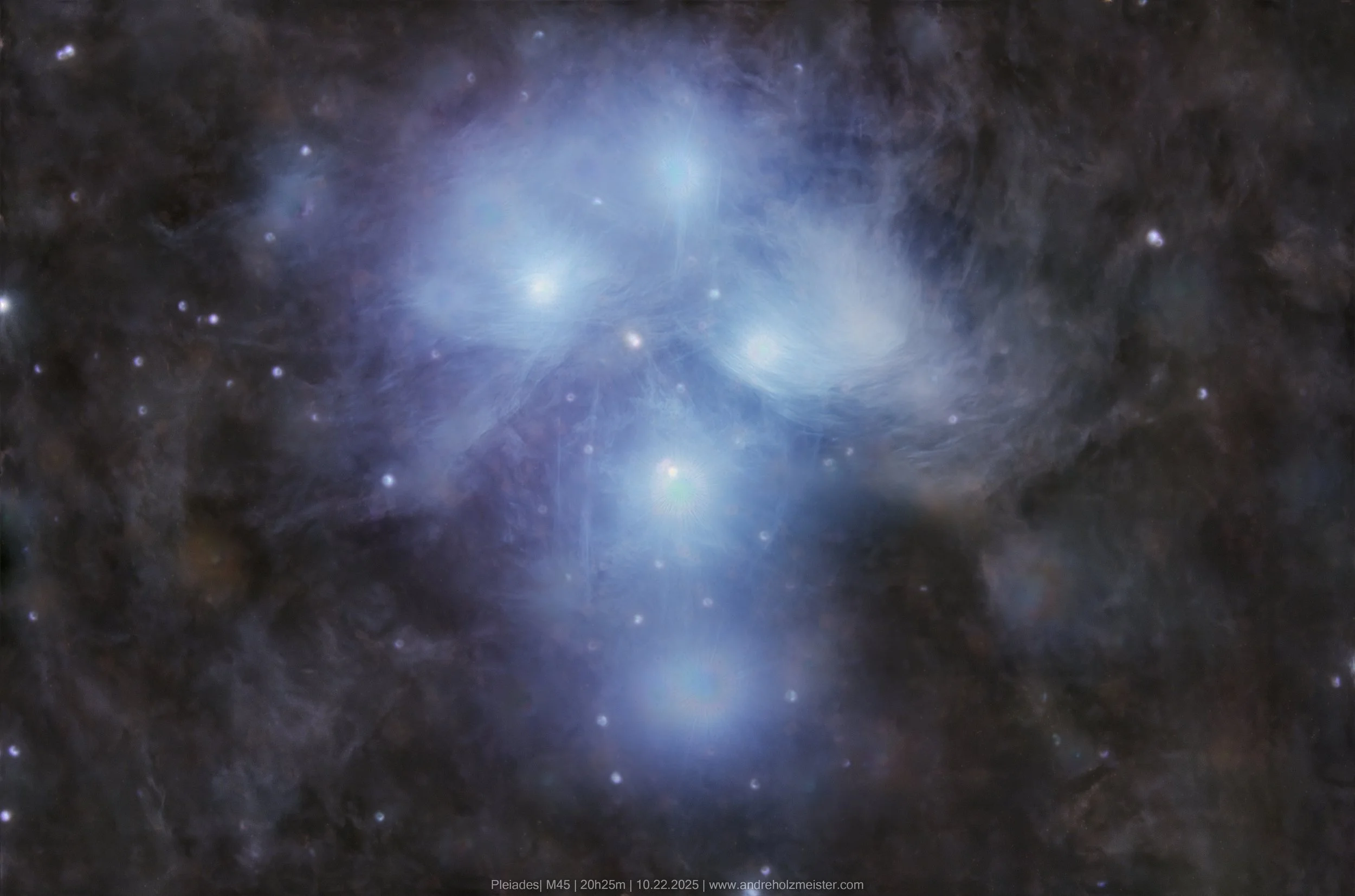
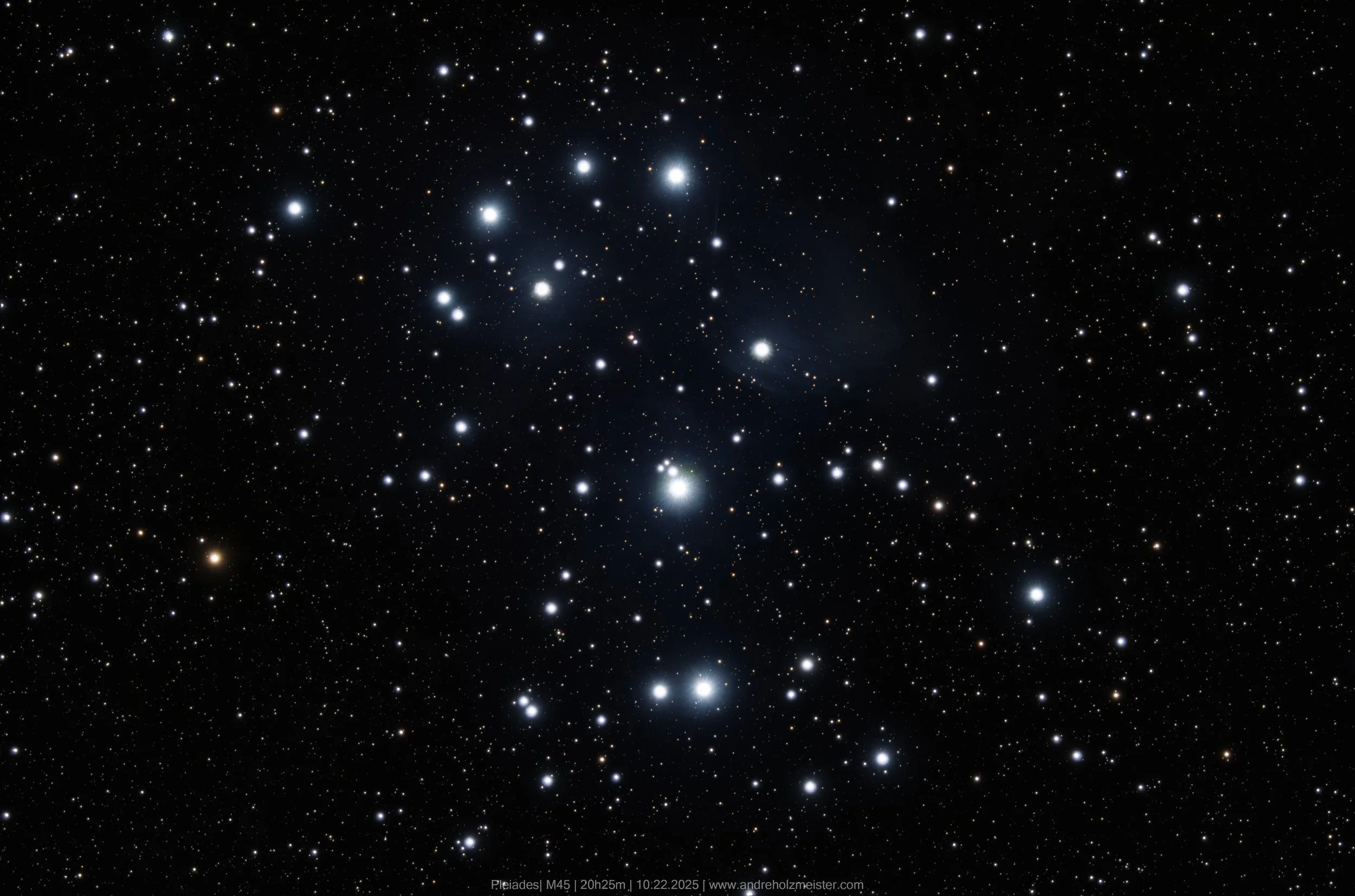
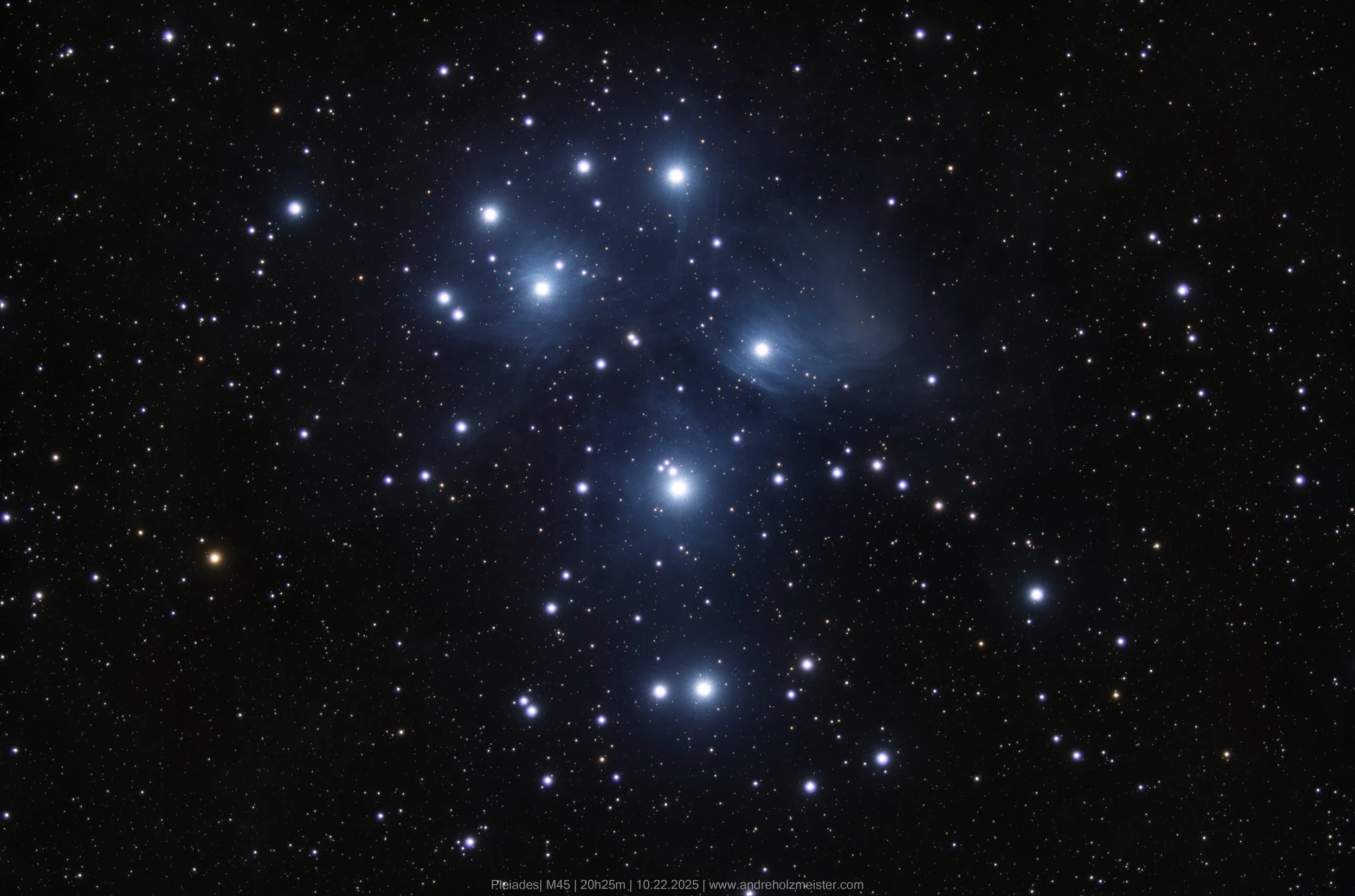
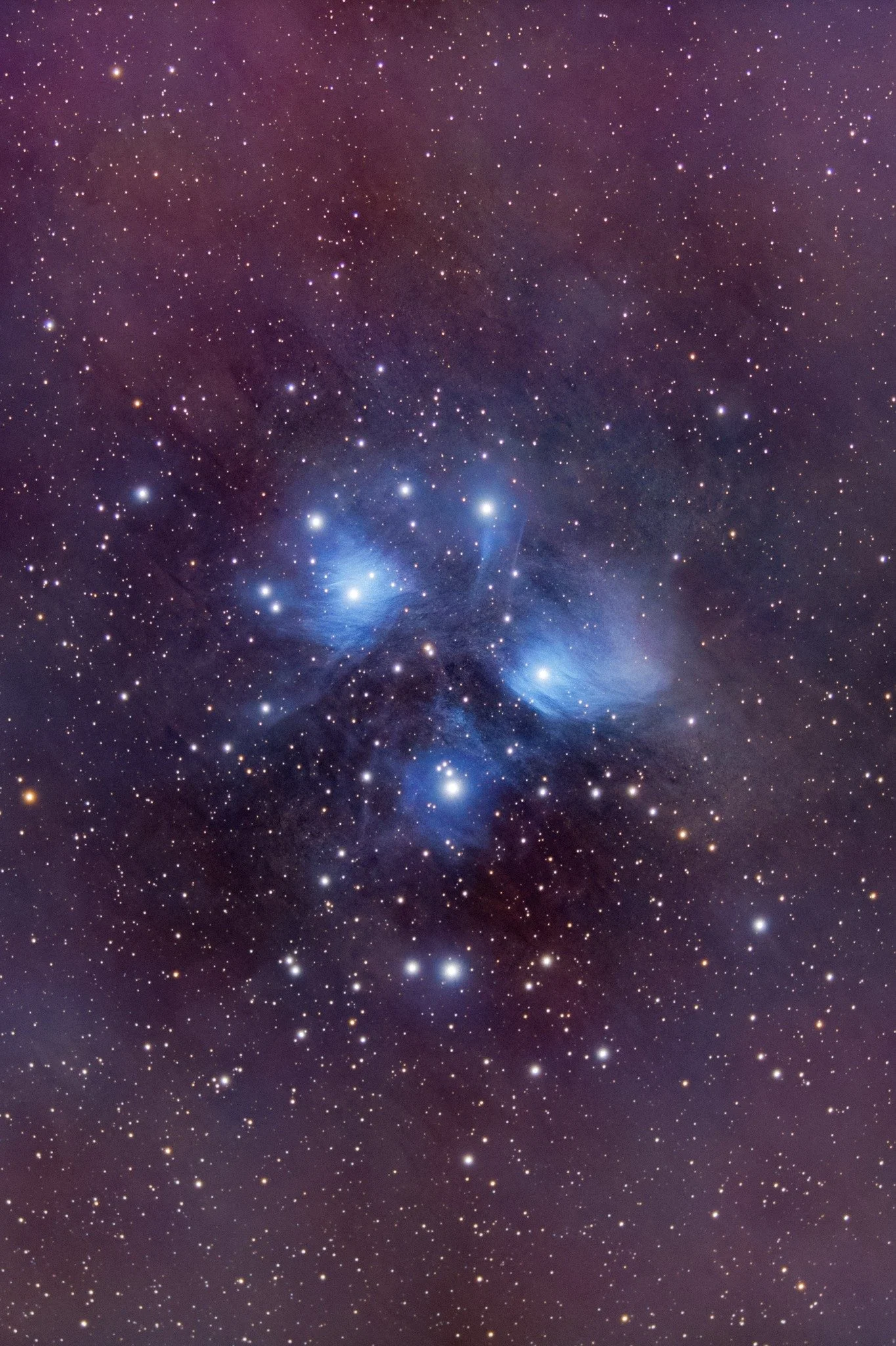
Above is a reprocess of the image below, same data, actually, I re-stacked, throwing away some bad frames and lost 3 hours of integration and still got better results. I was puzzled why I wasnt able to get more IFN (Integrated Flux Nebula, it’s the very faint nebulozity made from interstellar dust that we can see better surrounding the main reflection nebula on the starless version) The reason thos 3 extra hours were impacting my capability to revel that part is that I had some high altitude clouds passing by and makignt he contrast lower int he final result, so throwign away bad data means better results than adding more data that is not good data. This time I used 3 different stretches too to see which one was better. VeraLux Hyper Metric Stretch, just like the image below, gives you a bit more pop in the saturation, but I was able to get the best IFN from Sati Astro Statistical Stretch, and the best overall luminance from a simple histogram auto stretch, believe it or not. In the end in photoshop I ended up using the 3 stretches using masks to give the main nebula more saturation, from VeraLux, the edge of the frame is mainly from Statistical Stretch and the blend between them has the histogram result, making a perfect binding between them.
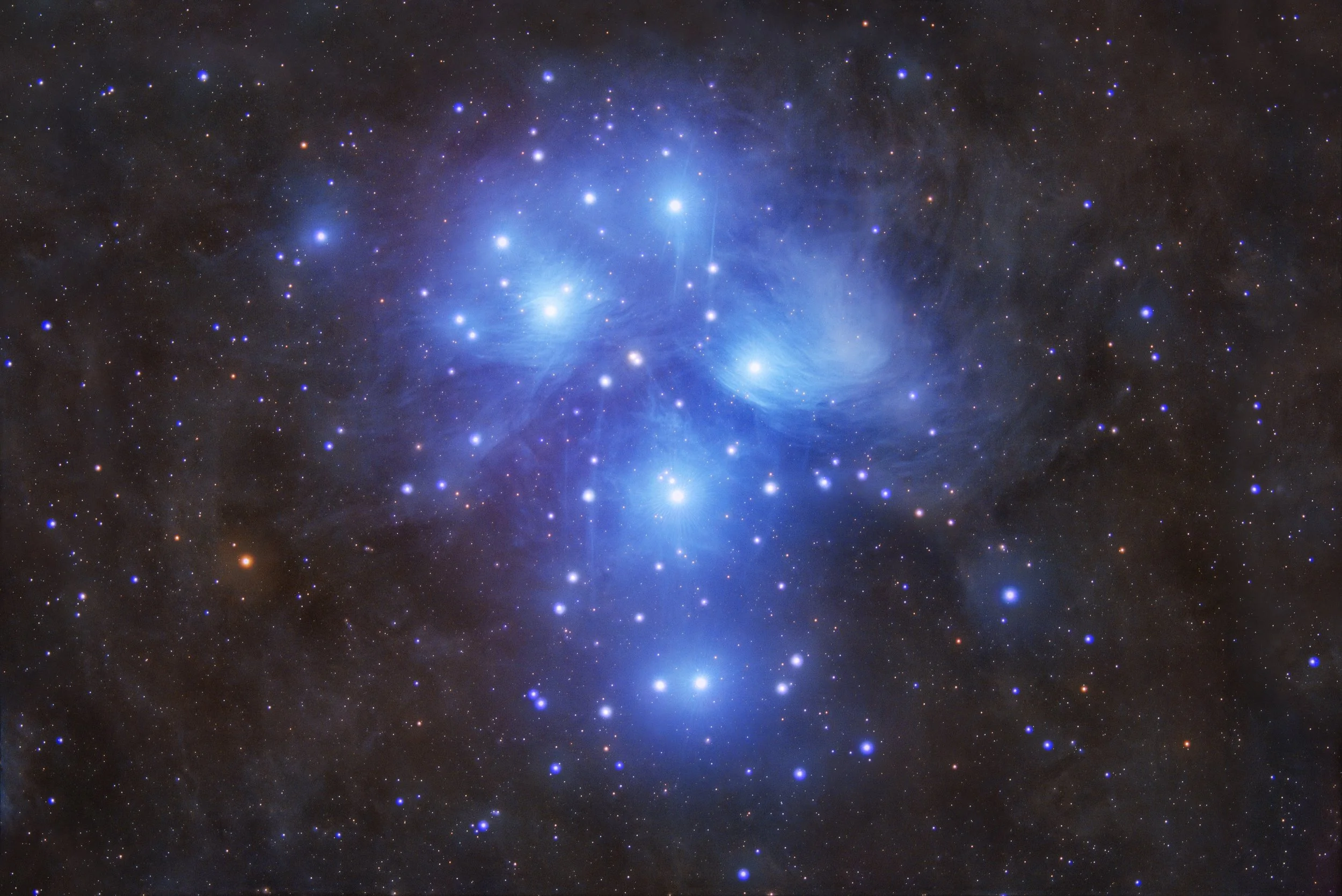
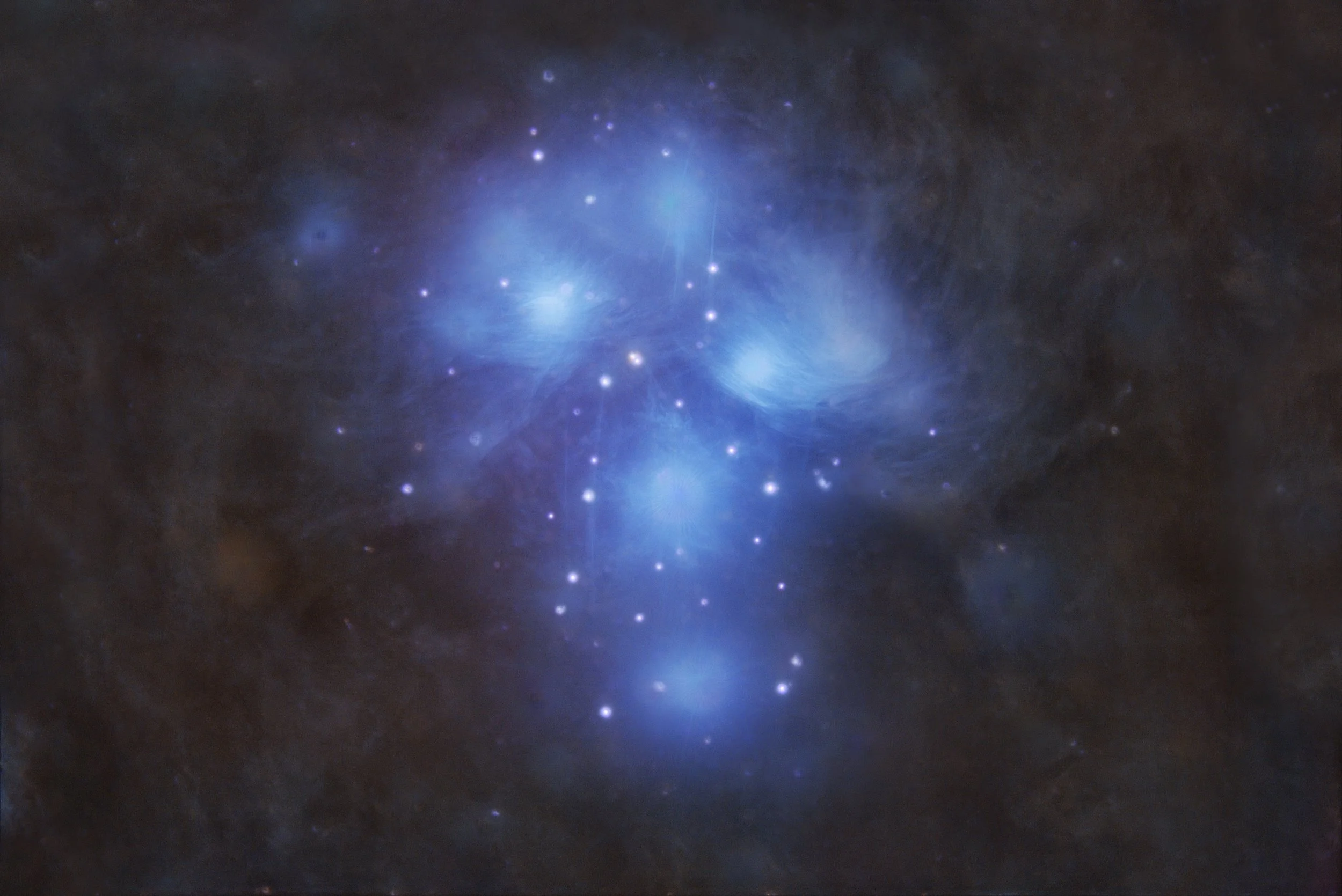
23h 35m stretched with VeraLux. I love the contrast and overall oversaturation of this one so I’ll keep it here.
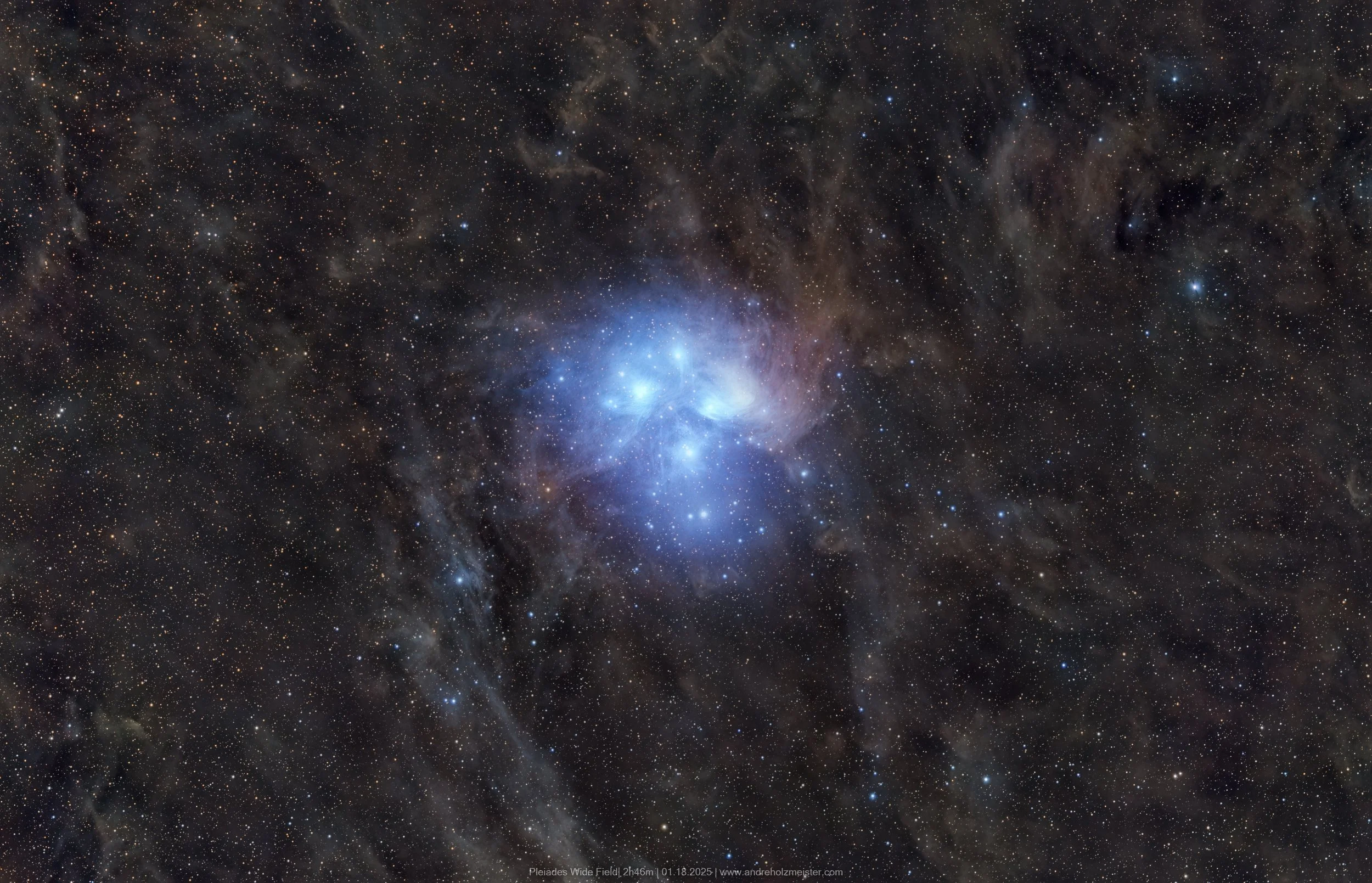
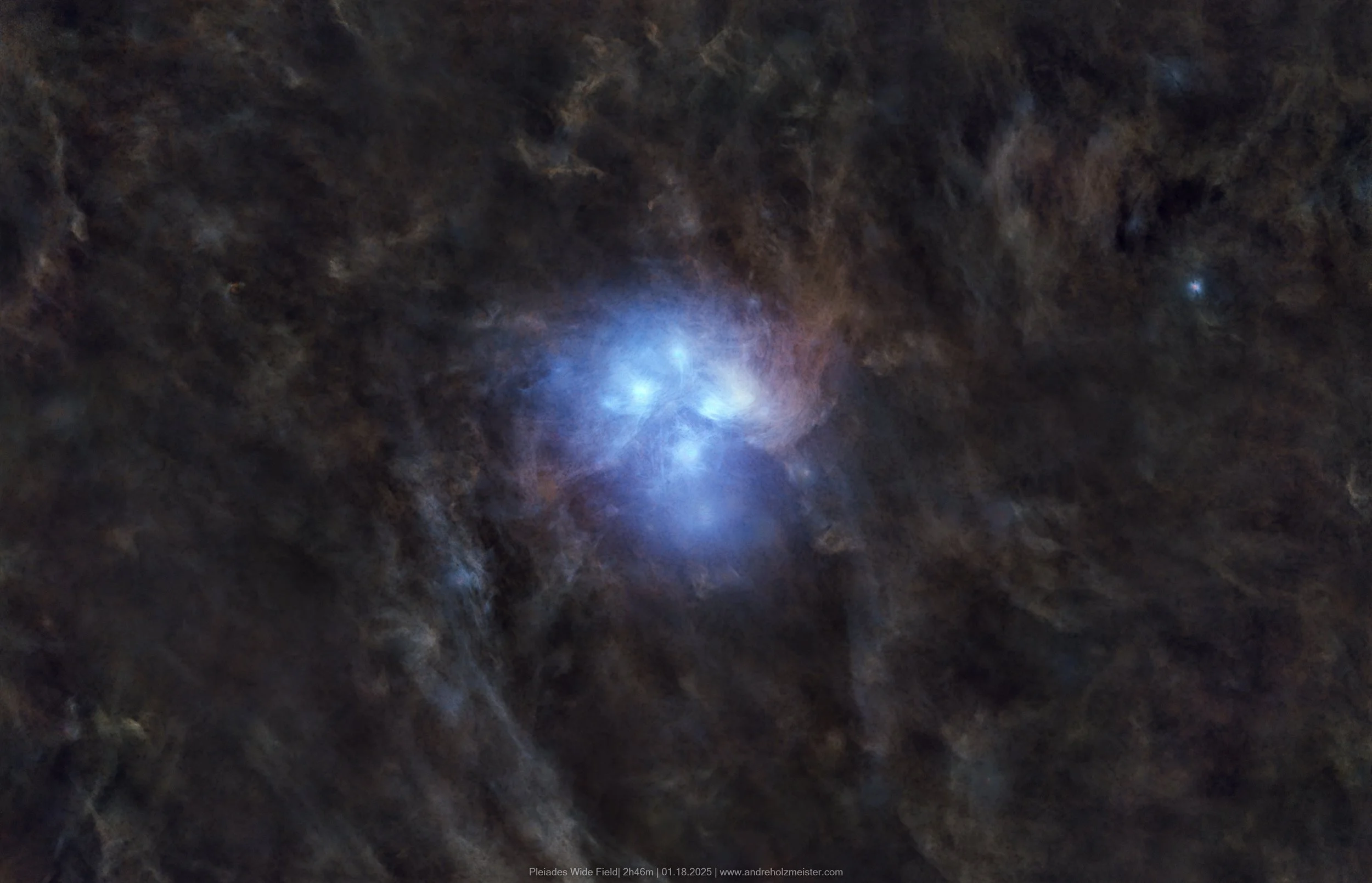
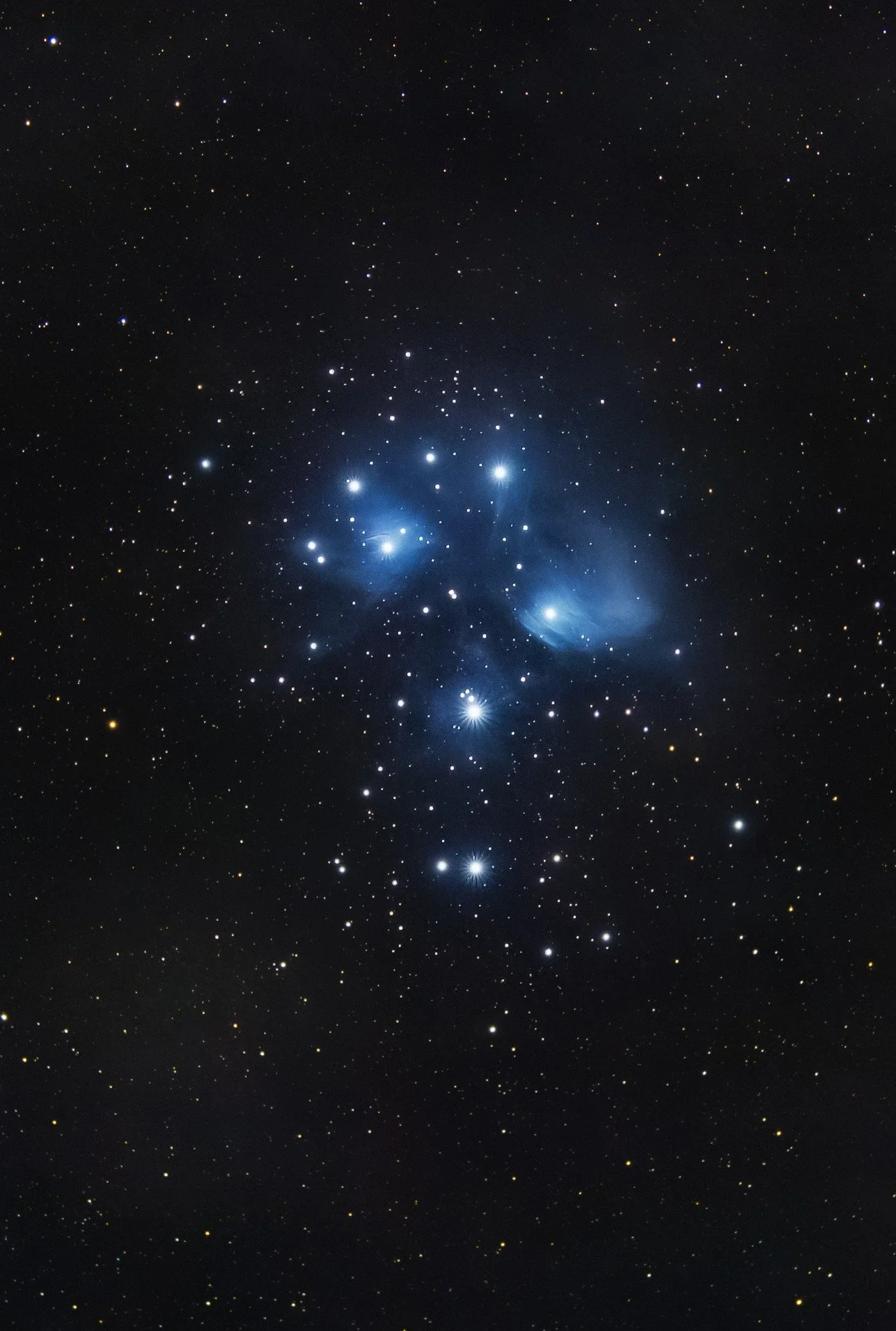
In the first new moon of 2026, January 18th I went on a dark sky trip, lower Bortle 3 at Texas Hill Country Resort, a nice cabin on the Texas mountains.
The capture above was only 2h 46m worth of data, with a Rokinon 135mm f 2 lens and an ASI294MC pro camera. Nothing beats a good old dark sky.
Rokinon 135mm f/2 @f/2
ASI294MC PRO dedicated astrocamera
AM5 Mount
SVBONY UV/IR cut filter
SVBONY 30mm f4 Guide Scope
ASI120MM mini guide camera with red filter
ASIAir mini
Bortle 3
Software: Siril > Starnet > Graxpert BG and Denoise > VeraLux HMS, Revela, Vectra > CosmicClarity Sharpening > Aberration Remover > Photoshop
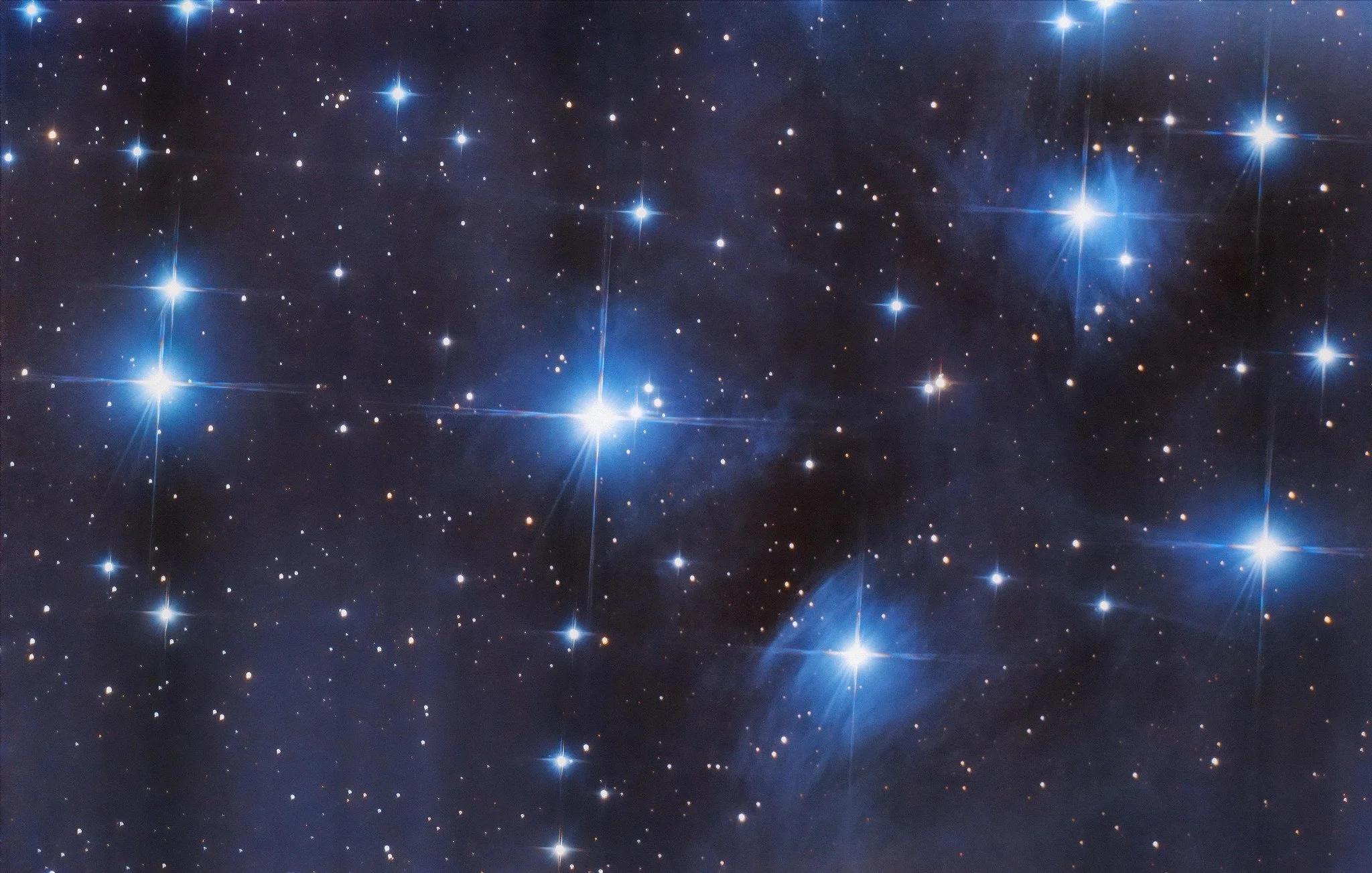
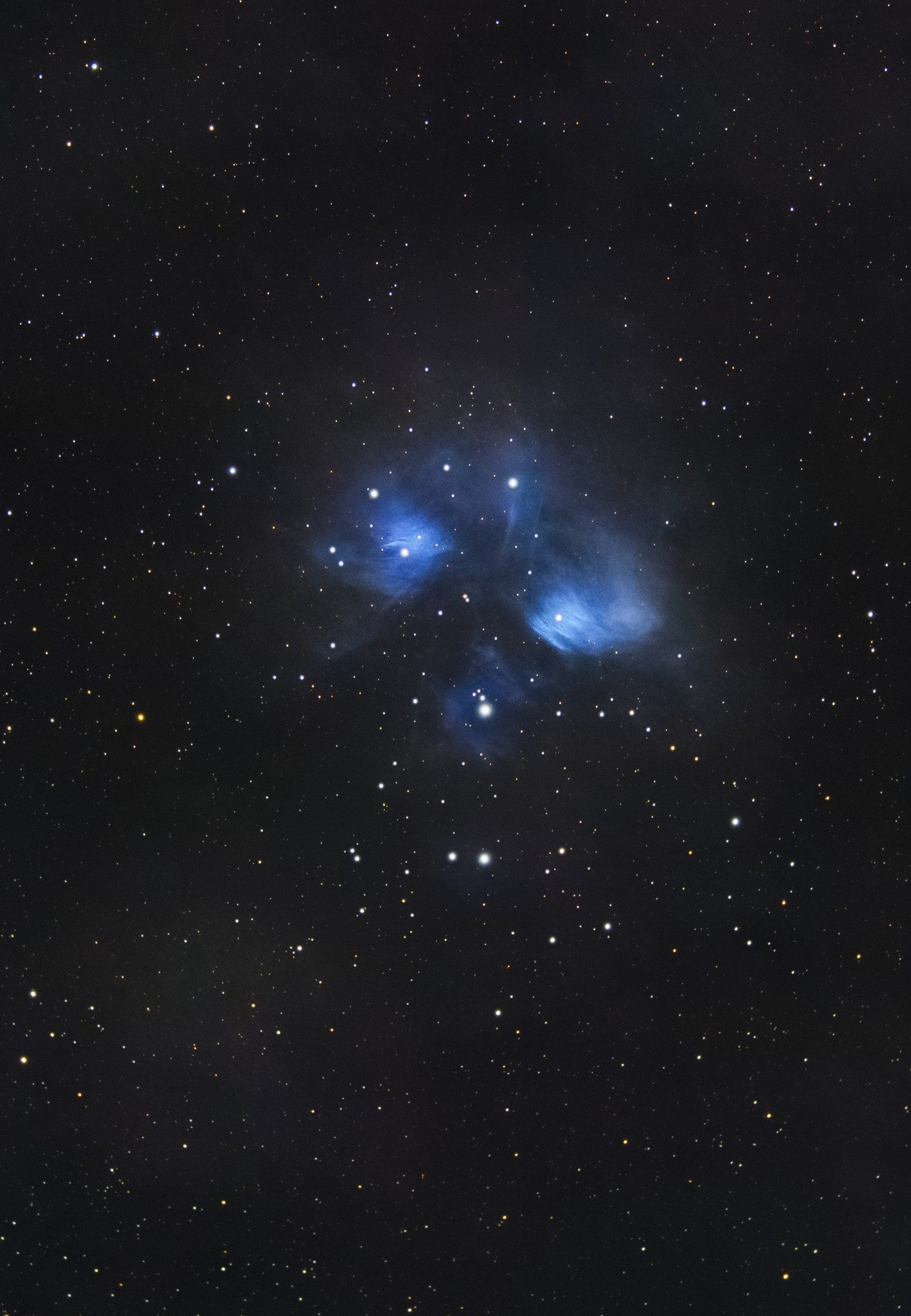
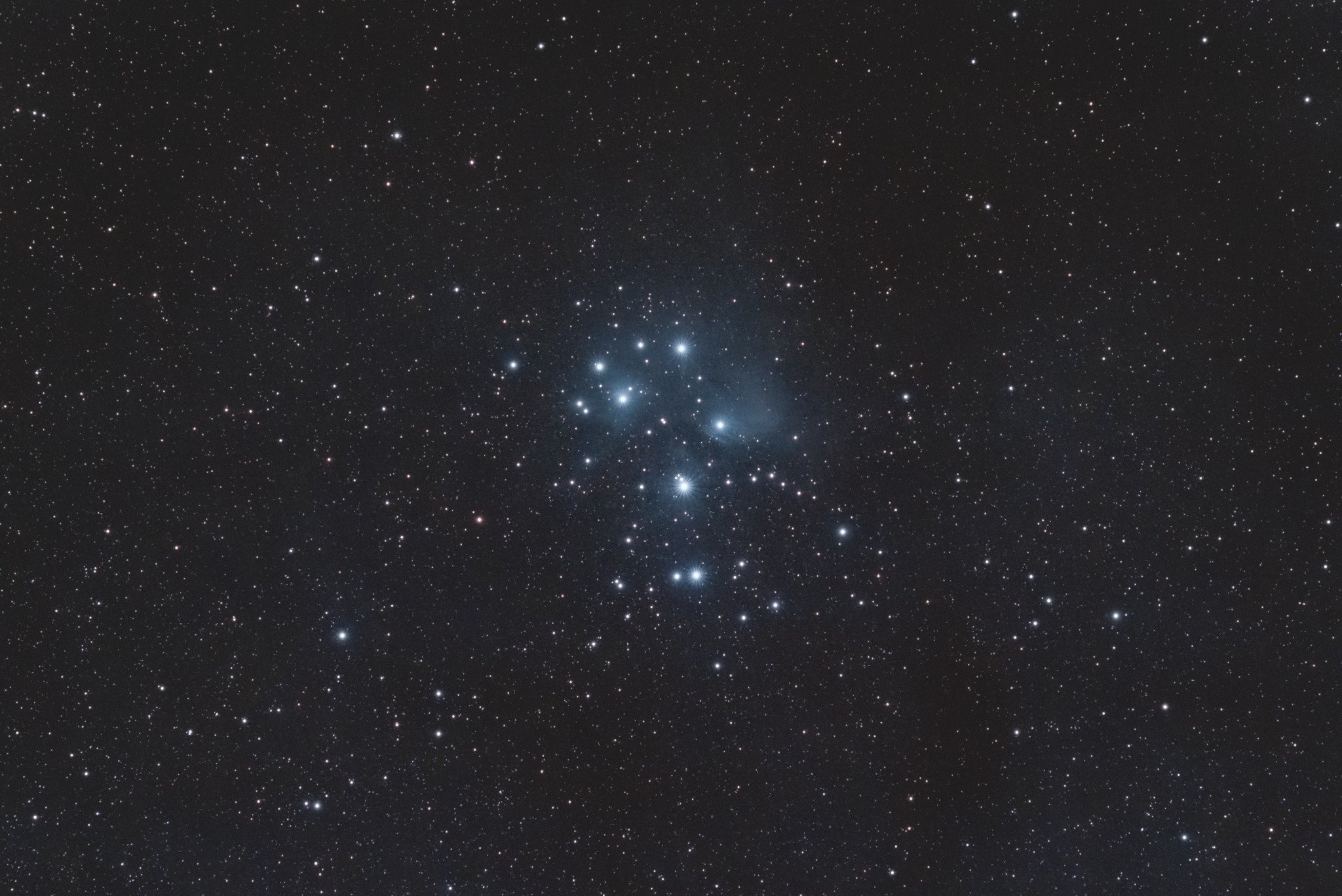
My progression throughout the years on this incredible target.