ROSETTE NEBULA | NGC2237
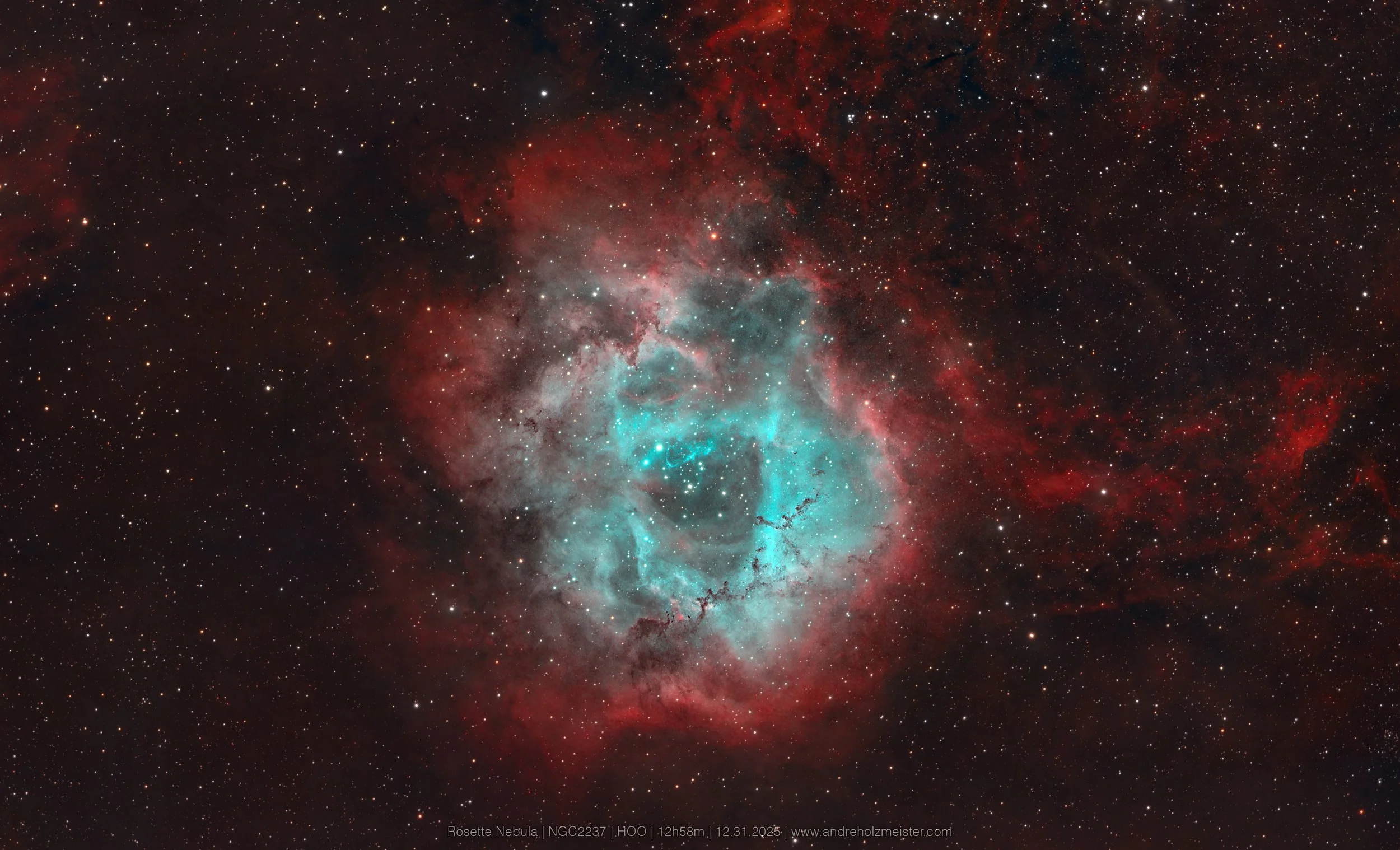
The Rosette Nebula is a stunning sight to behold. It is a vast cloud of glowing gas and dust, swirling and swirling in a never-ending dance. At the heart of the nebula lies NGC 2244, an open cluster of hot, young stars, whose fierce winds and radiation have sculpted the gas and dust into the beautiful, rose-like shape for which the nebula is named.
As you gaze upon the Rosette Nebula, you can almost feel the energy and intensity of the stars at its core. The vibrant colors of the gas and dust, ranging from deep reds and purples to bright blues and whites, are a testament to the strength and heat of these celestial bodies. And as you look deeper into the nebula, you can see hints of the hidden structures and patterns that lie within, formed by the complex interplay of gravity, radiation, and the movement of matter.
The Rosette Nebula is a truly awe-inspiring sight, a reminder of the majesty and wonder of the universe. As you stand in its presence, you can't help but feel humbled and small, located in the constellation Monoceros, about 5,200 light-years away from Earth.
Also called NGC2237 in the correct orientation it resembles a skull figure, therefore its also know as the Skull Nebula.
12h 58 min total integration time | 151x300s
Sharpstar 61 EDPH II + 0.7 reducer @f4.5
ASI294MC PRO dedicated astrocamera
AM5 Mount
SVBONY 7nm dual band filter
SVBONY 30mm f4 Guide Scope
ASI120MM mini guide camera with red filter
ASIAir mini
Bortle 4-5
Software: DeepSkyStacker > Siril > Veralux Alchemy > Starnet > VeraLux HMS > Graxpert > Cosmic Clarity > Photoshop > Topaz Denoiser
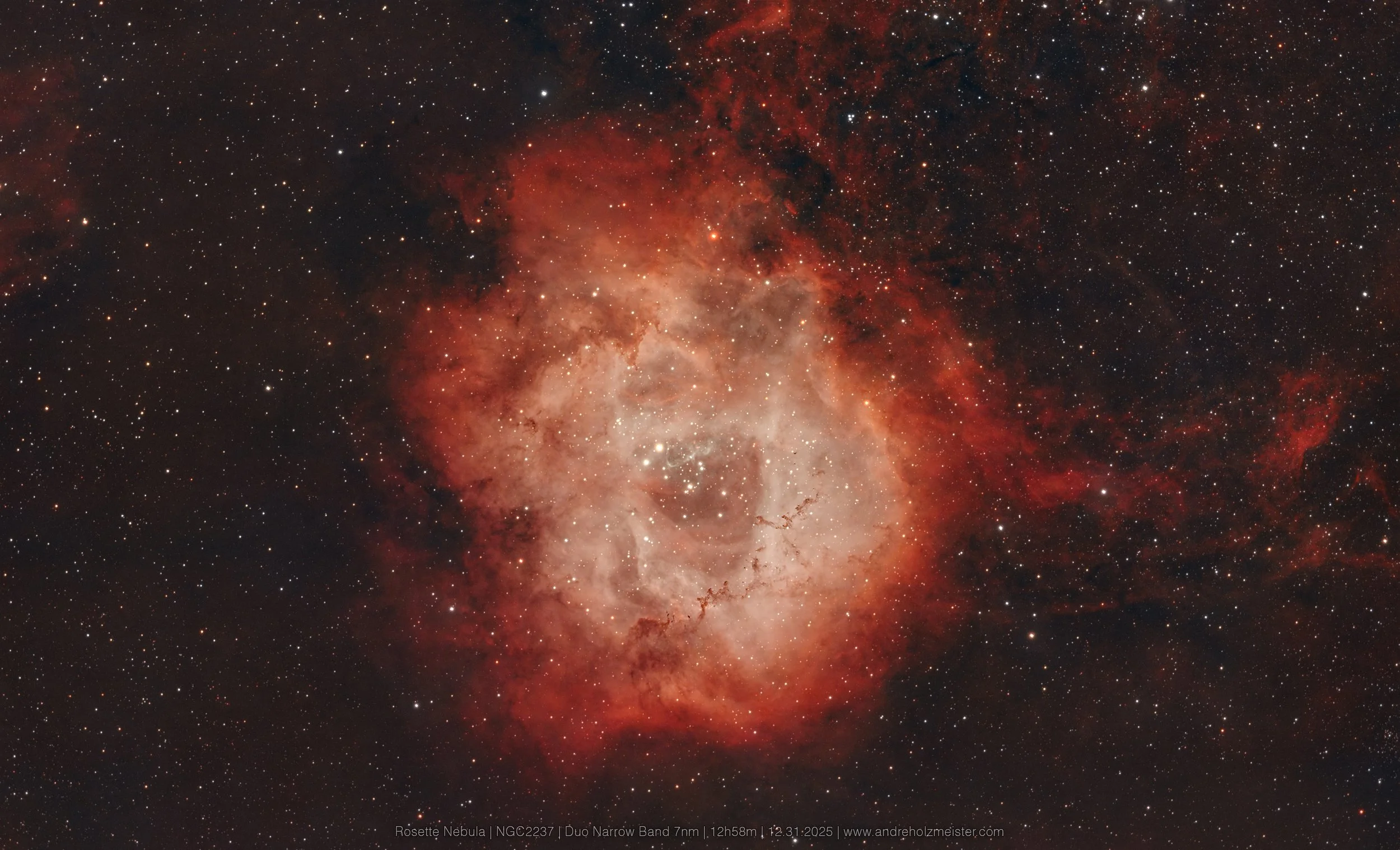
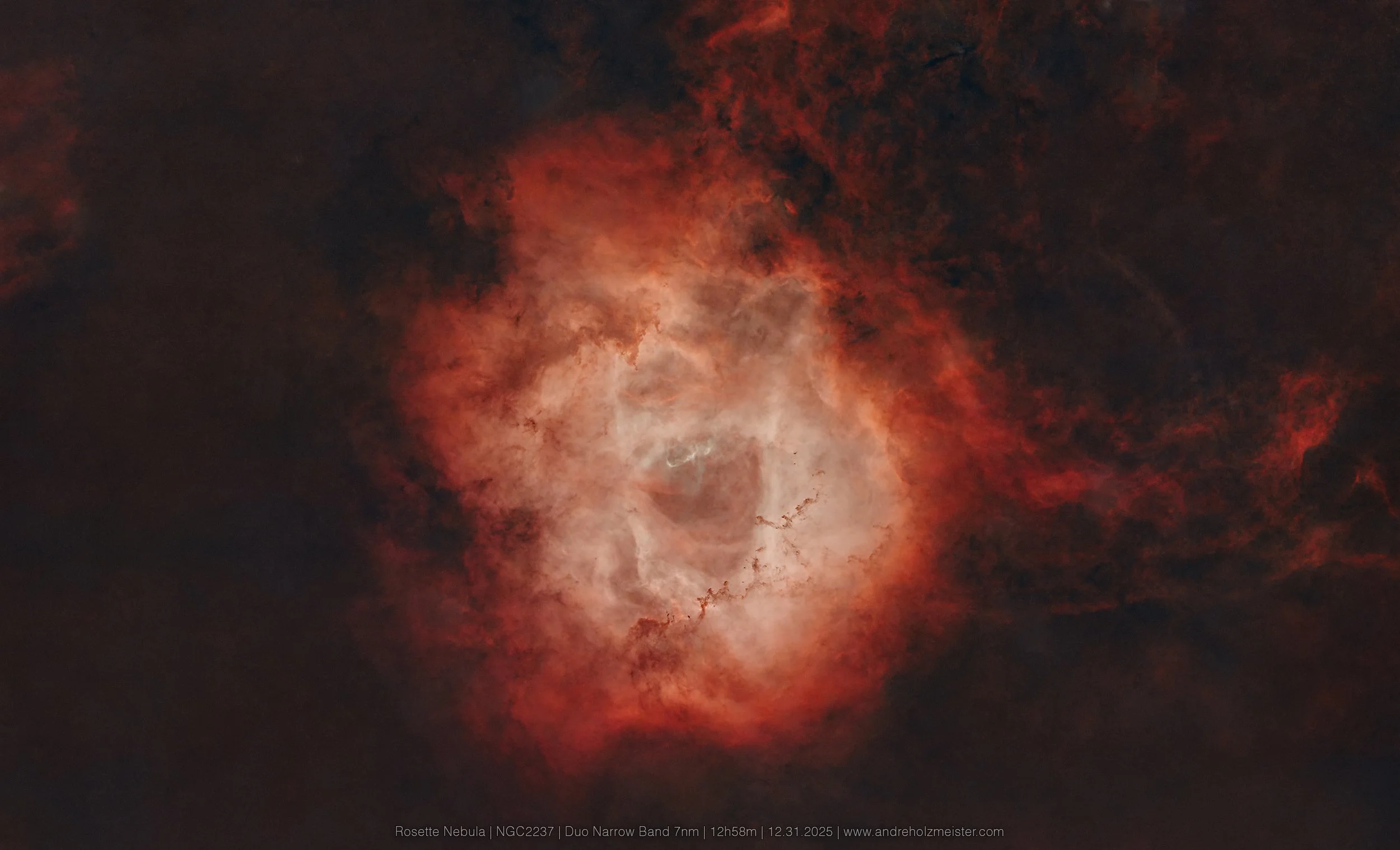
The image above is shot in natural colors, the data in all these versions are exactly the same, in this case Hydrogen Alpha (Ha) is dominating the images because of the great abundancy, the lighter color in the core is the Oxygen III (OIII) tinting the color slightly towards green and blue, but in natural colors the Red from Ha completely overpowers OIII.
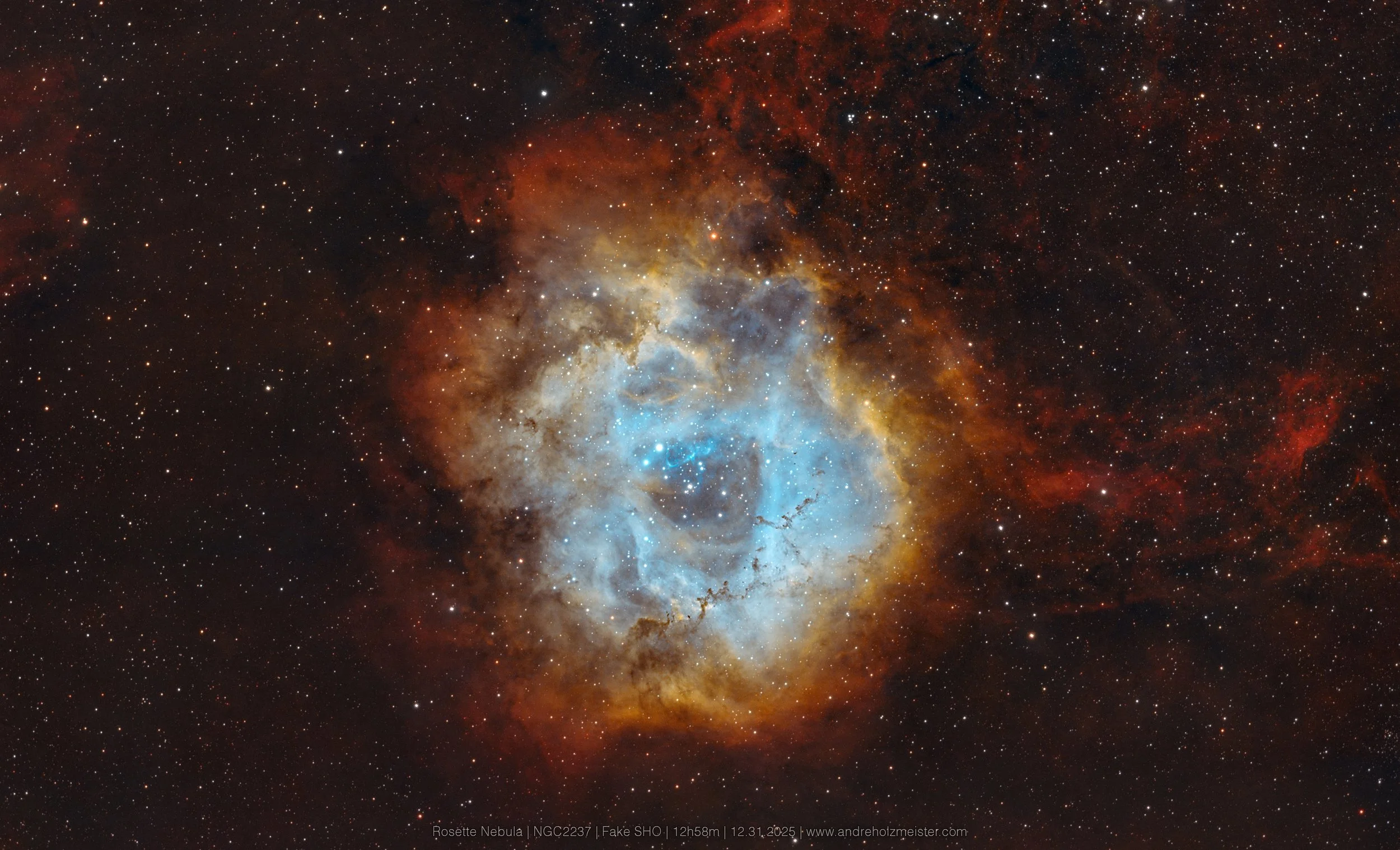
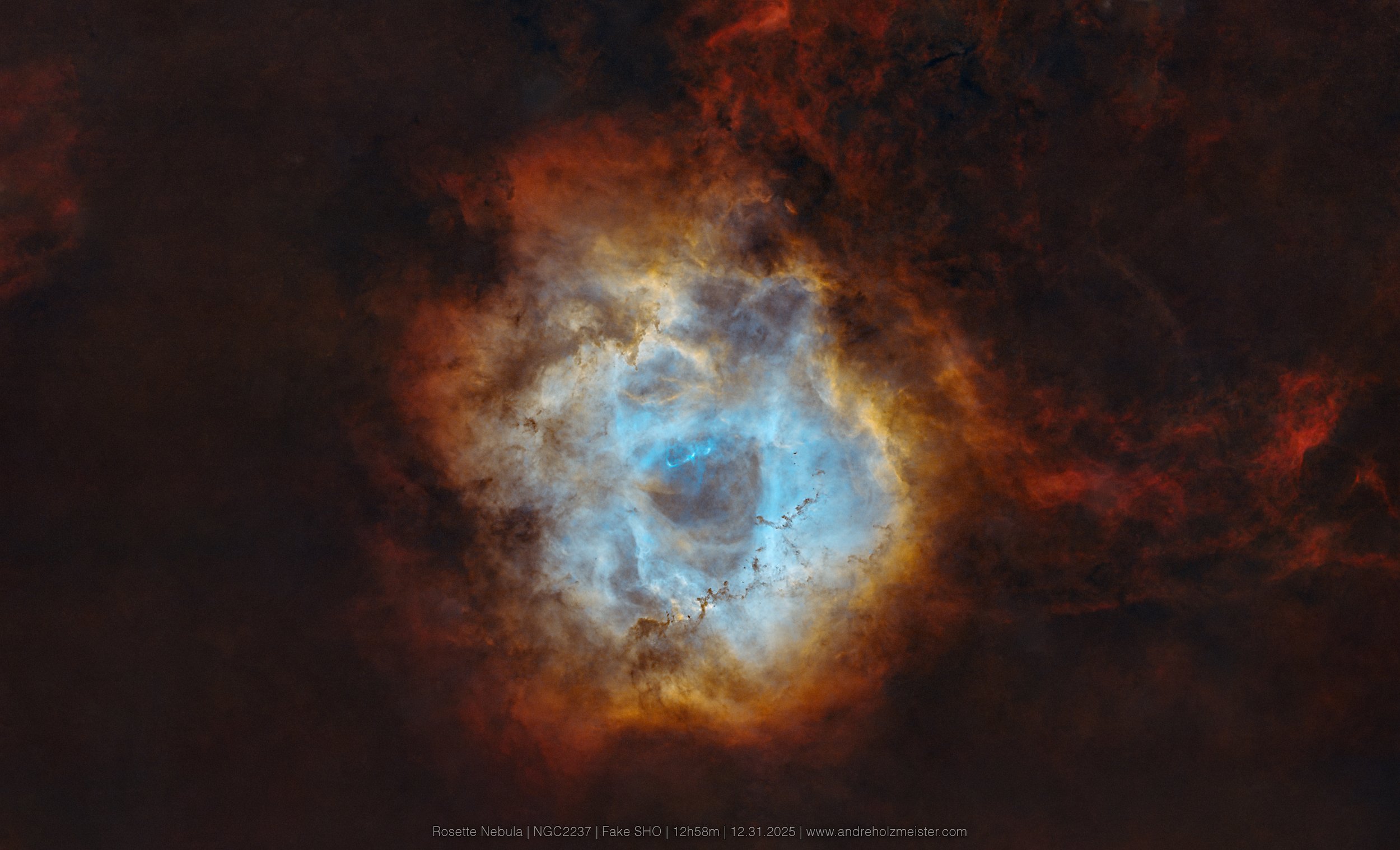
The image above was achieved by photographing the Nebula with a Duo Narrowband Filter, which filters the light emission of Hydrogen Alpha (Ha) and Oxygen III (OIII).
A color camera will “see” the Ha in the RED spectrum and OIII in GREEN and BLUE spectrum, this way we can separate these data in the RGB channels and you can remap the data in a way that you can view the light emission from the gases more clearly than the all-red natural color that we usually see becaus the abundance of Ha is so great that it dominates the image, with the separation of the data we can remap those colors in several ways, I used the incredible VeraLux Alchemy script by Riccardo Paterniti in Siril. SHO means Sulfur II mapped to RED, Hydrogen Alpha to GREEN and Oxygen III to BLUE. This is also called the Hubble Palette, because is was really used in most of the first images NASA shared from the space telescope that changed the history os astronomy. In this case I am missing the Sulfur data, that’s why I posted as fake SHO, we can use remmaping techniques to get similar results, because Sulfur II (SII) just like Ha, is seen as red by the color camera sensor. Images are also processed in starless state using tools like Starnett++ to separate the stars, so we can add them back in the image after we process and stretch the data, the benefit of this process is that we can go much more aggressive on stretching the data to reveal more details of the nebula without blowing up the stars.
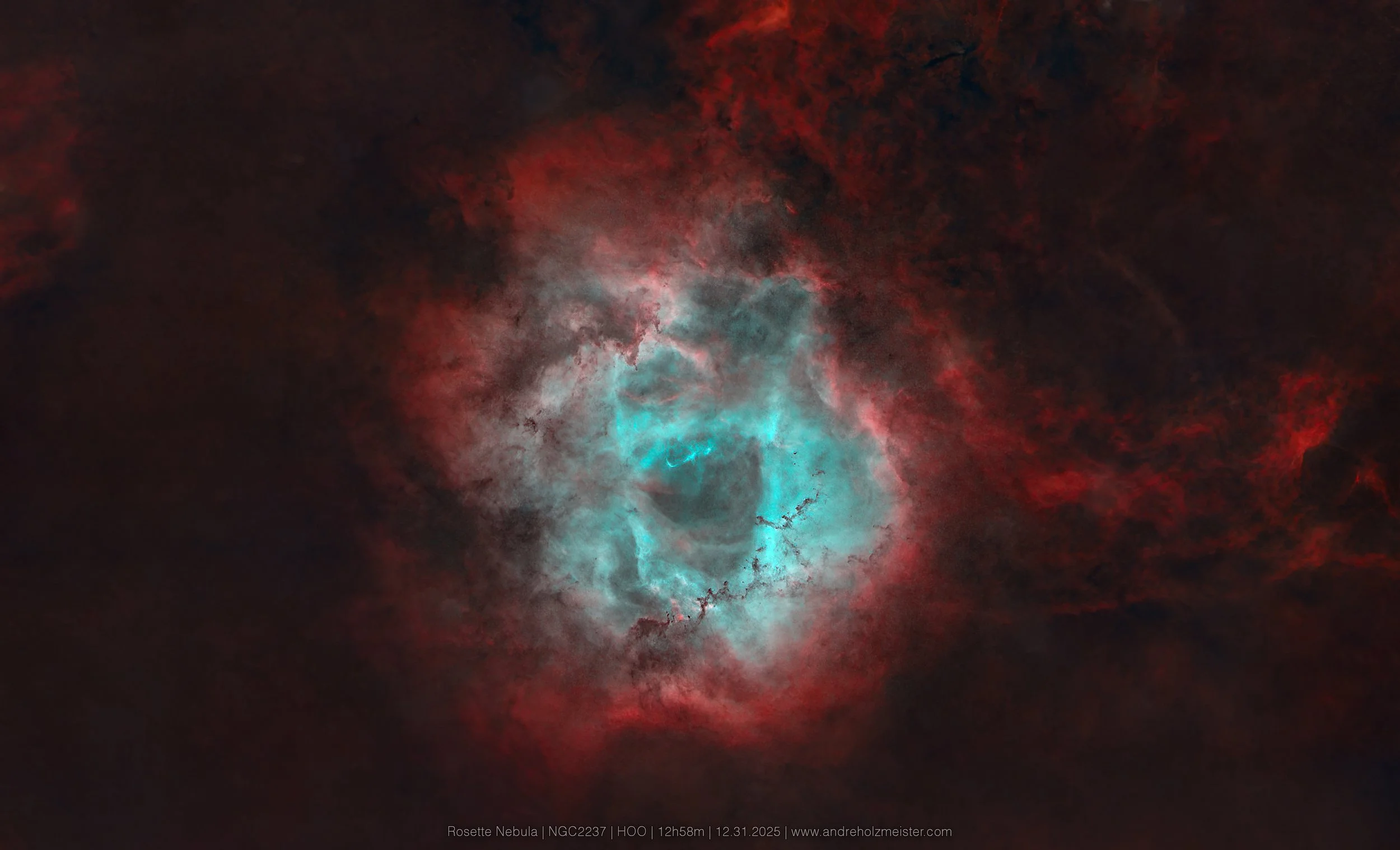
The version above is remapped and HOO, Hydrogen Alpha (Ha) as RED, and OXYGEN III in both GREEN and BLUE
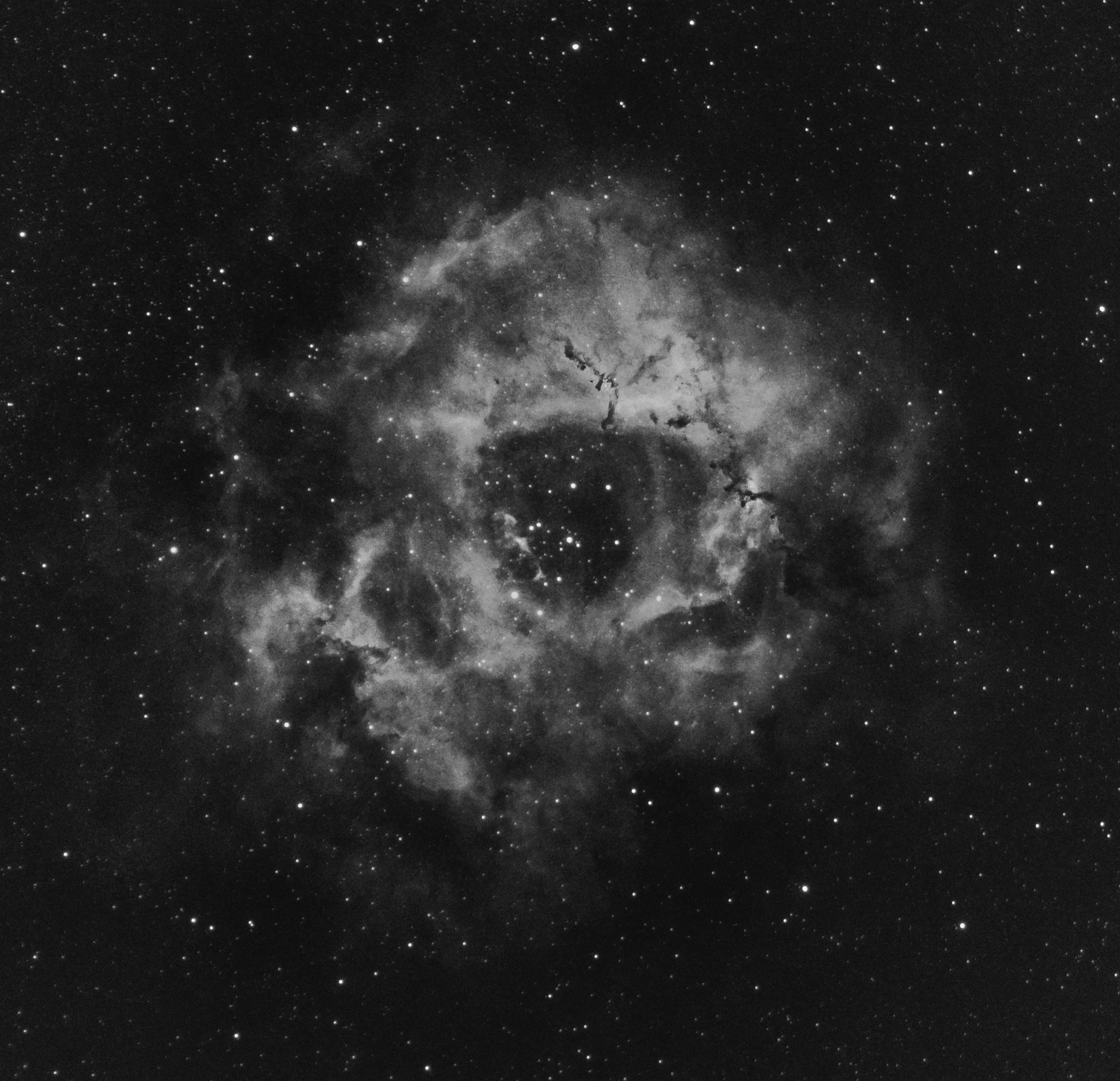
In this orientation the Rosette Nebula resembles a skull, that’s why it is also known as the Skull Nebula. This picture was taken in December 31st 2022, curiously the same day I took the pictures above 3 years apart.

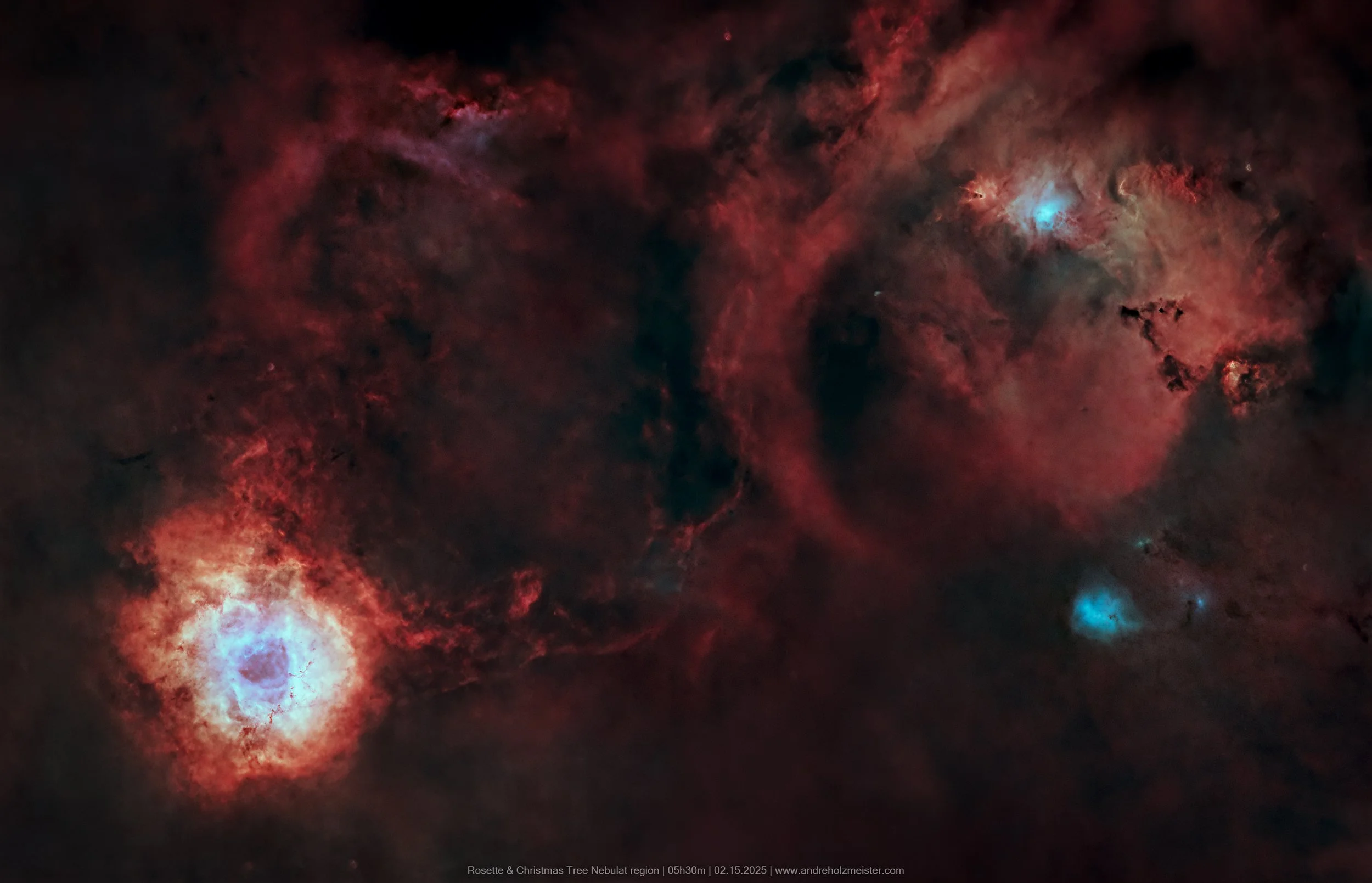
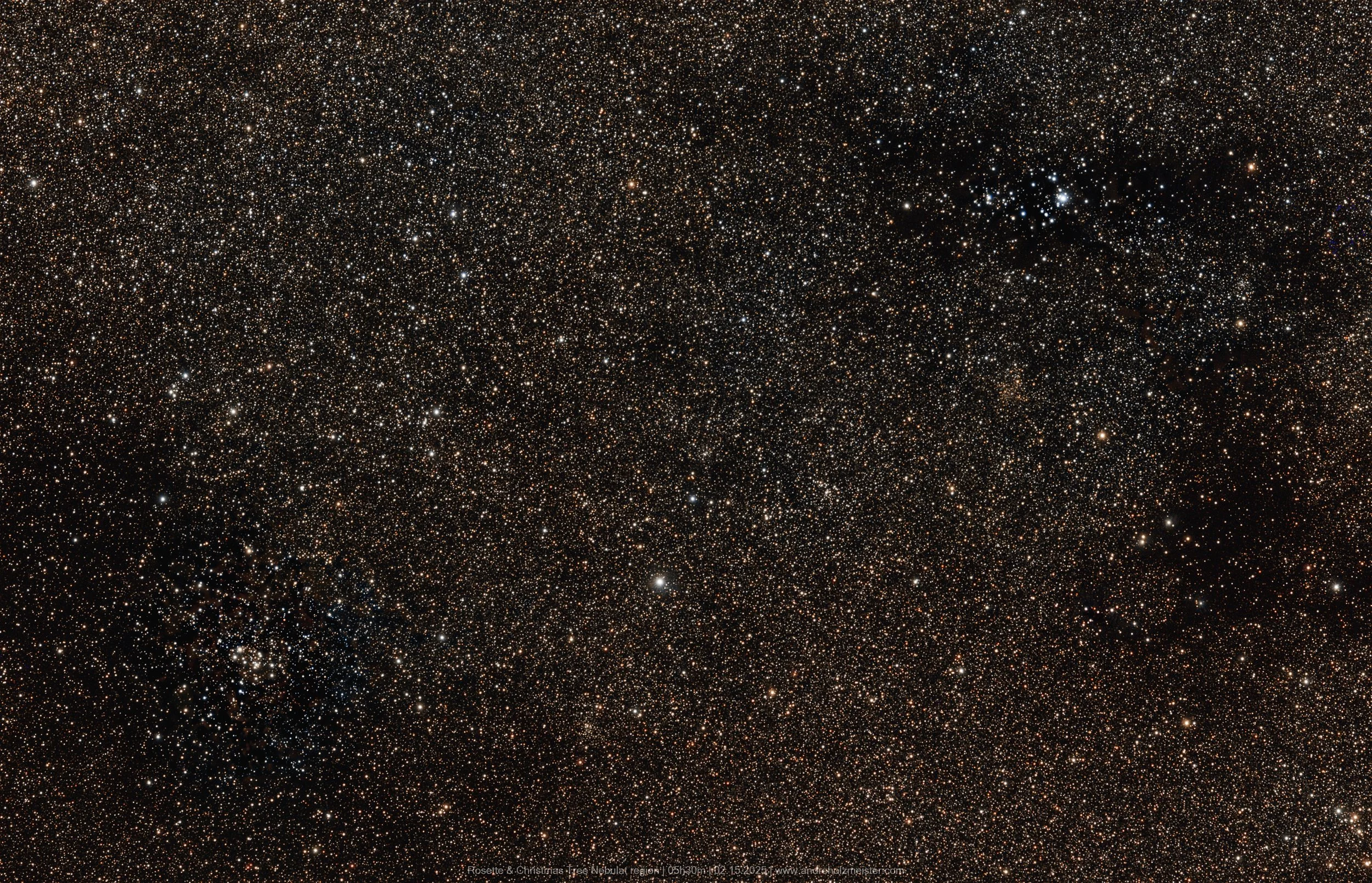
How many stars can you see when you look at the sky at night? Even in our wildest dreams, we would be able to see the number of stars that lie in this densely packed small patch of sky between the Rosette Nebula and the Christmas and Cone Nebula region.
This wide field shot shows a lot interesting areas between those two well known Nebulas, the Rosette and the Christmas Tree Nebula and the Cone Nebula. It is actually my first picture of the Christmas Tree region.
5h30m total integration 5 min exposures
Rokinon 135mm f/2 @f/4
ASI294MC PRO dedicated astrocamera
iOptron GEM28 Mount
SVBONY UV/IR cut filter
SVBONY 30mm f4 Guide Scope
ASI120MM mini guide camera with red filter
ASIAir mini
Bortle 4-5
Software: Siril > SyQon Zenith Starless > AutoGBE > Statistical Stretch > CosmicClarity Sharpening > VeraLux Curves > Photoshop