RHO OPHIUCHI
Rho Ophiuchi holds a special place for me as an astrophotographer because it marked a clear boundary between what was possible and what required commitment. Unlike emission nebulae that can be isolated from city skies with narrowband filters, Rho Ophiuchi is dominated by faint reflection nebulosity and dark dust clouds—structures that depend on subtle starlight rather than strong emission lines. From my light-polluted skies, it was simply out of reach. Capturing it meant leaving the city for the first time, traveling to a national park, and carefully planning every detail: location, timing, weather, framing, and moon phase.
Standing under truly dark skies, collecting those photons felt different. The image became more than a photograph—it became a reminder that some parts of the universe require us to move toward them, to slow down, and to meet the night on its own terms.
Rho Ophiuchi is less a single object but a landscape, and that’s precisely why it feels so different from nebulae that carry familiar Messier or NGC numbers. What we call the Rho Ophiuchi cloud complex is a wide region of interstellar dust and gas spread across several degrees of sky, illuminated by nearby stars rather than defined by a single, compact structure. Within it lie multiple distinct components: the bright blue reflection nebula IC 4604, lit by the star Rho Ophiuchi itself; the warmer, pinkish IC 4603, where some hydrogen emission mixes with reflected light; and the dark nebulae Barnard 44 and Barnard 45, dense dust lanes that block background starlight and give the region its dramatic contrast.
Adding another layer of depth to the scene is the globular cluster Messier 4 (M4), visible near the edge of the cloud complex. Unlike the surrounding dust, M4 is an ancient structure—one of the closest globular clusters to Earth—its stars formed over 12 billion years ago. Its presence creates a striking contrast: a fossil from the early Milky Way projected against a foreground region where new stars are still being shaped.
Because the Rho Ophiuchi region is diffuse, irregular, and sprawling, it never fit neatly into early catalogs, which focused on discrete, well-defined objects that could be isolated at the eyepiece. Instead, its components were cataloged individually as IC and Barnard objects, while the complex as a whole remained without a single designation. In that sense, the lack of one name feels appropriate. Rho Ophiuchi isn’t a single object to be indexed—it’s a conversation between deep time and ongoing creation, written across a wide stretch of sky.
Rho Ophiuchi 3h 30 minutes of integration time
Samyang 135mm f2 @f2.8
ASI 183MC Pro @0°C camera
iOptron GEM28
Svbony UVIR cut filter
Svbony mini guide scope 30mm f4
ASI 120mm mini guide camera
ASIair mini
Bortle 3
DeepSkyStacker > Siril > Photoshop > Topaz Denoiser
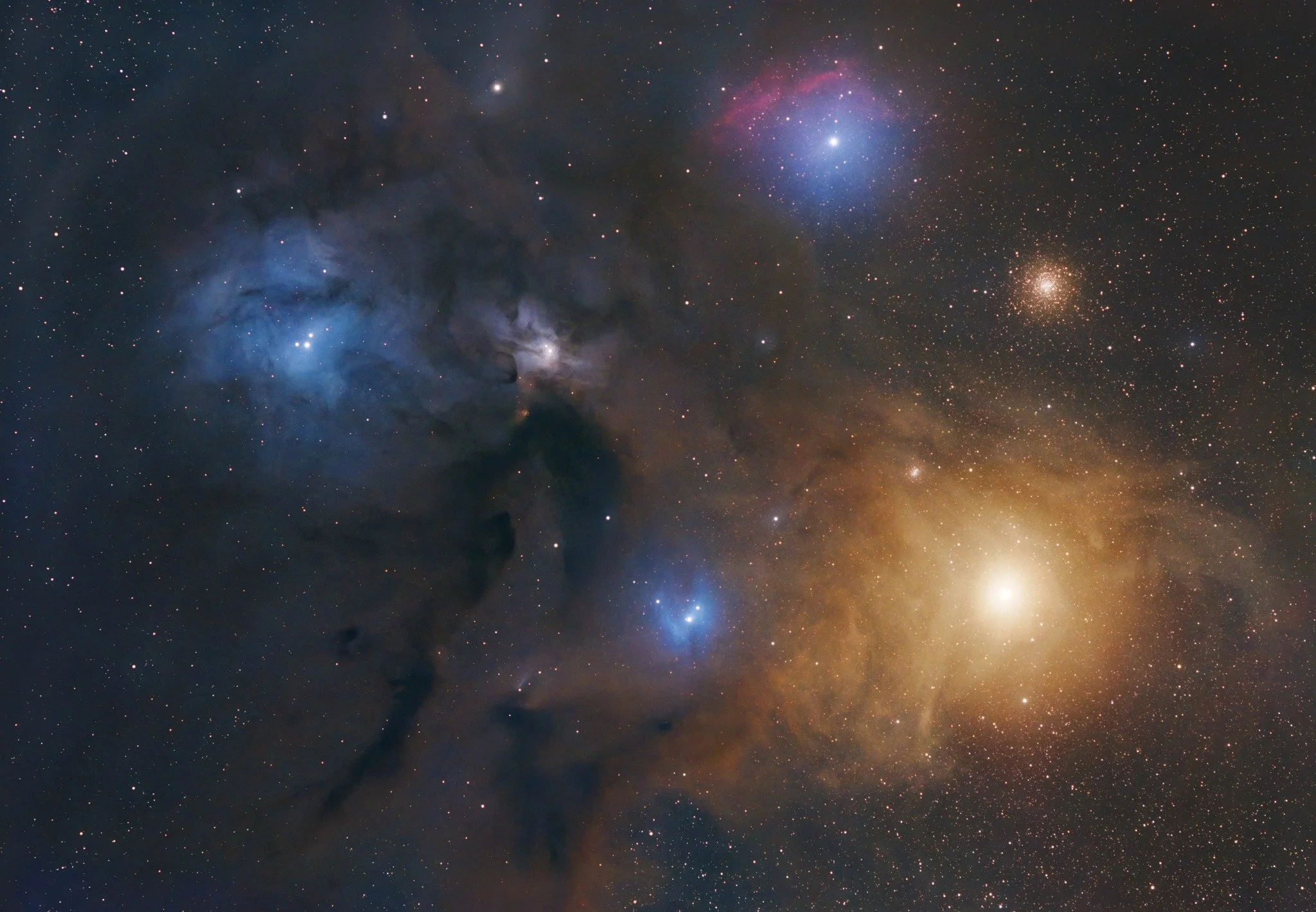
Rho Ophiucci in all of it’s glory, captured with the Samayang 135mm f/2 lens at F/2, I consider this one of my best, if not the best astrophoto. What a sight to behold!
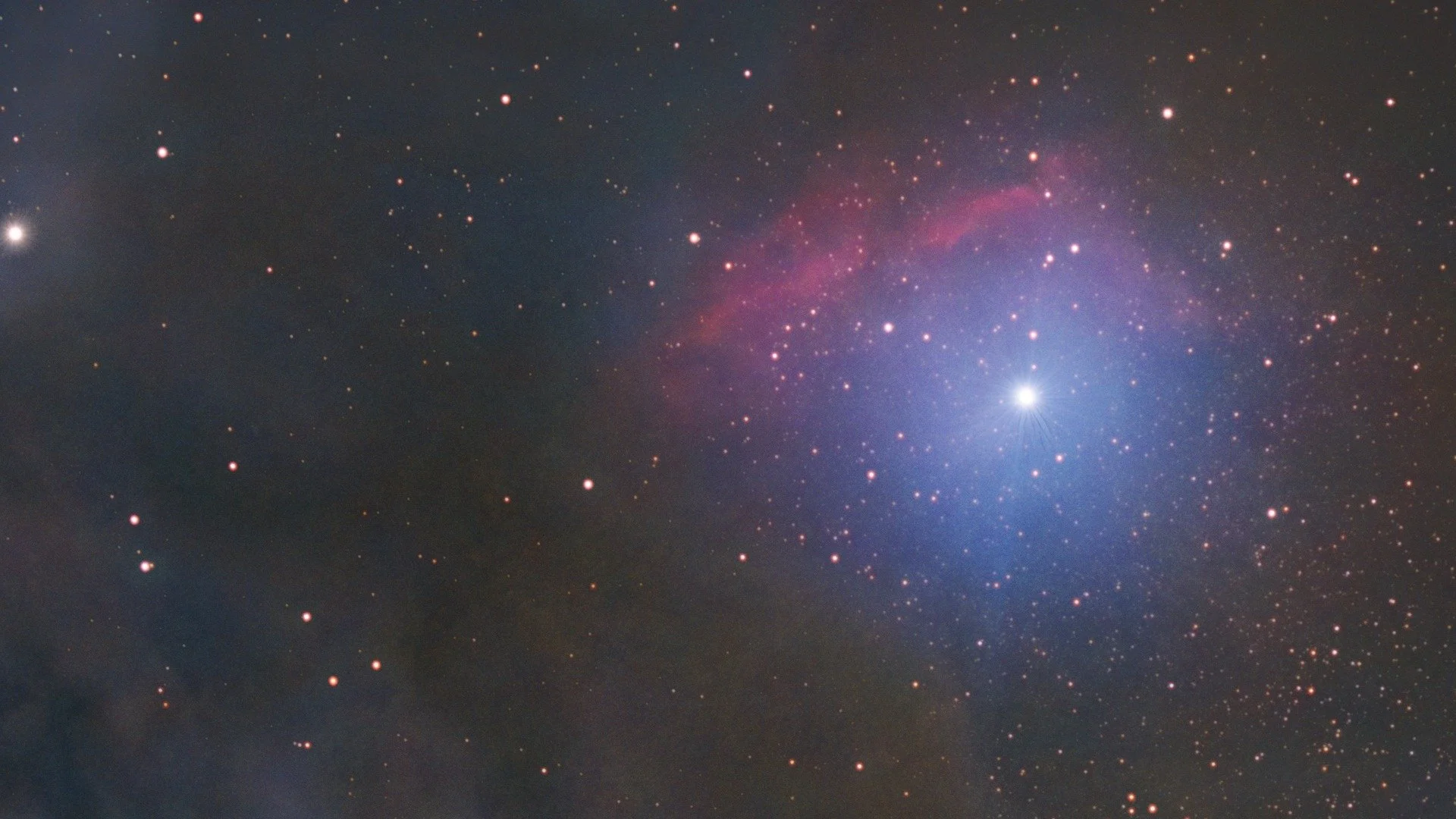
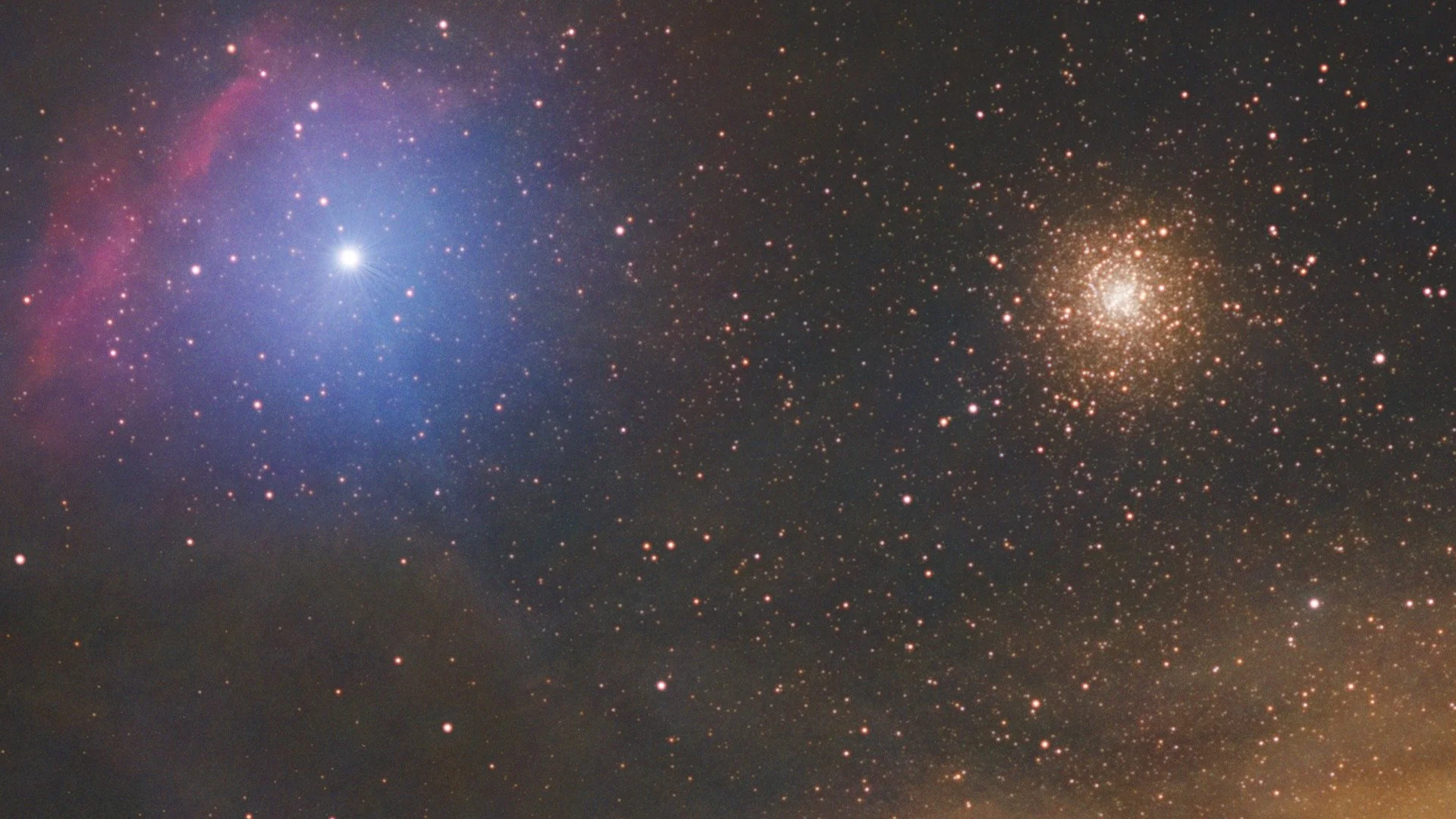
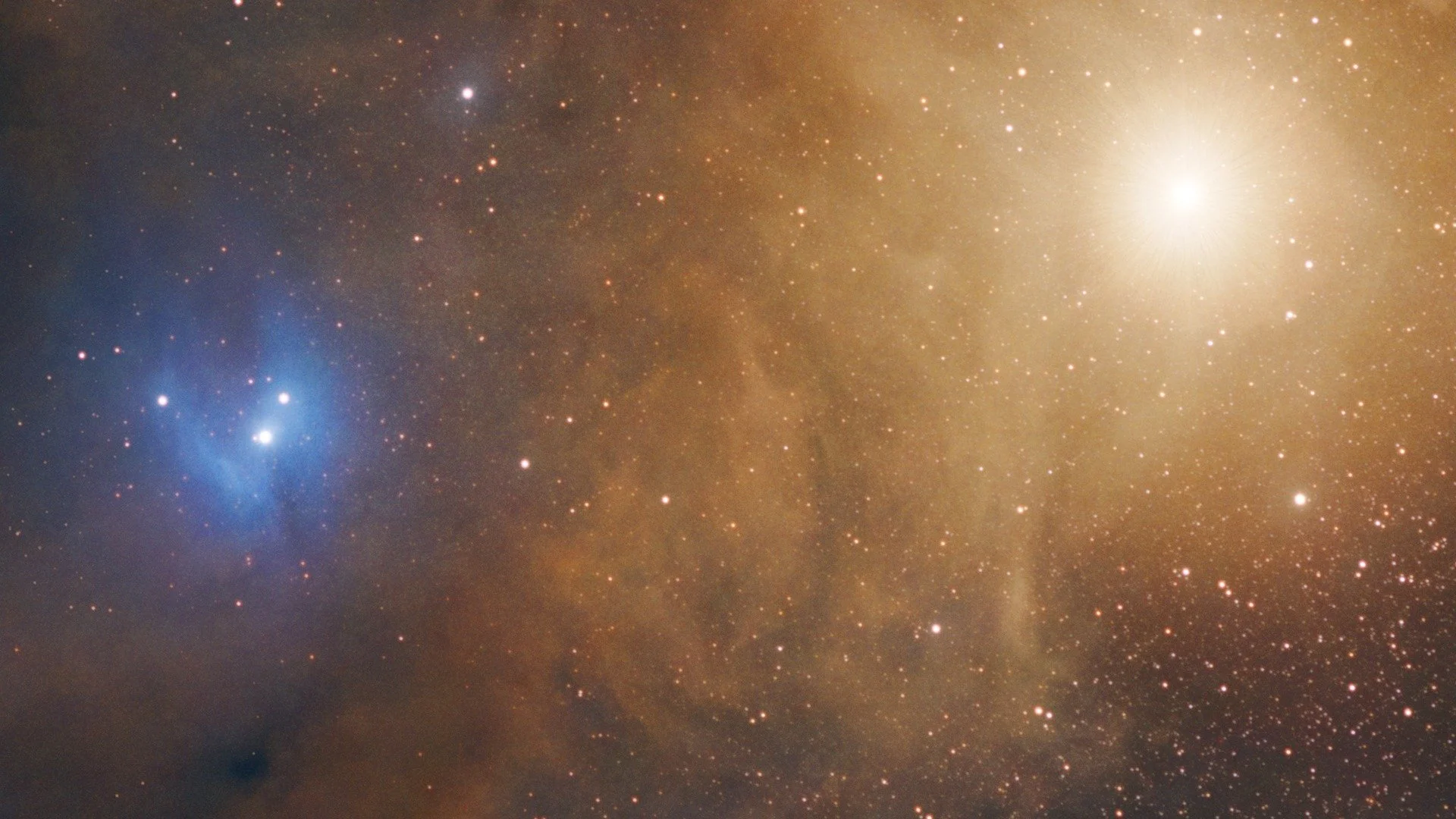
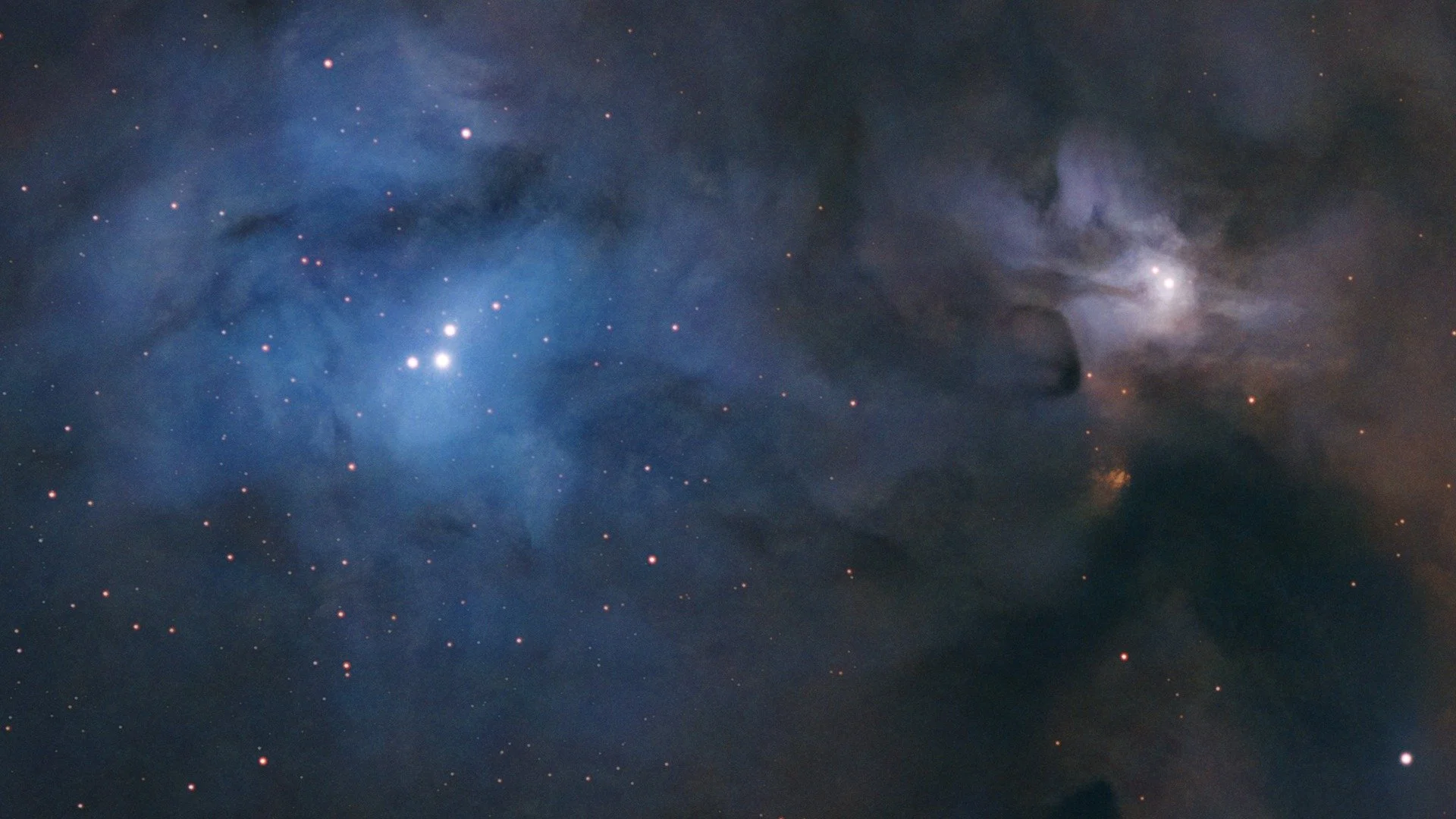
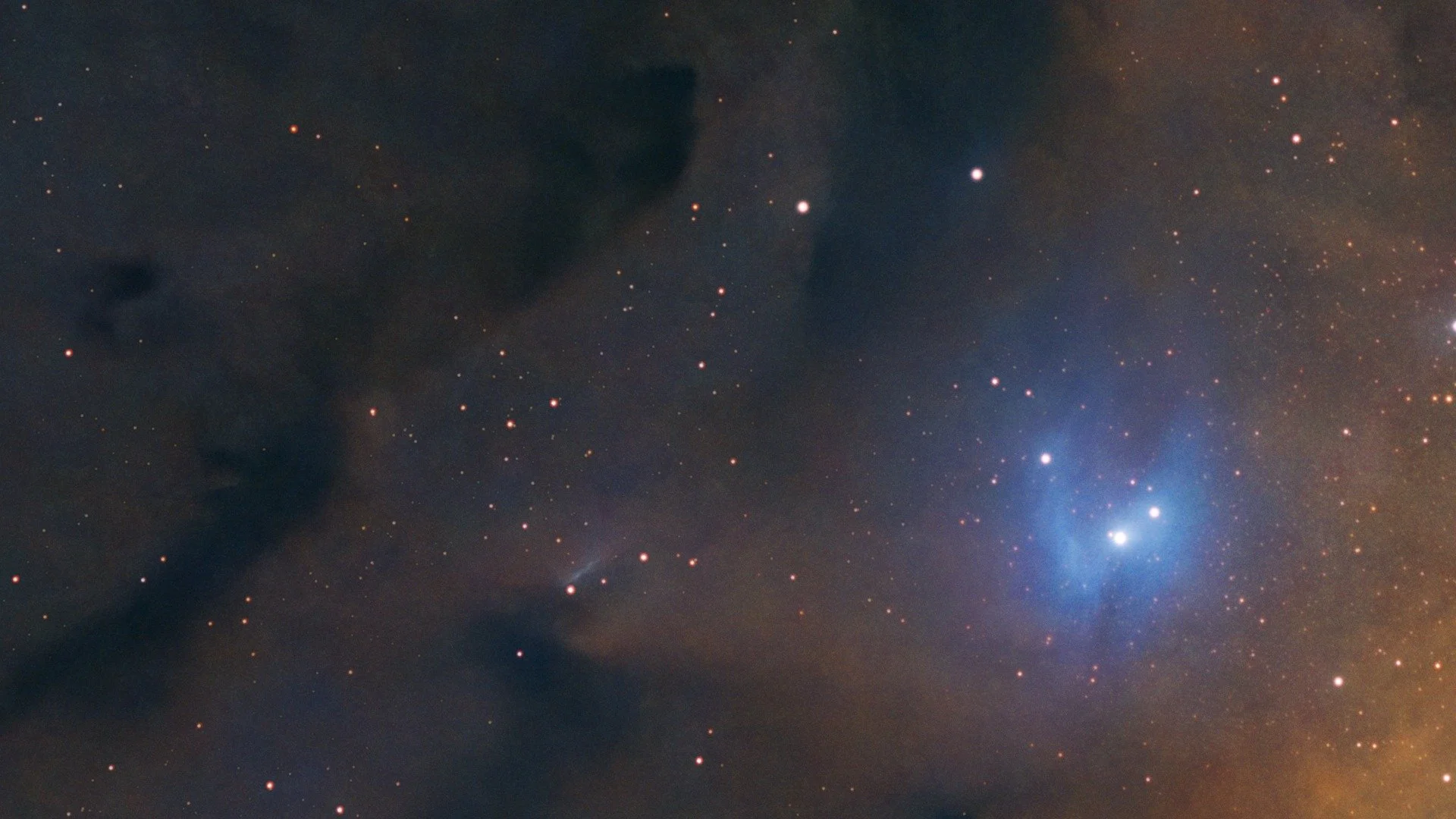
These are crops to 1:1 pixel scale
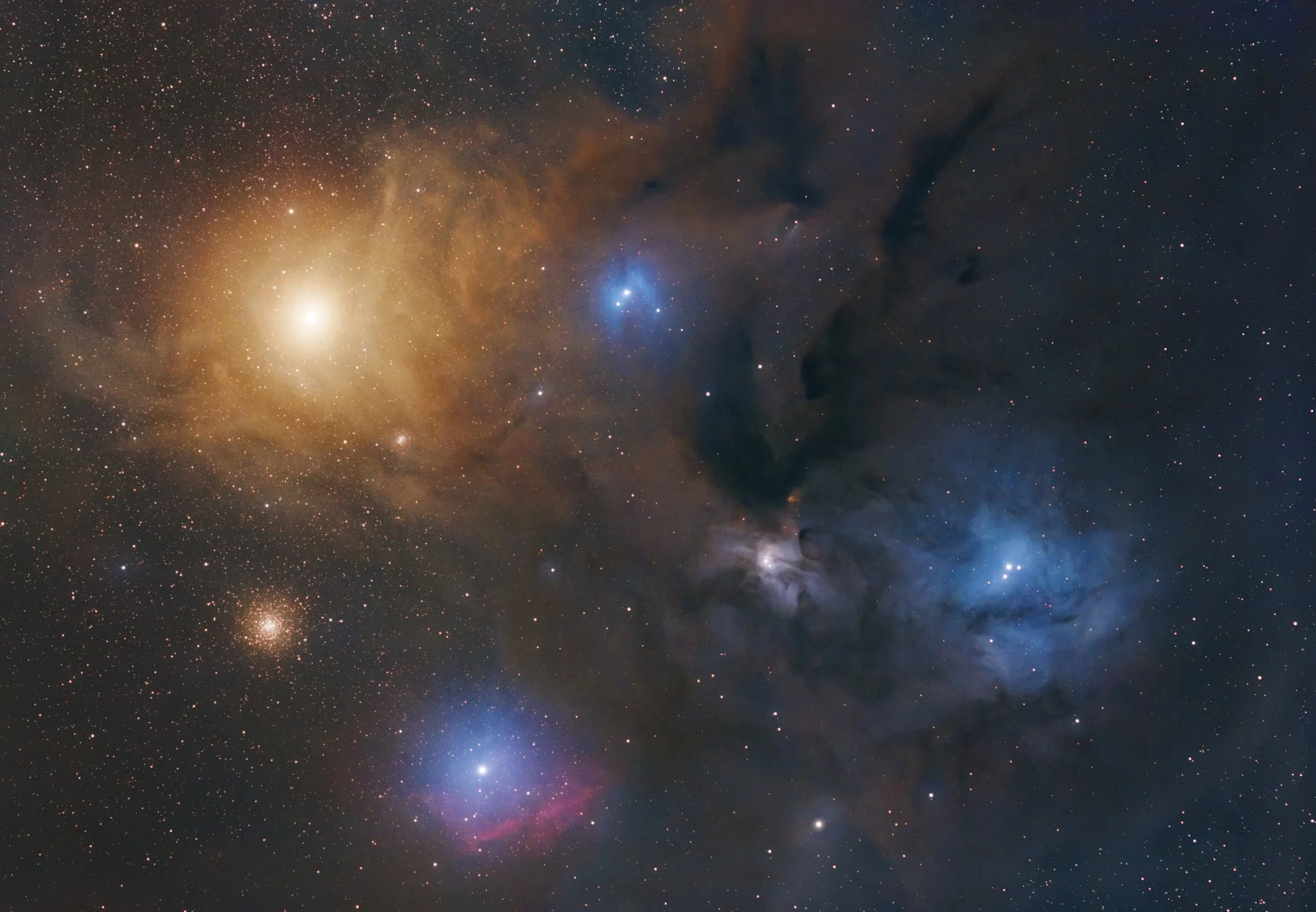
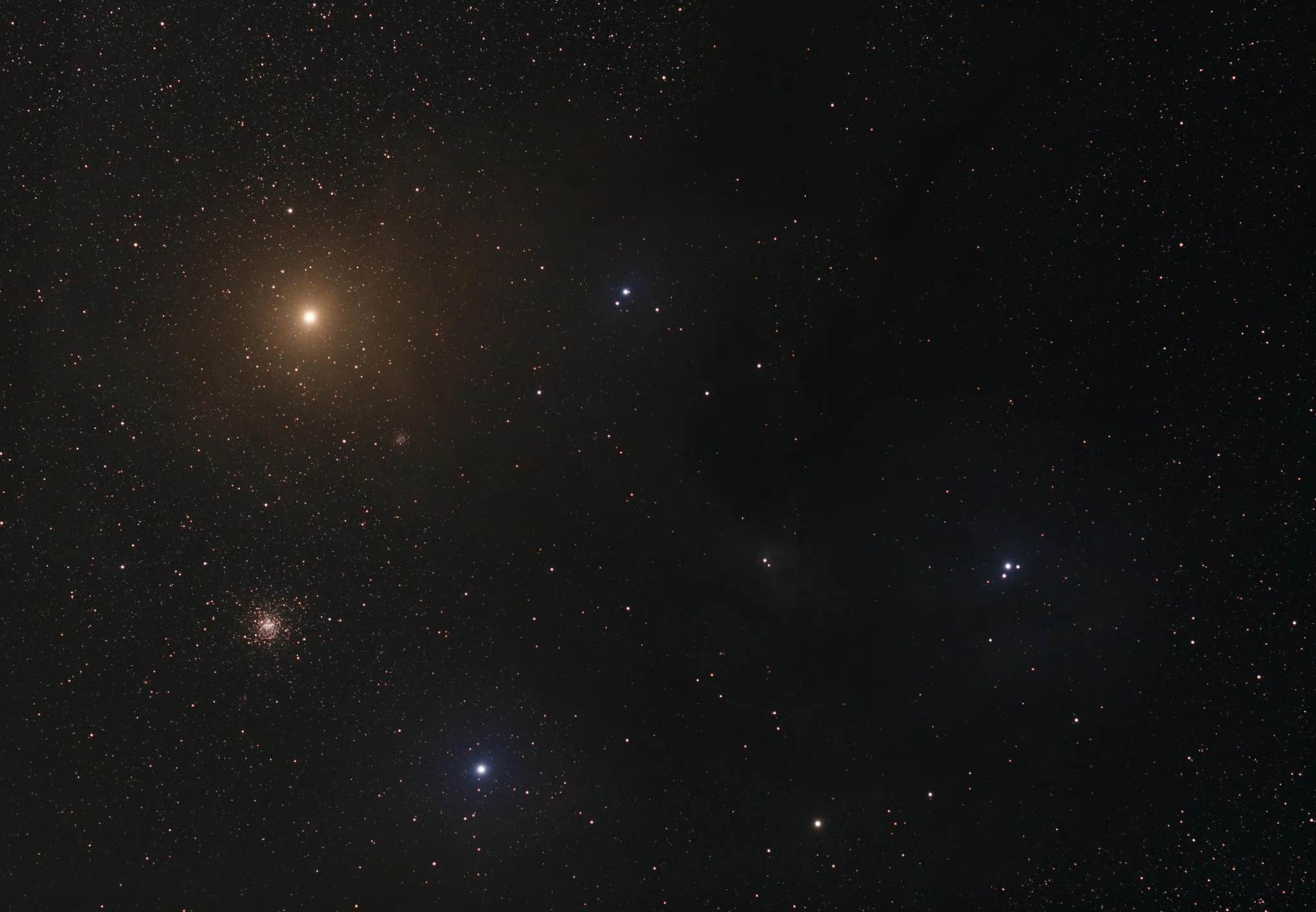
This shows the stacked image and the stretched image where we bring out all the nebulosity that is hidden in the dark part of the 32 bit image spectrum, there is a ton of hidden information on those pixels just waiting for us to light them up in processing.
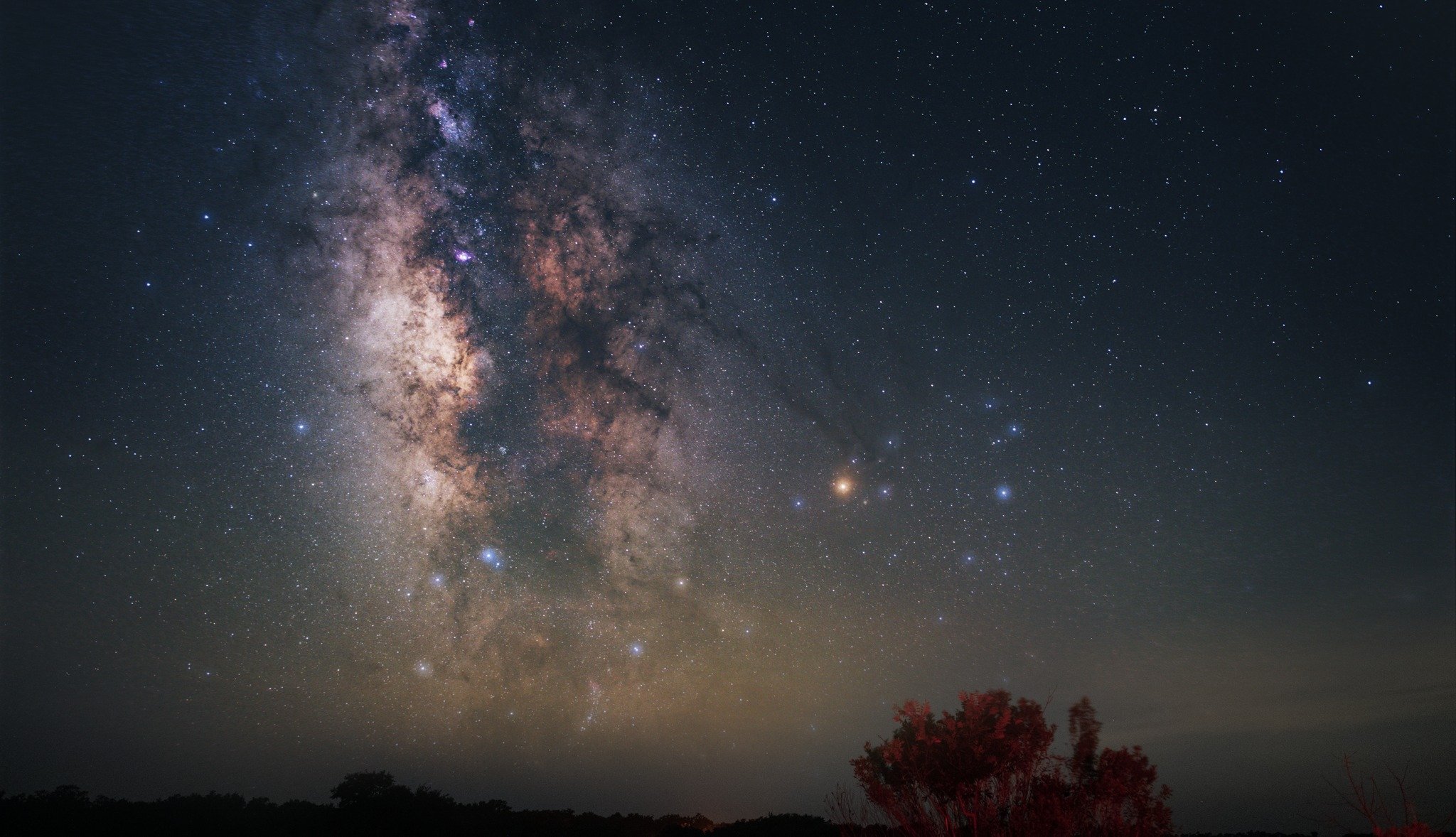
Milkyway integration time 17 minutes, using just a camera and a tripod, SonyA7III + Tamron 28-75mm f/2.8, we can see the bright yellow reflection nebula on the right of the Milkyway core produced by the Antares red super giant star in Rho Ophiuchi.
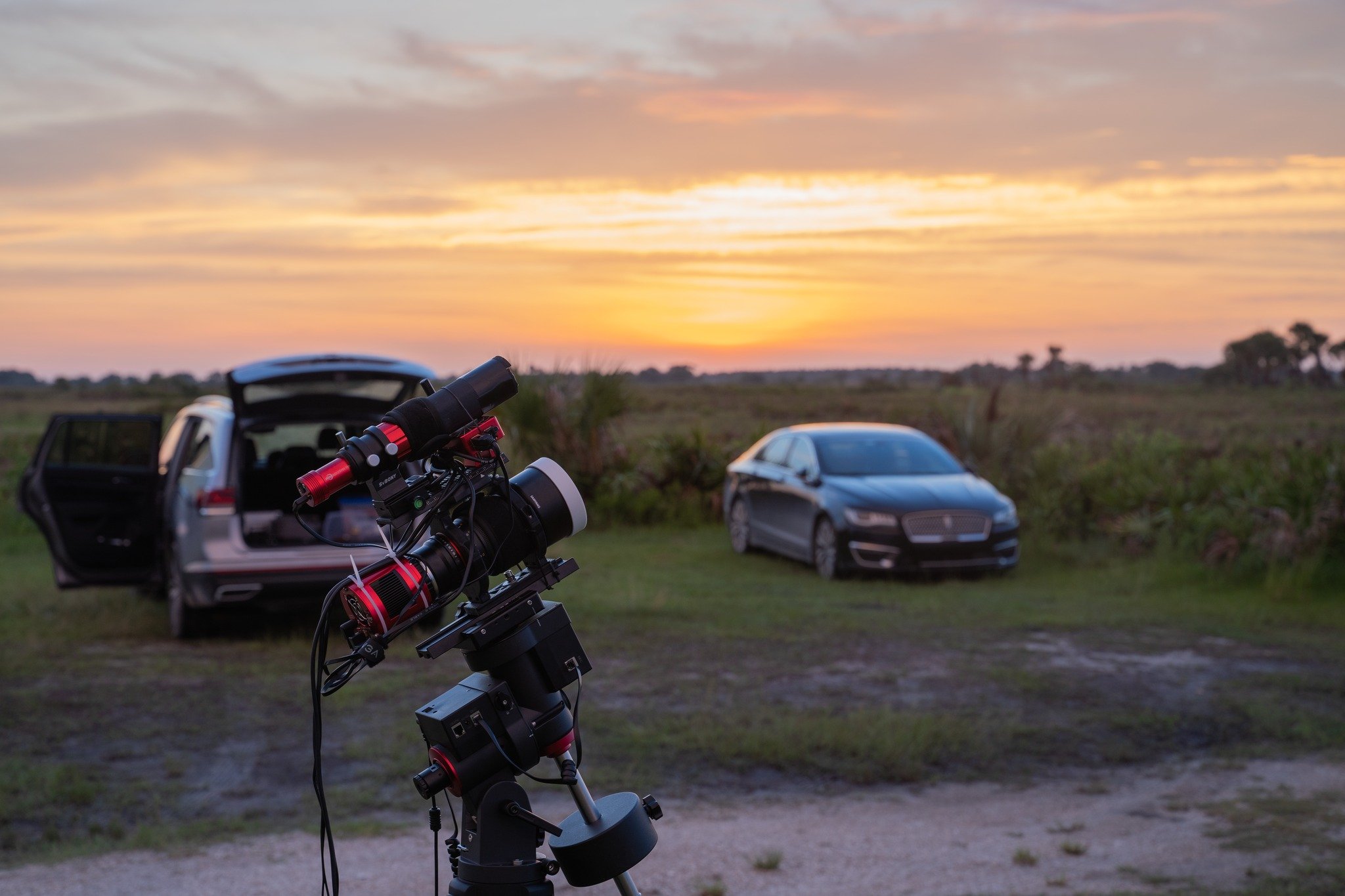
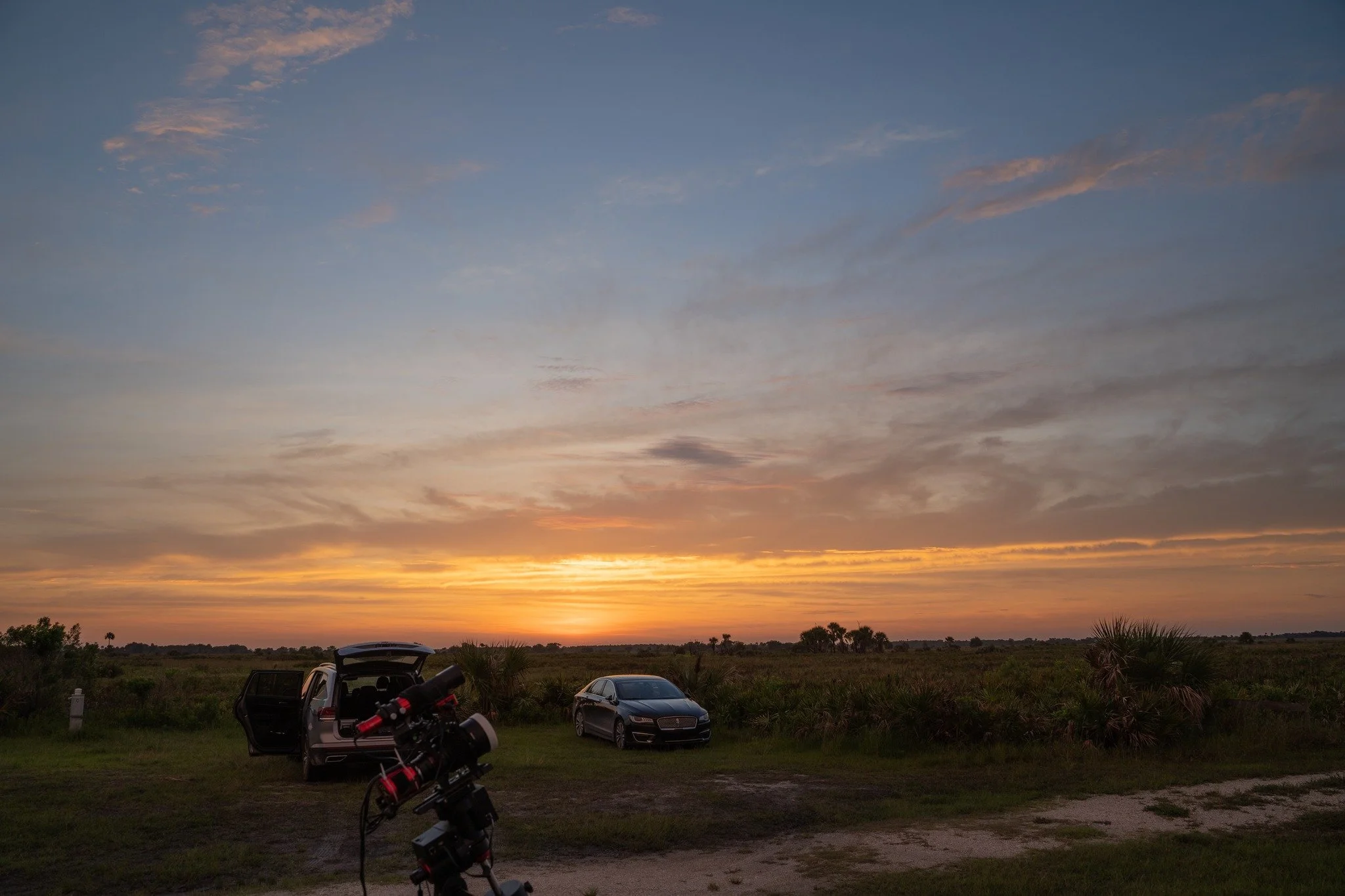
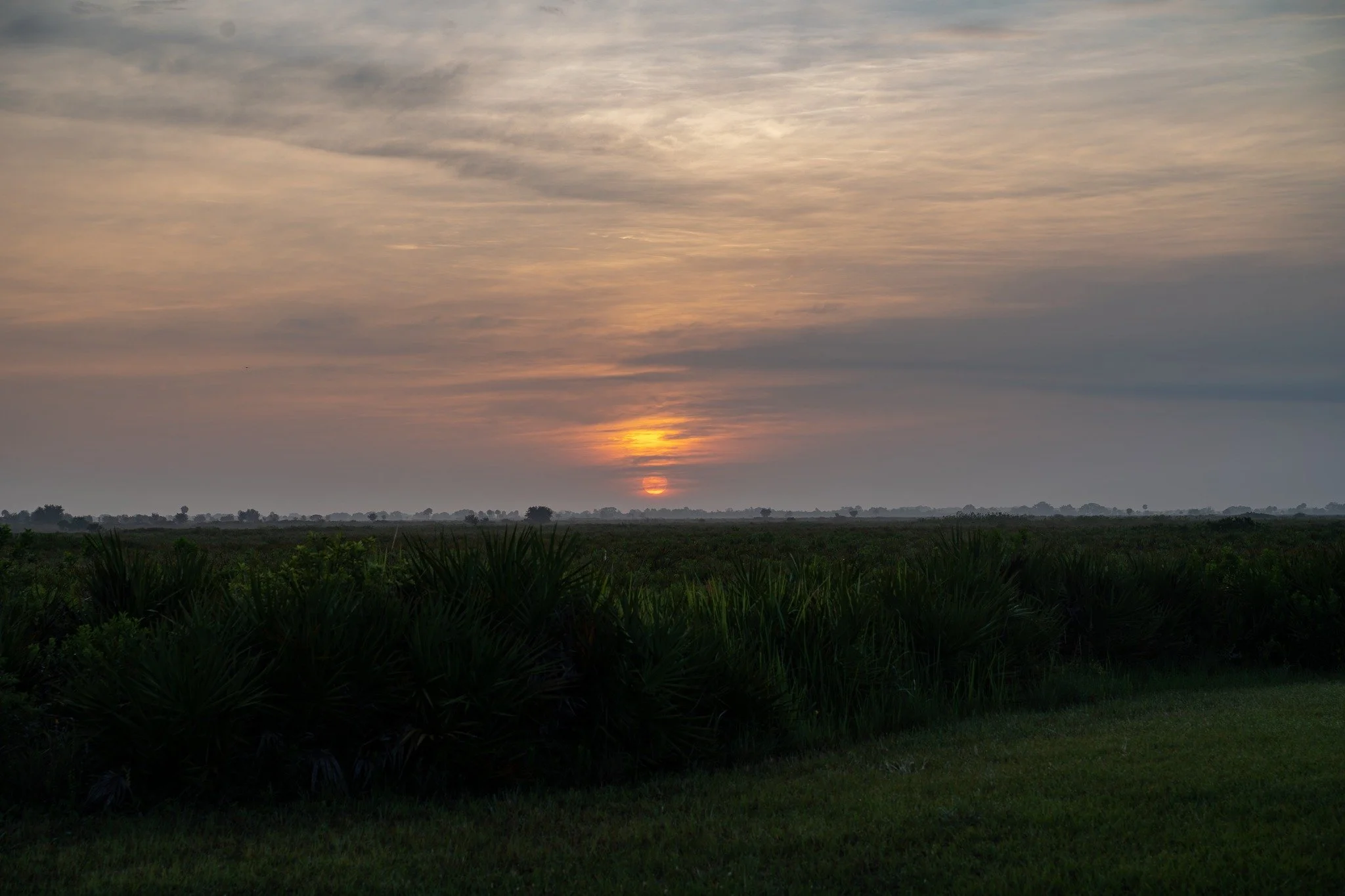
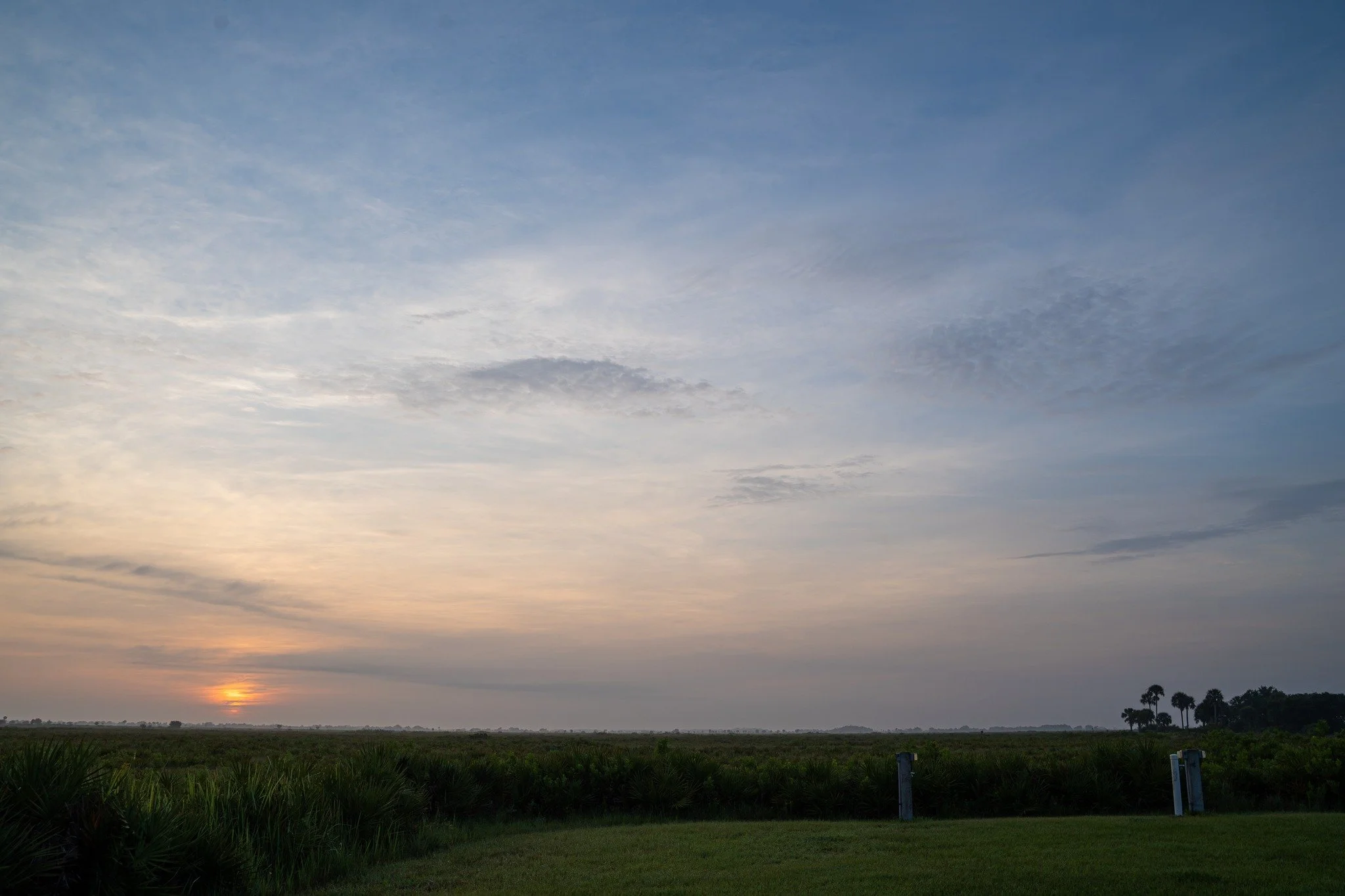
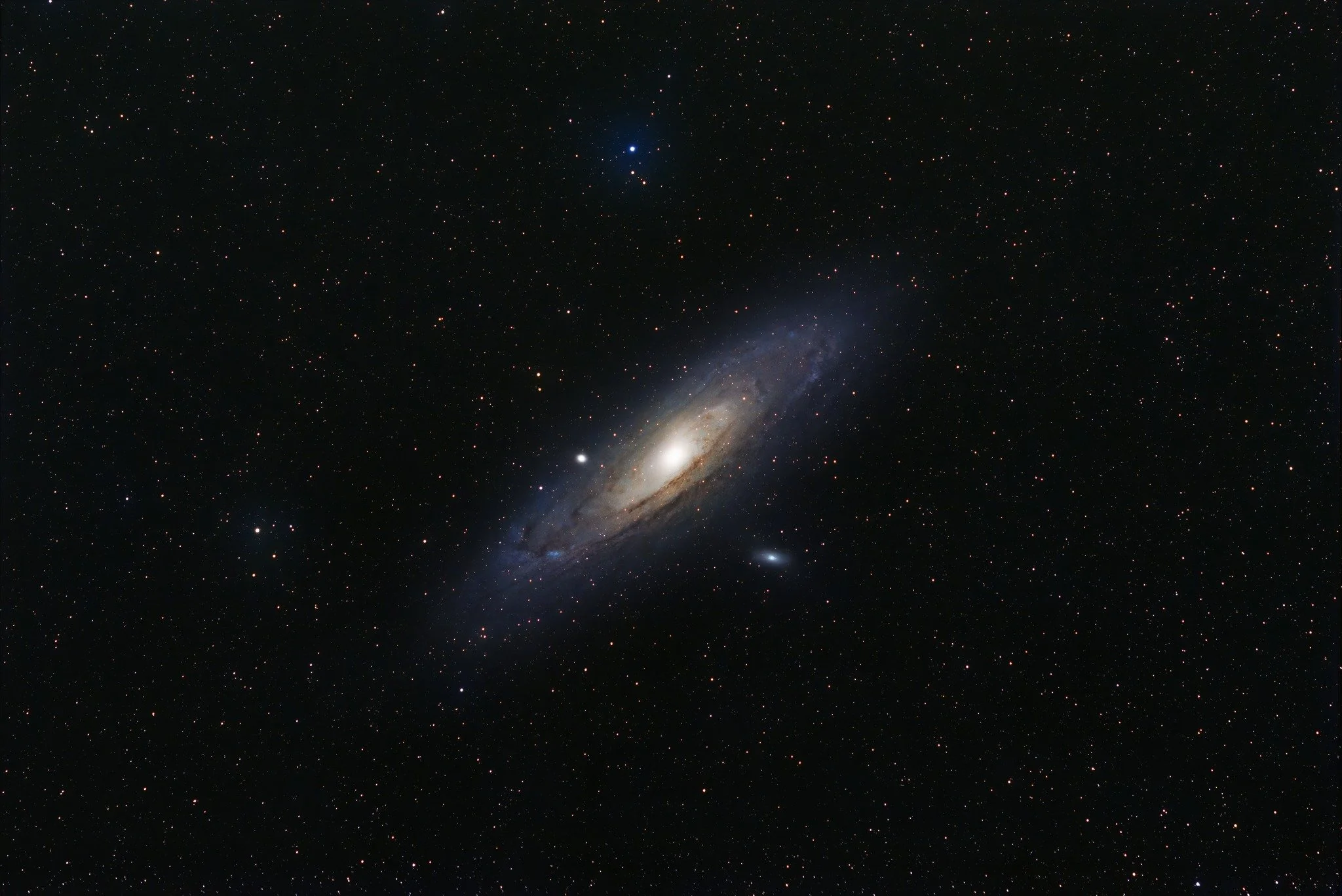
Some pictures of the setup and a bonus Andromeda galaxy that I took after Rho Ophiuchi got too low on the horizon and I used the last 50 minutes of the night before sunrise to capture it.